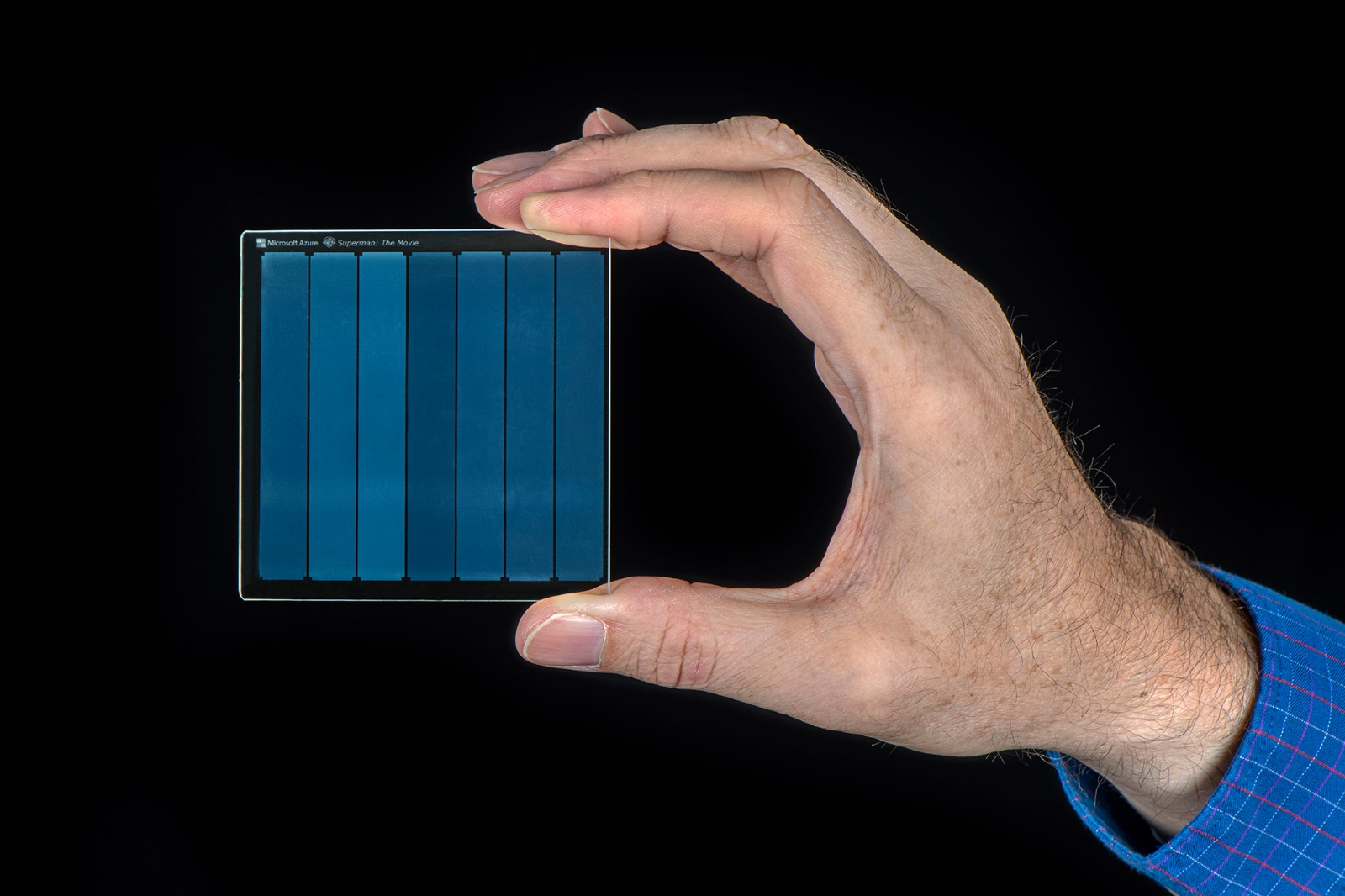
Microsoft Research has announced advances in Project Silica, its experimental glass-based storage system aimed at preserving data for centuries. The initiative encodes information into quartz glass using femtosecond lasers, creating microscopic layers of structured data that can be read via machine learning-powered imaging systems.
Unlike magnetic tape or hard drives, glass does not degrade under typical environmental conditions.
Why glass storage matters
Traditional archival storage technologies face constraints:
- Magnetic decay over time
- Sensitivity to temperature and humidity
- Ongoing maintenance and migration requirements
Project Silica aims to eliminate these vulnerabilities by storing data in solid glass slabs that are resistant to heat, electromagnetic interference, and physical wear.
Microsoft positions the technology primarily for cold storage scenarios, including historical archives, legal records, and large-scale cloud backup.
Technical evolution
Recent updates from Microsoft Research suggest improvements in:
- Write speed efficiency
- Data density per glass slab
- AI-assisted decoding accuracy
- Manufacturing scalability
Reading the data requires computational reconstruction using advanced imaging and AI models to interpret microscopic structures etched into the glass.
The fusion of materials science and AI distinguishes Project Silica from conventional storage formats.
Sustainability implications
Data centers consume significant energy, particularly for cooling and storage maintenance.
Glass storage offers potential sustainability benefits:
- No power required for preservation
- Reduced cooling demands
- Lower long-term infrastructure overhead
As hyperscalers pursue carbon reduction targets, durable offline storage alternatives gain relevance.
Azure and enterprise potential
While Project Silica remains in research and pilot stages, integration with Azure archival services is a logical pathway.
Long-duration storage is critical for:
- Government records
- Financial compliance archives
- Media preservation
- Scientific datasets
Glass-based storage could complement existing tape and disk infrastructure.
Competitive context
Long-term storage innovation includes DNA storage experiments and advanced optical media.
However, commercialization challenges include:
- Production cost
- Write speed scalability
- Retrieval latency
Project Silica’s progress suggests Microsoft continues to treat archival storage as a strategic frontier.
Long-term outlook
As AI-driven data creation accelerates, storage durability becomes more critical.
Glass storage represents a radical departure from refresh-cycle-dependent systems.
Project Silica remains experimental, but its advances highlight a broader industry question:
How should society preserve digital information for generations?
Microsoft’s answer, at least in part, may be written in glass.