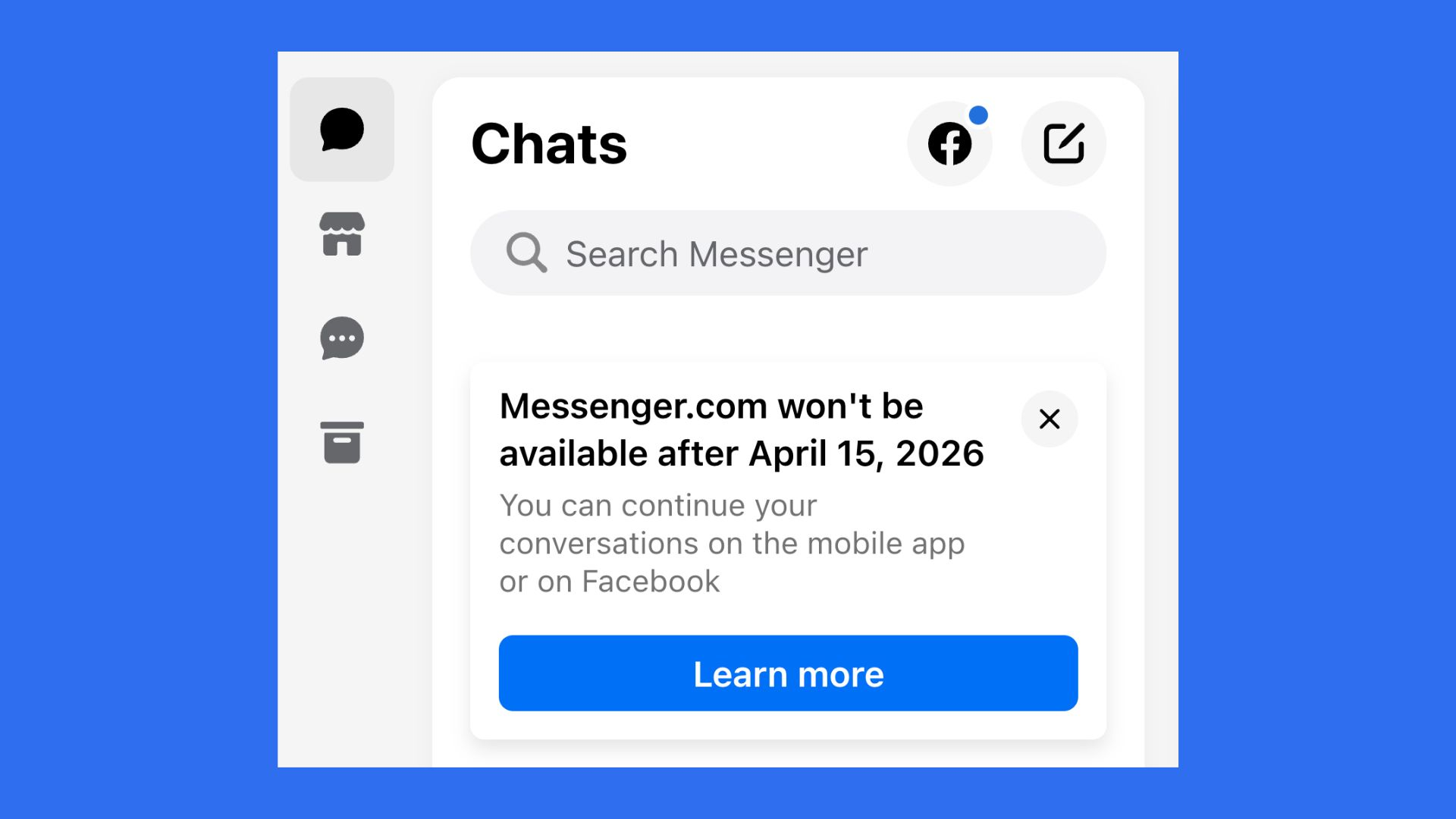
The company will shut down the standalone web version of Messenger in April 2026, redirecting desktop users to alternative access points within its ecosystem. The decision marks another step in Meta’s ongoing effort to simplify its product architecture and prioritize core platforms.
For users, the change means Messenger conversations on desktop browsers will no longer be available through a dedicated website. Instead, messaging will be integrated into Facebook’s primary web interface or accessed through downloadable applications.
Consolidation Over Fragmentation
Meta has spent the past several years streamlining overlapping features across its platforms, including Facebook, Instagram, and Messenger.
At one point, Messenger operated as both a standalone mobile app and a distinct web property, reflecting Meta’s push to elevate it into a quasi-independent communication platform.
The closure signals a strategic recalibration. Rather than maintaining separate entry points, Meta appears focused on consolidating user activity within fewer core surfaces.
For product teams, fewer standalone services reduce engineering overhead, maintenance costs, and fragmentation across user experiences.
Desktop Messaging in a Mobile-First Era
The Messenger web client was initially designed to support users who preferred typing on desktop keyboards. However, consumer messaging habits have shifted heavily toward mobile devices.
Desktop messaging remains relevant for workplace communication and extended conversations, but standalone web properties compete with integrated experiences inside broader social platforms.
Meta’s decision reflects a broader industry trend: prioritizing mobile-native apps and unified web platforms over fragmented browser-only experiences.
Cost and Infrastructure Implications
Operating separate web infrastructures requires ongoing security updates, backend maintenance, and feature parity across devices.
By retiring the Messenger website, Meta may reduce operational complexity while focusing development resources on higher-growth areas, including artificial intelligence integrations and immersive digital experiences.
The company has recently emphasized AI-powered assistants and messaging enhancements across its ecosystem. Consolidation could facilitate faster deployment of those features across unified platforms.
Competitive Context
The messaging market remains highly competitive, with rivals offering web-based access alongside mobile apps.
However, Meta’s scale provides flexibility. Messenger remains deeply integrated into Facebook’s core functionality, giving users multiple access pathways even without a standalone site.
For enterprise and power users who rely on browser-based messaging, the transition period before April 2026 provides time to adapt workflows.
A Broader Product Rationalization
Meta has periodically retired or merged services as part of broader cost discipline initiatives.
In recent years, the company has focused on operational efficiency while investing heavily in AI and virtual reality development.
The Messenger web closure fits within that rationalization strategy: eliminating redundant surfaces while reinforcing core engagement hubs.
For the broader tech ecosystem, the move illustrates how large platforms continually reassess product portfolios — particularly when maintaining parallel systems no longer yields strategic advantage.
By 2026, Messenger will remain central to Meta’s communication stack — but not as a standalone website.