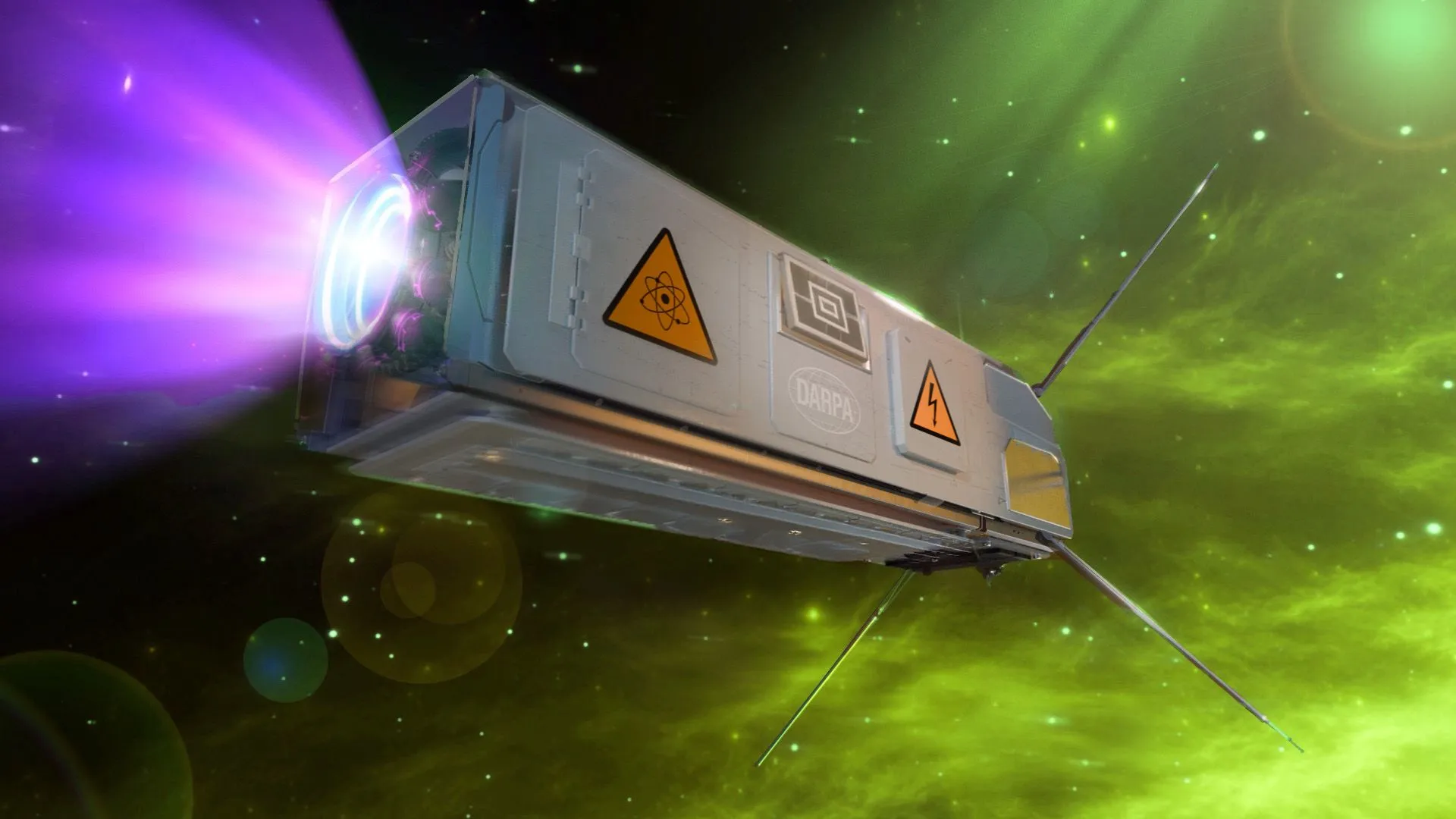
Morgan State-led SYMPHONEE project, funded by DARPA, aims to power space, defense, and remote systems for decades using radiovoltaic devices.
DARPA Fuels Bid to Turn Nuclear Waste into Decades-Long Power Source, Signaling Market Shift
The Defense Advanced Research Projects Agency has awarded a $3.37 million contract to a consortium led by Morgan State University, signaling a concerted push to transform Cold War-era nuclear waste into high-density, persistent electrical power systems. This investment into advanced radiovoltaic technology has significant implications for future long-duration missions across defense, space, and remote infrastructure, potentially unlocking new market segments for resilient energy solutions.
The project, dubbed SYMPHONEE, aims to develop a novel class of nuclear-powered energy devices capable of operating for decades without requiring refueling. This initiative falls under DARPA’s broader Rads to Watts program, which seeks to advance compact power systems with substantially higher energy output and extended operational lifespans compared to conventional batteries. The consortium includes key players such as Northrop Grumman, Pacific Northwest National Laboratory (PNNL), Project Omega, Applied Research Associates (ARA), and Widetronix, bringing together expertise in nuclear science, materials engineering, and system integration.
At its core, SYMPHONEE focuses on a radiovoltaic device that directly converts energy from radioactive decay into electricity, utilizing radioisotopes like Strontium-90. Unlike traditional power sources, these systems draw on the inherent energy of radioactive materials, promising sustained operation with minimal maintenance. This approach is particularly relevant for applications where frequent power replenishment or physical access is severely constrained, challenging the conventional wisdom that nuclear byproducts are solely a disposal burden rather than a potential strategic energy asset.
What It Means
This DARPA investment transcends a mere research grant; it represents a strategic pivot in how advanced economies might view and leverage legacy nuclear materials. For venture capital and deep tech investors, the development of kilowatt-level radiovoltaics offers a tantalizing, albeit long-horizon, opportunity to de-risk a critical technology segment. The ability to generate reliable power for years, even decades, has profound market implications well beyond military applications. Consider deep-sea exploration, where subsea sensors and autonomous vehicles could operate indefinitely without costly surface support, or remote terrestrial IoT networks in extreme environments, providing unprecedented data collection continuity.
The push for higher power density is critical here. Current battery technologies, while advancing rapidly, still face inherent limitations in energy density, especially for missions requiring power output in the kilowatt range over extended periods. Radiovoltaics could bridge this gap, offering power-to-weight ratios that enable entirely new capabilities for spacecraft propulsion, persistent aerial platforms, and resilient ground infrastructure. My read is that this initiative will spur adjacent innovations in radiation hardening for electronics and advanced thermal management, creating a fertile ground for further startup activity and specialized investment.
DARPA's initial $3.37 million contract to Morgan State and its partners serves as a foundational investment for the SYMPHONEE project, aiming to develop high-density radiovoltaic devices that could power systems for decades without refueling, indicating a critical early stage in de-risking a novel energy technology.
Background
The concept of converting radioactive decay into electricity is not new, with radioisotope thermoelectric generators (RTGs) having powered spacecraft like Voyager and Cassini for decades. However, RTGs are typically large, heavy, and less efficient than the radiovoltaic approach being pursued by SYMPHONEE. DARPA's Rads to Watts program specifically targets the advancement of compact, high-power-density systems that utilize semiconductor materials in direct contact with beta-emitting isotopes to improve both efficiency and radiation tolerance. This represents a significant technological leap from previous generations.
A key aspect of the SYMPHONEE project is its intention to utilize isotopes recovered from recycled nuclear fuel and existing legacy nuclear waste streams. This approach offers a dual benefit: it addresses the persistent challenge of nuclear waste management by transforming it into a valuable resource, and it provides a potentially abundant supply of fuel for these new power systems without the need for new uranium enrichment. Professor Michael Spencer, the technical lead at Morgan State University, emphasized this ambition, stating, “Our team is pushing the boundaries of radiovoltaic technology. By integrating advanced materials, device engineering, and nuclear science, we are laying the foundation for a new generation of persistent power systems.” Stafford Sheehan, CEO of Project Omega, reiterated this sentiment, noting, “Our mission is to turn what has historically been treated as waste into a strategic energy asset.” This shift from waste disposal to resource recovery could fundamentally alter the economics and public perception surrounding nuclear energy byproducts.
What Analysts Say
The project represents a bold, long-term bet on foundational science, characteristic of DARPA's mission to foster disruptive innovation. The conventional wisdom often pigeonholes nuclear technology into either large-scale power generation or weapons, overlooking its potential for compact, distributed applications. The strategic foresight in targeting existing waste streams is notable. This not only mitigates environmental and political hurdles associated with new fuel production but also creates a compelling economic narrative for what has historically been a significant liability.
While the technical challenges are immense, ranging from radiation tolerance of semiconductor materials to safe handling of isotopes and ensuring long-term device stability, the potential payoff is equally significant. Northrop Grumman’s involvement, leveraging its expertise in microelectronics and radiation effects, underscores the seriousness of the defense sector's interest in resilient, off-grid power. For venture capitalists eyeing the next wave of deep tech, the success of SYMPHONEE could unlock an entirely new category of energy infrastructure investments, particularly in areas requiring extreme reliability and operational longevity. The market for such persistent power sources, whether for lunar bases, quantum computing infrastructure in remote locales, or highly distributed sensor networks, will expand dramatically if these devices prove viable and scalable.
The immediate watch points for this program include the successful demonstration of improved radiation tolerance and efficiency at the Pacific Northwest National Laboratory, where much of the device development and testing will occur. Further funding announcements and public disclosure of specific power and energy density metrics against DARPA's targets will provide crucial indicators of progress. Beyond the technical milestones, observing how regulatory frameworks adapt to the deployment of such compact nuclear sources, particularly in civilian applications, will be critical. The long-term commercialization pathway, potentially through spin-off companies or licensing agreements, will ultimately dictate the broader market impact of turning waste into watts.
Frequently asked questions
What is DARPA's Rads to Watts program?
DARPA's Rads to Watts program aims to develop compact power systems with higher energy output and longer lifespans. It focuses on advancing radiovoltaic technology to create persistent power sources that can operate for decades without refueling, especially for demanding applications.
What is the SYMPHONEE project?
The SYMPHONEE project is a new initiative led by Morgan State University, funded by DARPA, to convert energy from radioactive decay directly into high-density electricity using radiovoltaic devices.
How do radiovoltaic devices work?
Radiovoltaic devices use radioisotopes like Strontium-90 to generate electricity from radioactive decay, combining advanced semiconductor materials with beta-emitting isotopes to create long-lasting power systems.
What are the main applications for this new technology?
The technology is designed for applications where batteries struggle, including space missions, underwater infrastructure, remote sensors, and military platforms, providing reliable, long-duration power.
Which organizations are involved in the SYMPHONEE project?
The project is led by Morgan State University, with partners including Northrop Grumman, Pacific Northwest National Laboratory (PNNL), Project Omega, Applied Research Associates (ARA), and Widetronix.
What are the benefits of using nuclear waste for power?
Using nuclear waste for power transforms materials once considered waste into valuable energy resources, offering a sustainable power source that reduces the need for frequent battery replacement and provides persistent energy for critical systems.