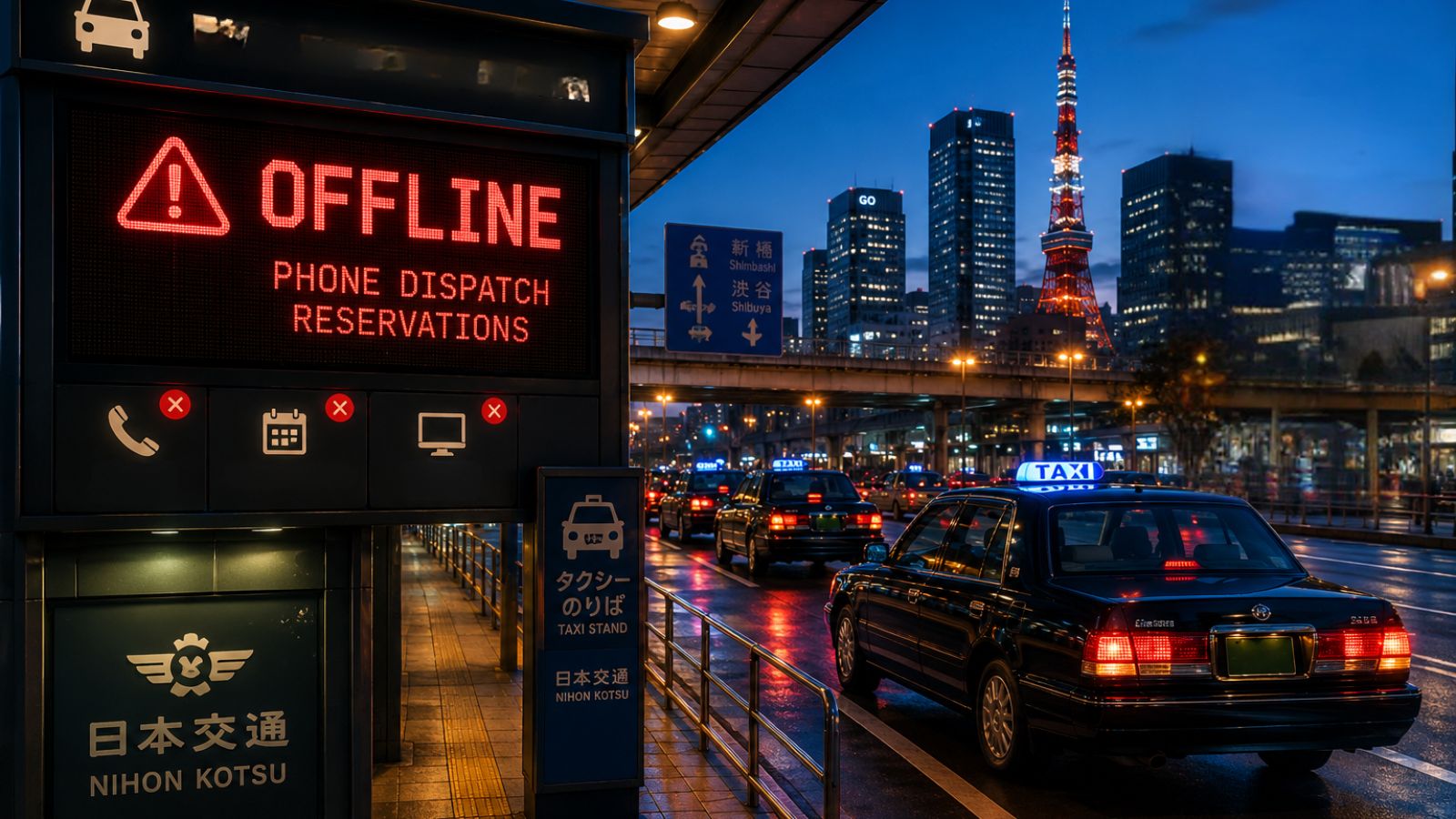
Nihon Kotsu, Japan's biggest taxi service, faces major disruption after a cyberattack, highlighting global surge in digital threats.
Nihon Kotsu Hit by Major Cyberattack, Shutting Down Systems Amid Global Surge in Digital Threats
Japan's largest taxi operator, Nihon Kotsu, has been forced to shut down some of its core systems following a cyberattack, causing significant disruption for both the company and its vast network of drivers and passengers. This incident underscores the increasing vulnerability of critical infrastructure worldwide to digital threats, impacting everyday services that millions rely on.
The company shut down affected servers and networks as a precautionary measure following a cyberattack. This swift action aims to contain any breach and prevent further compromise, but it inevitably brings operational challenges.
Nihon Kotsu operates a massive fleet of taxis across Japan, making it a dominant force in the country's transportation sector. The company confirmed that some of its systems, including those related to taxi operations and internal administrative functions, were impacted by the attack, though specific details of the breach remain under investigation.
The disruption means that while taxis are still largely operational on the streets, the digital infrastructure supporting them is compromised. This can translate into longer wait times for passengers, potential issues with app-based bookings, and complications for drivers regarding real-time dispatching, route optimization, and digital payment processing. It’s a stark illustration of how deeply integrated technology has become in modern urban mobility.
While the exact nature of the cyberattack — whether it was a ransomware demand, data theft, or an attempt to disrupt services — has not been publicly disclosed, the decision to actively shut down systems suggests a serious and potentially widespread compromise that required immediate, drastic measures to mitigate. Such actions are typically taken when there's a risk of data exfiltration or system-wide encryption.
Why is the transportation sector a prime target for cyberattacks?
The attack on Nihon Kotsu isn't an isolated event; it fits into a worrying global trend of cybercriminals increasingly targeting transportation and logistics companies. These sectors are ripe for disruption because of their critical role in daily life and the economy, coupled with the complex, often legacy, operational technology (OT) and information technology (IT) systems they employ. The convergence of these systems, intended to boost efficiency, inadvertently creates new attack surfaces that bad actors are quick to exploit.
For cybercriminals, the motivations are varied but clear: financial gain through ransomware, espionage to gain competitive advantage or state secrets, or even hacktivism aimed at causing widespread chaos. A successful attack can cripple operations, hold sensitive data hostage, or even endanger physical safety if critical control systems are affected, making these companies highly attractive targets. Incidents have ranged from major airlines experiencing booking system outages to global shipping giants facing ransomware attacks that brought international trade to a halt, demonstrating the wide-ranging impact.
The sheer volume of sensitive data handled by transportation operators — from passenger itineraries and personal information to logistical routes, financial records, and vehicle telemetry — makes them lucrative targets for data exfiltration. This stolen data can then be sold on dark web markets, used for identity theft, or leveraged in further sophisticated attacks. The pressure to restore vital services quickly often pushes affected companies to consider paying ransoms, further fueling the lucrative cybercrime ecosystem.
What are the broader market implications of such attacks?
The immediate aftermath of a cyberattack always involves frantic recovery efforts and significant financial strain, but the long-term market implications can be even more profound. For companies like Nihon Kotsu, there are the direct costs of remediation, which include extensive forensic investigations to understand the breach, system rebuilds, and the implementation of advanced security measures. This can run into millions of dollars, diverting resources from innovation or expansion.
Beyond these direct costs, there's potential revenue loss from disrupted services, which can be substantial for an operator of Nihon Kotsu’s size. There are also potential fines from regulatory bodies, especially if customer data is compromised under strict privacy laws. Perhaps most damaging is the often-irreversible impact on brand reputation and customer trust. Consumers and business partners expect reliable and secure services, and a major breach can erode that confidence, leading to customer churn and a competitive disadvantage.
Investors are also increasingly scrutinizing companies' cybersecurity postures, viewing robust defenses not just as an IT expense but as a critical component of enterprise risk management. A major breach can send stock prices tumbling and make future investment more challenging, as perceived risk increases. This dynamic pushes cybersecurity from being a back-office function to a boardroom priority, influencing valuation and strategic decisions.
This incident further highlights the growing economic burden of cybersecurity across all industries. Businesses are now forced to allocate substantial budgets not just to preventative measures, but also to comprehensive incident response and recovery plans. This shift impacts profitability and competitiveness, especially for companies that may have historically underinvested in their digital defenses. Moreover, the cyber insurance market is becoming more expensive and selective, as insurers grapple with the escalating frequency and severity of attacks, making it harder for companies to transfer risk.
For North American businesses, the Nihon Kotsu situation offers a powerful cautionary tale. The interconnectedness of global economies and digital infrastructure means that a breach anywhere can have ripple effects everywhere. Companies here are grappling with similar, if not identical, threats, from ransomware gangs disrupting critical healthcare systems and manufacturing facilities to sophisticated espionage operations targeting intellectual property and government agencies. The lessons from Japan are directly applicable: digital resilience is paramount.
The focus will now turn to Nihon Kotsu's recovery timeline and the level of transparency they provide regarding the extent of any data breach. How quickly they can restore full functionality and reassure their vast customer base and partners will be a key test of their crisis management capabilities. This incident will undoubtedly prompt other transportation companies, both in Japan and internationally, to review and bolster their own digital defenses and incident response strategies, understanding that the next attack could be just around the corner.
The ongoing battle against cybercriminals is a dynamic and relentless one, constantly evolving with new threats, vulnerabilities, and attack vectors. As more of our daily lives and essential services migrate onto digital platforms, the stakes for businesses, consumers, and governments continue to climb dramatically. This latest disruption in Japan serves as a potent reminder that cybersecurity is a shared, continuous responsibility, demanding proactive investment, skilled personnel, and constant vigilance to protect our increasingly digitized world.
Frequently asked questions
What happened to Japan's largest taxi operator?
Japan's largest taxi operator, Nihon Kotsu, suffered a cyberattack forcing them to shut down core systems. This disruption impacts their vast network of drivers and passengers, highlighting increasing digital vulnerabilities.
Which company was affected by the cyberattack?
The cyberattack primarily affected Nihon Kotsu, which is Japan's largest taxi operator in Japan.
What systems were shut down by the cyberattack?
Nihon Kotsu was forced to shut down some of its core systems, leading to significant operational disruption across its services.
When did the cyberattack on Nihon Kotsu occur?
The incident occurred recently, forcing systems offline amid a global surge in digital threats to companies worldwide.
What is the impact of the cyberattack on Nihon Kotsu?
The cyberattack has caused significant disruption for Nihon Kotsu, affecting its vast network of drivers and passengers due to system shutdowns.
Why are cyberattacks on companies like Nihon Kotsu increasing?
Cyberattacks are increasing globally due to a surge in digital threats, making critical infrastructure and large companies more vulnerable to sophisticated incidents.