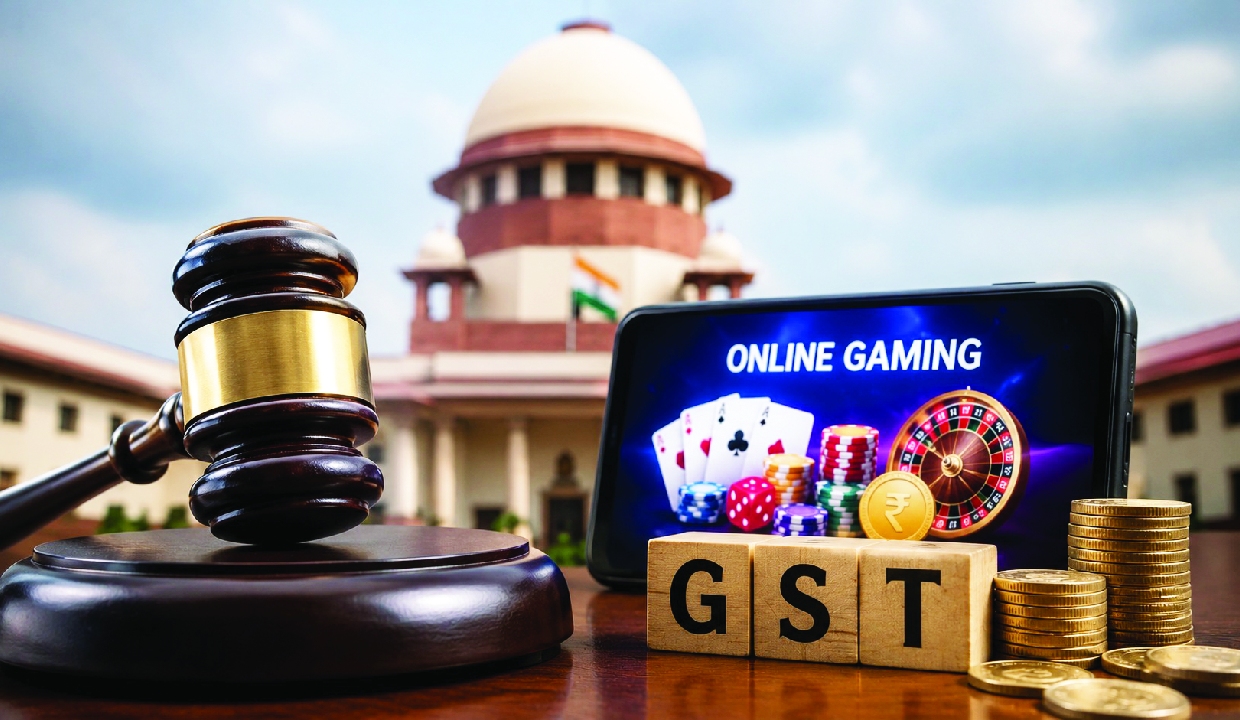
India's Supreme Court upholds a 28% GST on online gaming bets, sending shockwaves globally and reshaping investment strategies for major firms.
The global gaming industry is watching closely as India's Supreme Court has delivered a significant blow to online gaming firms, upholding a steep 28% Goods and Services Tax (GST) on the full value of bets. This isn't just a local tax hike; it's a decision with reverberations that could reshape investment strategies and market dynamics for gaming companies worldwide, including those eyeing the massive South Asian market.
Here's what happened: India's apex court essentially backed the government's stance to levy a 28% tax not just on the platform fees or commissions that gaming companies earn, but on the entire amount of money players put into online games. For an industry that thrives on high volumes and relatively thin margins, this is a seismic shift, with estimates suggesting a substantial potential cumulative tax blow.
This ruling comes after months of intense lobbying by India's burgeoning online gaming sector, which had hoped for a more favorable tax structure, akin to those seen in many Western markets where taxation applies to Gross Gaming Revenue (GGR) – the revenue retained by the platform after winnings are paid out. Instead, the court's decision effectively treats every bet placed as a taxable service, fundamentally altering the economic model for these businesses. Imagine a casino where the government takes a cut of every chip you buy, even before you've played a hand, rather than just a cut of the house's winnings. That's a simplified way to understand the magnitude of this change.
For North American investors and gaming giants, this development in India, one of the world's largest and fastest-growing internet markets, is a critical case study. It highlights the unpredictable regulatory landscape that can emerge in nascent digital economies, potentially dampening the enthusiasm for expansion into what was once considered a goldmine for user acquisition and revenue growth. Companies that have already invested heavily, or were planning to, now face a dramatically altered financial outlook.
What You Need to Know
The core of the issue lies in how "online gaming" is defined and taxed. Traditionally, many jurisdictions differentiate between "games of skill" and "games of chance," with varying tax treatments. In India, the distinction has been a legal and regulatory battleground for years. While the Supreme Court's ruling itself focuses on the GST application, it implicitly reinforces a broader governmental view that these platforms warrant significant taxation, partly driven by concerns over social impact and potential addiction, similar to debates around sports betting and online casinos in North America.
To grasp the economic impact, consider how online gaming platforms operate. Players deposit money, place bets, and if they win, they receive payouts. The platform makes money from a small commission on each bet or tournament entry, or by taking a percentage of the prize pool. By taxing the "full bet value," the government is taxing the entire pool of money circulating through the system, not just the company's actual earnings. This means that a significant portion of the money that would otherwise be recycled back into the game, either as winnings for other players or as operating capital for the platform, is now siphoned off as tax. This dramatically reduces the capital available for prize pools, marketing, and crucially, for innovation and expansion.
The industry had argued that this tax structure makes their business models unviable, pushing them to either pass on the cost to consumers through higher entry fees or lower payouts, or to scale back operations. Several startups in the Indian gaming space, often backed by global venture capital, were built on the premise of a more favorable tax regime. This represents a massive potential drain on an industry that was projected to grow exponentially, attracting both domestic and international talent and capital. For a North American tech investor, this is a stark reminder of regulatory risk, even in seemingly attractive emerging markets.
What Happens Next
The immediate fallout will likely see gaming firms scrambling to reassess their financial models and strategic plans. Some might be forced to significantly downsize, cut jobs, or even exit the market altogether. For a North American company looking to acquire or partner with an Indian gaming firm, the valuation landscape has now fundamentally shifted, with potential earnings significantly reduced by the new tax burden. This could lead to a cooling of investment interest from abroad, as the risk-reward ratio shifts unfavorably.
For consumers, the impact could manifest as higher costs to play, smaller prize pools, or a reduction in the variety and quality of games available. If companies struggle to remain profitable, their ability to invest in new game development, user experience improvements, or even robust customer support will diminish. This could stifle the very innovation that has made the online gaming sector so dynamic globally. From a North American perspective, this could mean fewer Indian-developed games making their way to international markets, or a general slowdown in cross-border collaborations within the gaming ecosystem.
The government, on its part, likely views this as a necessary step to generate revenue and perhaps exert greater control over a rapidly expanding, and at times controversial, industry. While the economic implications for the sector are dire, the state's focus might be on broader fiscal objectives or addressing societal concerns around gambling. This sets a precedent for how digital services, particularly those involving real-money transactions, might be taxed in other developing economies grappling with similar issues and looking for new revenue streams.
The long-term consequences could extend beyond India's borders. As regulatory environments for digital industries evolve globally, decisions made in one major market can often influence others. For North American policymakers and industry leaders, India's approach serves as a cautionary tale and a potential blueprint for how a government might choose to regulate and tax a burgeoning digital sector. It underscores the ongoing tension between fostering innovation and growth versus maximizing tax revenue and addressing social concerns.
Ultimately, this ruling presents a significant challenge for the Indian online gaming industry, forcing it to adapt to a much tougher economic reality. For the global gaming community, it's a stark reminder that market potential is always balanced by regulatory risk, and that even the most promising growth stories can be reshaped by government policy. Companies and investors will now be watching closely to see how the industry responds and whether innovation can still thrive under such a substantial tax burden, or if it will simply drive talent and capital to more favorable jurisdictions.
Frequently asked questions
What is the recent Supreme Court decision regarding online gaming in India?
The India Supreme Court recently upheld a 28% Goods and Services Tax (GST) on the full value of bets placed in online gaming. This decision confirms a prior ruling and represents a significant financial impact on gaming firms operating or planning to operate in India.
How does the 28% GST impact online gaming companies?
It significantly increases their tax burden, affecting profitability and potentially leading to a reassessment of business models and investment strategies in the Indian market.
Will this decision affect global gaming companies?
Yes, it has global reverberations, influencing investment decisions and market dynamics for international gaming companies eyeing India's large consumer base.
What is the 'full value of bets' in this context?
It means the tax is applied to the entire amount wagered by a player, not just the platform's commission or gross gaming revenue.
Why did the Supreme Court uphold this tax?
The court's reasoning aligns with the government's stance on taxing the full transaction value in online gaming, classifying it as a game of chance for tax purposes.
What are the potential long-term effects on India's gaming market?
It could slow the growth of the legitimate online gaming sector, deter foreign investment, and potentially shift some activities to unregulated markets.