Deep-tech pioneer Wakeline has announced the successful closing of a €2.1 million pre-seed funding round. The investment was led by Aachen-based TechVision Fonds (TVF), with critical participation from Cologne-based venture capital investor neoteq ventures.
Founded in 2025, the Düsseldorf-based startup plans to use the capital injection to accelerate the development of its proprietary, continuously adaptive artificial intelligence platform. The fresh funding will also drive targeted team expansion and intensify go-to-market strategies across key European industrial sectors. Wakeline is tackling one of the most significant architectural limitations in modern AI development: the inability of algorithms to learn autonomously during live operation.
Dismantling the "Static Model" Flaw in Current AI Architectures
The global artificial intelligence landscape remains heavily constrained by a single, monolithic design paradigm. Whether powered by large language models or specialized prediction engines, current AI architectures operate on a strict two-phase cycle: models are trained extensively on massive historical datasets, frozen into place, deployed to production environments, and then manually updated at fixed intervals.
This static approach introduces a severe structural flaw. Because environments fluctuate in real time, traditional machine learning models are inherently out-of-date the moment they encounter live data. Wakeline addresses this gap through a biologically inspired architecture that eliminates the artificial barrier between training and inference. By interweaving training directly into the live execution layer, Wakeline’s technology turns learning into a real-time, fluid process that remains permanently connected to its operating environment.
Furthermore, Wakeline has engineered its platform to function completely independently of proprietary US models or hyper-scale cloud infrastructures (hyperscalers). This explicit design choice establishes a self-reliant technical framework, directly supporting the growing corporate demand for technological sovereignty within the European Union.
High-Stakes Applications: Energy, Industry, and Neurology
The commercial value of a continuously adaptive AI system scales rapidly alongside the volatility of the environment in which it operates. Wakeline is focusing its initial commercial rollouts on highly dynamic use cases where traditional, static models fail to maintain predictive accuracy:
1. Real-Time European Energy Market Forecasting
The company’s first production application—initially introduced in beta as Market Edge—provides highly accurate pricing intelligence for European Battery Energy Storage System (BESS) operators. Because renewable energy grids and power markets experience constant, unpredictable shifts, Wakeline's models adapt continuously to structural market changes without requiring periodic, disruptive retraining cycles.
2. Autonomous Industrial Manufacturing
In automated factory environments, machinery and production parameters constantly drift due to mechanical wear and tear or material variations. Wakeline’s live learning loops monitor factory floor components to predict operational degradation, optimize assembly rhythms, and reduce unplanned downtime in real time.
3. Early Detection in Neurological Research
Beyond industrial settings, Wakeline's adaptive architecture is demonstrating immense promise in medical data processing. The continuous learning engine is currently being utilized in advanced neurological studies, specifically focused on identifying subtle, evolving biomarkers for the early detection of Parkinson’s disease.
“Most AI investments today are bets on better models within the same architecture. Wakeline questions the architecture itself, and that is the rarer and more interesting approach. Continuously adaptive systems solve a problem the industry has simply accepted until now: that AI is always one step behind reality.”
— Dr. Ansgar Schleicher, Managing Partner at TechVision Fonds
Core Corporate Profiles and Financing Parameters
Strategic Parameter | Wakeline Ecosystem Overview | Supporting Venture Capital Base |
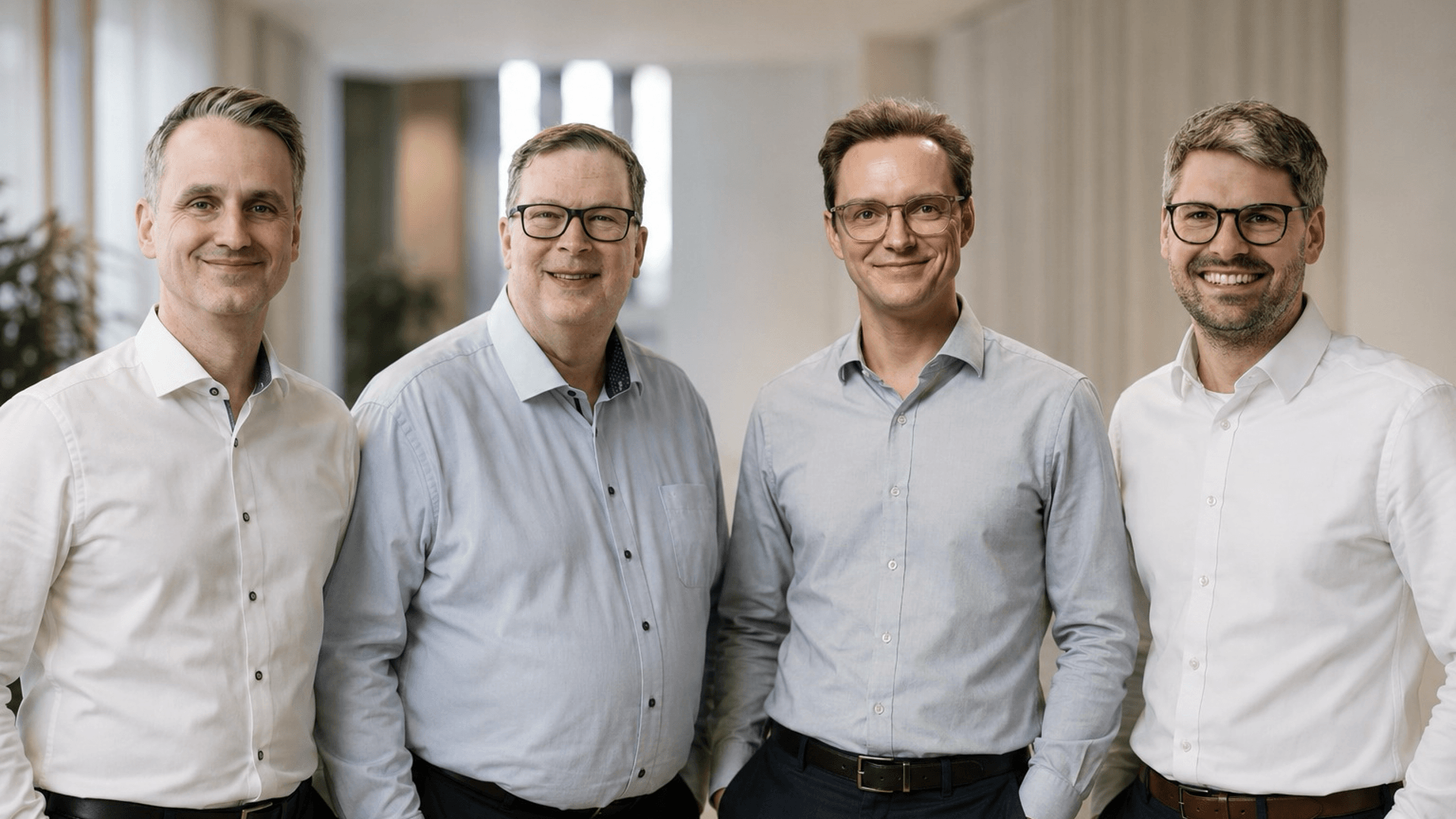
Founding Team | Dr. Tim Gülke, Jan Böggering, Simon Sprünker, Dr. Merten Tiedemann | Led by TechVision Fonds (TVF) & neoteq ventures |
Capital Allocation | €2.1 Million Pre-Seed Capitalization | Sourced from NRW.BANK, Savings Banks, & Entrepreneurs |
Geographic Hub | Düsseldorf, North Rhine-Westphalia (NRW) | Aachen and Cologne Investor Network |
Primary Industry Focus | BESS Energy Markets, Smart Industry, Healthcare | Early-stage Technology Startups (Pre-Seed to Series A) |
Core Technical Moat | Biologically Inspired Continual Learning Architecture | Access to 150+ Industrial Partners via S-UBG Group |
Securing Europe’s Next-Generation AI Infrastructure
By anchoring its operations in Düsseldorf, Wakeline directly leverages the industrial density of the North Rhine-Westphalia region. The backing from TVF and neoteq ventures provides the startup with a deeply integrated local network, bridging the gap between deep-tech innovation and legacy enterprise buyers.
As regulatory frameworks like the European AI Act push corporations toward greater transparency and data sovereignty, Wakeline’s decentralized, non-hyperscaler reliant software design offers a distinct compliance advantage for regional utility companies and manufacturers alike.
“What convinced us was the combination of scientific substance and a team that knows exactly which industrial problem it wants to solve first. We’re investing because we believe Europe needs its own architectures for the next generation of AI.”
— Jan Jeske, Partner at neoteq ventures
With its core architecture validated through initial energy market deployments and a dedicated leadership team combining extensive doctoral-level research with industrial execution, Wakeline's pre-seed milestone highlights a structural shift in venture funding—moving away from generic wrapper applications toward foundational deep-tech infrastructure.