Meta's new AI image generator, Muse Image, allows users to manipulate public Instagram photos, raising significant privacy concerns and drawing comparisons to past data controversies.
Meta has just rolled out Muse Image, its latest artificial intelligence image generator, and the launch is already generating significant discussion among users, particularly regarding privacy. The new tool, developed by Meta Superintelligence Labs, allows for creative image generation but also introduces a controversial feature that lets users manipulate public Instagram photos.
Here's the core of the concern: Muse Image enables users to take images from any public Instagram profile and use AI to modify them, without explicit consent or notification to the original poster. This capability has quickly raised red flags for many who see it as a potential invasion of privacy and a new frontier for digital manipulation.
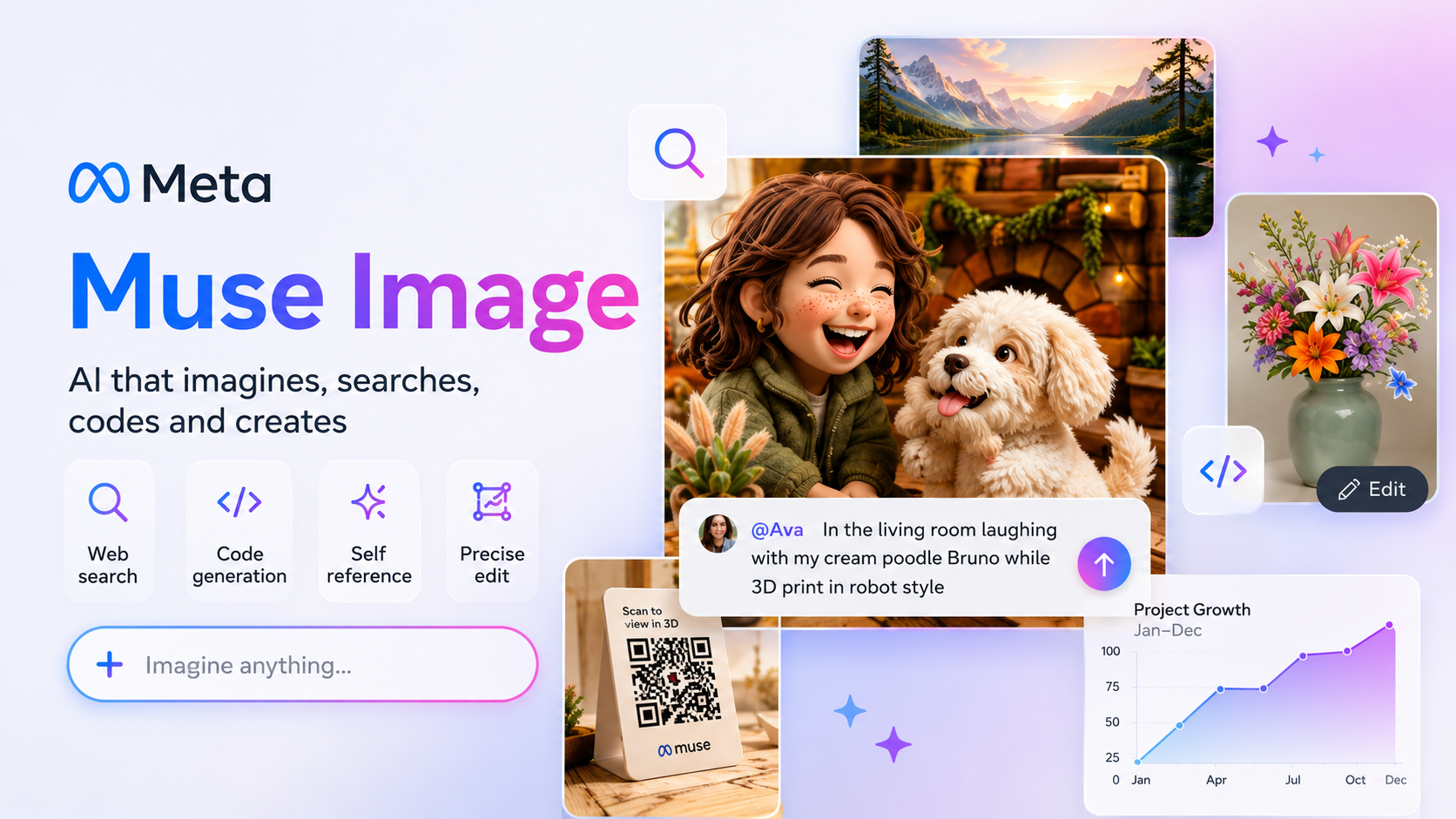
Code-named "Mango" during its development, Muse Image is now freely available through the Meta AI app, and integrated into Instagram Stories and WhatsApp, making it accessible to billions. Beyond the contentious photo manipulation feature, the tool offers a range of creative functions, from generating whimsical, cartoonish images to providing "presets" — prefabricated prompts designed to spark users' imaginations.
The applications extend beyond casual content creation. Muse Image allows for prompt-based image editing, which means users can generate specific visuals to share across Meta's vast ecosystem of apps. Imagine asking the AI to place you in front of a historical landmark, remove an unwanted person from a photo, or even design a functional QR code using text prompts.
Another practical, less controversial use case highlighted by Meta is its integration with advertising and e-commerce. Businesses and individuals can leverage Muse Image to create custom advertisements or visualize interior design concepts, such as seeing how a secondhand couch might look in their garage. This latter function is designed to connect seamlessly with Facebook Marketplace, Meta's popular platform for buying and selling used goods.
What's the core privacy issue with Meta's new AI?
The controversy surrounding Muse Image primarily stems from its default settings, which allow public Instagram content to be used for AI manipulation without notification. Critics argue this is a "privacy landmine," as it means anyone with a public profile could have their likeness or images altered and re-shared in ways they didn't authorize or foresee.
Meta's policy acknowledges this, stating that "people may be able to create content with your Instagram content using AI features at Meta" and explicitly notes that "you will not be notified about content created using AI features at Meta." While Meta asserts users "have control" through opt-out settings, the very nature of an opt-out default for such a sensitive feature raises questions about user agency and informed consent.
This approach echoes a familiar pattern in Meta's history, where user data has been broadly utilized unless actively disabled. My read is that this default setting, while perhaps intended to promote widespread adoption and ease of use, inadvertently places the burden of privacy protection squarely on the user rather than on the platform.
The company's past struggles with data privacy, notably the Cambridge Analytica scandal and the eventual shutdown of its facial recognition system in 2021, add a layer of skepticism for many users. The $5 billion FTC fine in 2019 following revelations of improper data harvesting highlighted how deeply user trust can be eroded when data practices are perceived as opaque or exploitative.
Shutting down the automatic facial recognition system was a direct response to mounting lawsuits and regulatory pressure over biometric data collection. The Muse Image feature, with its opt-out consent for public photos, fits into a trend of broad data utilization that users and regulators have repeatedly flagged as problematic.
How does Muse Image fit into Meta's wider AI ambitions?
The launch of Muse Image is not an isolated event but a clear indicator of Meta's aggressive push into the generative AI space, a strategic pivot that CEO Mark Zuckerberg has heavily invested in. Meta Superintelligence Labs, the dedicated unit behind Muse, signifies the company's commitment to developing cutting-edge AI capabilities to compete with industry giants like OpenAI and Google.
This investment is massive; Meta is on track to spend a substantial amount on AI infrastructure this year, signaling its intent to embed AI across its entire product ecosystem. Muse Image is just one piece of a broader AI strategy that has seen Meta release a suite of AI-powered tools and services over the past year, including an AI assistant called Creator and Pocket, an app designed to "vibe-code" video games.
The company's approach seems to be one of rapid iteration and widespread deployment, aiming to make AI features ubiquitous within its apps. While Muse Image is currently free for "everyday creation," Meta plans to introduce subscription tiers for users who exceed a certain usage limit, indicating a clear monetization strategy for its AI advancements.
The development of Muse Video, an AI video generator, is already underway, further underscoring Meta's ambition to cover all forms of media creation with its AI models. This comprehensive strategy suggests Meta is not just dabbling in AI but aiming for a leadership position, integrating these capabilities deeply into the daily digital lives of its billions of users.
What strikes me here is the dual challenge Meta faces: innovating at the blistering pace of the AI industry while simultaneously rebuilding and maintaining user trust, especially in light of its past privacy issues. The company needs to demonstrate that its powerful new AI tools can enhance user experience without compromising fundamental privacy rights.
The future success of Muse Image and Meta's broader AI initiatives will likely hinge on how it navigates this delicate balance. As generative AI becomes more sophisticated and integrated into our digital interactions, the conversation around data usage, consent, and the ethical implications of AI will only intensify.
Regulators, privacy advocates, and users will be closely watching how Meta addresses these concerns, especially as AI-generated content becomes indistinguishable from reality. The company's response to the current backlash and its willingness to adapt its privacy defaults could set a precedent for how other tech giants approach the deployment of their own powerful AI tools in the years to come.
Frequently asked questions
What is Meta Muse Image?
Meta Muse Image is a new AI image generator developed by Meta Superintelligence Labs. It allows users to create various images, from cartoonish to custom ads, and even manipulate existing photos, integrating with Meta's apps like Instagram and WhatsApp.
Where can I use Meta Muse Image?
You can access Muse Image for free through the Meta AI app, Instagram Stories, and WhatsApp.
What is the controversy surrounding Muse Image?
The controversy stems from a feature allowing users to manipulate public Instagram photos using AI, raising significant privacy concerns about consent and data usage, reminiscent of Meta's past privacy issues.
Can I prevent others from using my photos with Muse Image?
Yes, Meta states users have control and can disable this co-option of their pictures through settings, as it is opt-out by default.
What other features does Muse Image offer?
Beyond controversial photo manipulation, Muse offers presets for inspiration, custom ad creation, interior decorating ideas for Facebook Marketplace, and prompt-based image editing for various creative applications.
Does Meta have other AI initiatives in development?
Yes, Muse Video (an AI video generator) is already in development, and Meta has launched other AI apps like Creator and Pocket, while continuing to invest heavily in AI infrastructure.