Viewers are abandoning shows, signaling Netflix's binge-watching era is over. TikTok and YouTube are the new competition, forcing Netflix to reinvent its strategy.
Netflix invented binge-watching. Now, its defining innovation is becoming a relic.
The era of endless Netflix binge-watching might be quietly winding down, with new data suggesting viewers are increasingly abandoning shows before they even hit a second season. This shift isn't just a minor programming hiccup; it signals a fundamental change in how people consume entertainment, pushing Netflix's core model to its limits. For everyday viewers, this means a potential overhaul in how their favorite streaming service operates and what kind of content it prioritizes. Here's why this matters: Netflix's once-revolutionary strategy of dropping entire seasons at once, which helped it dominate traditional television, is struggling to keep pace with the hyper-fragmented, instant-gratification landscape of today's digital media. The competition has moved beyond cable to platforms like TikTok and YouTube, which offer endless, bite-sized content on demand. Back in February 2013, when Netflix unleashed the full season of "House of Cards," it redefined television consumption. Viewers could ditch weekly schedules and commercials, immersing themselves in stories for hours and building deep connections with characters and plots in record time. This ad-free, on-demand approach was a potent weapon against linear TV, allowing Netflix to build a loyal subscriber base that craved uninterrupted storytelling. This strategy was incredibly effective in the fight against traditional broadcast and cable. By June 2025, Nielsen data confirmed a significant milestone: streaming, pioneered by Netflix, had officially eclipsed traditional TV viewing in North America. Netflix had won the original battle, but as often happens in tech, winning one war can leave you vulnerable to the next. What Netflix failed to anticipate, or perhaps was too slow to adapt to, was that its primary competition would not remain the TV of old. Instead, a new generation of video apps, designed for entirely different consumption patterns, began to capture the precious attention spans Netflix had fought so hard to win.
Why Netflix's Binge Model is Struggling
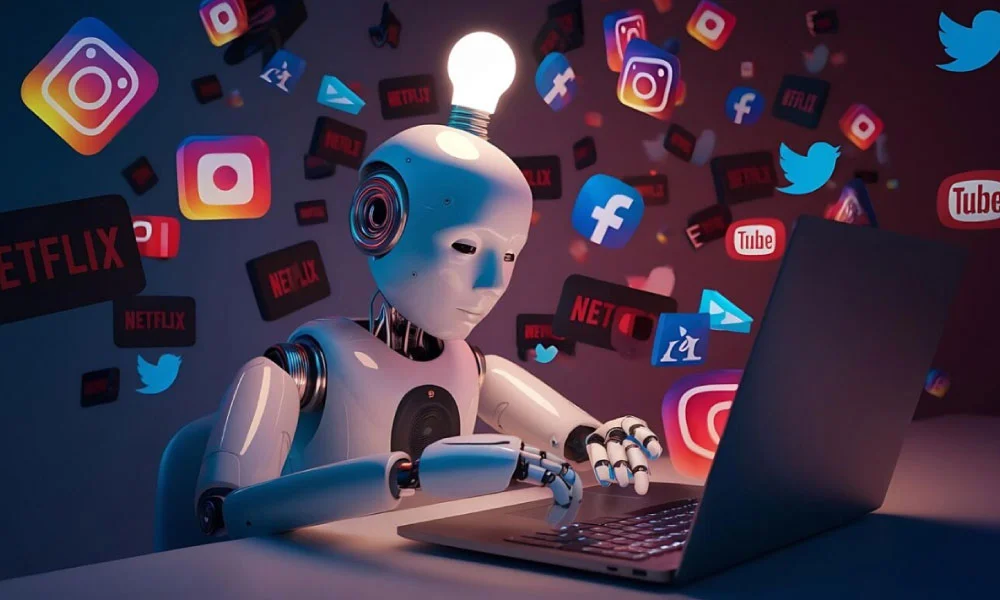
A buzzy Bloomberg report, citing internal Netflix data, highlights a growing problem: a significant number of viewers are bailing on popular shows before getting to a second season. The reasons are multifold, ranging from Netflix's frequent show cancellations that leave viewers wary of investing time, to lengthy waits between seasons, and a perception that much of its content is designed more for algorithmic appeal than for artistic depth. This creates a disincentivizing cycle where viewers are less willing to commit to a multi-season arc. The real shift, however, lies in where viewers are spending their time when they have a few hours to kill. It's no longer just about choosing between Netflix and a cable channel. Platforms like TikTok, YouTube, and Instagram Reels offer an endless, free supply of short-form entertainment that is instantly gratifying and constantly refreshed. This new landscape prioritizes rapid consumption and continuous discovery over deep, prolonged engagement with a single narrative. My read is that the "binge" model, while technologically innovative for its time, eventually became a content strategy that prioritized volume and initial hook over sustained engagement. This worked brilliantly when the alternative was appointment viewing, but it struggles against an ecosystem where individual creators and algorithms offer a personalized, never-ending stream of novel content. This isn't just about attention spans shrinking; it's about a complete re-architecture of how content is produced, distributed, and consumed on a daily basis. Market data underscores this existential threat. According to eMarketer analysts, by 2024, TikTok was already nearing Netflix in terms of daily time spent by U.S. adults, with Netflix at 62.1 minutes and TikTok at 58.4 minutes. Globally, the Financial Times reported in 2024 that TikTok users were spending an average of 95 minutes per day on the app, marking the highest engagement rate among major social networks. YouTube presents an even more direct challenge, offering a mix of both short and longer-form content. A report released this year by Digital i indicated that YouTube surpassed Netflix in average daily viewing for the first time in 2025, with users spending 99.1 minutes daily on YouTube compared to Netflix’s 93.4 minutes. While these market reports use differing methodologies and demographics, their directional consistency clearly indicates that YouTube and apps like TikTok are Netflix’s true competition, not the traditional TV networks it so successfully disrupted. Netflix has, to its credit, acknowledged this mounting pressure. In April, the company rolled out a product redesign that incorporated a TikTok-like feed, aiming to help users discover content more fluidly. However, this feature is still largely pitched as a way to find something to watch within its existing library, rather than being the primary viewing experience itself. This distinction is critical; many users with dopamine-drained attention spans are seeking out content that *is* the feed, not just a gateway to it.
Netflix popularized the binge-watching model, but new data confirms its defining innovation has reached an evolutionary wall. At StartupNews.fyi, we view this not just as a content problem, but as an fundamental shift in user behavior toward low-commitment, dopamine-dense entertainment.With platforms like YouTube pulling ahead in average daily viewing time and microdrama apps like ReelShort experiencing explosive revenue growth, the friction of committing to a multi-season arc is driving a steep decline in second-season viewership. Netflix’s rollout of a vertical, TikTok-inspired discovery feed on mobile proves it understands the threat. For the media-tech startup ecosystem, this creates an unprecedented frontier. The future belongs to builders of scalable, modular storytelling tech, personalized short-form algorithmic distribution, and interactive monetization loops. Legacy streaming has officially been disrupted by the creator economy; the next major entertainment powerhouse will be built on micro-engagements, not mega-budgets.
This shift is particularly evident in the burgeoning market for microdrama apps. These platforms offer serialized storylines designed to be consumed in minutes, catering directly to the desire for quick, episodic entertainment that requires minimal commitment. App intelligence firm Appfigures reported that ReelShort, a top microdrama app, saw roughly $1.2 billion in gross consumer spending in 2025, a massive 119% increase from 2024. Another leading app, DramaBox, generated $276 million in gross consumer spending last year, more than doubling its 2024 figures. Even TikTok has recognized this trend, launching its own microdrama app to test the market's appetite for this format.
What Netflix is Doing and What Comes Next
So, where does this leave Netflix, a company whose entire brand identity was built on the premise of full seasons dropped at once for rapid consumption? The company finds itself in a strategic bind, caught between the prestige television it uses to attract subscribers and the snackable, immediate content that now dominates daily screen time. The challenge is no longer just about producing great shows, but about fundamentally rethinking how those shows are structured and delivered for a modern audience. Netflix will likely need to re-evaluate its greenlighting, production, and release strategies for what it considers a "TV show." This doesn't necessarily mean a complete pivot to short-form content, but it does require a deep understanding of how people want to stream in 2026. Viewers may no longer be willing to commit hours and weeks to a multi-season epic, preferring content that feels more "finishable," akin to a self-contained YouTube series or a creator-driven arc on TikTok. A straightforward fix could involve Netflix prioritizing single-season shows, often known as miniseries or limited series. This model allows viewers to engage with a complete story without the anxiety of a cliffhanger ending or the uncertainty of renewal. It provides a satisfying, self-contained experience that aligns with a desire for less commitment. Alternatively, Netflix could experiment with breaking up shows into smaller, more digestible chunks, reminiscent of the Quibi model that was perhaps ahead of its time. Jeffrey Katzenberg's startup had gambled on the idea that people would gravitate towards TV content designed for shorter viewing sessions. While Quibi ultimately failed, largely due to the pandemic suddenly giving everyone ample time to watch long-form content, the core idea of modular storytelling remains highly relevant in today's mobile-first world. Many of Netflix’s existing lightweight competition shows, such as "Nailed It," "Is It Cake?," or "Squid Game: The Challenge," could easily be revamped for shorter viewing sessions. Furthermore, Netflix, with its vast production resources, could undoubtedly produce higher-quality microdramas than many of the offerings currently on the market, which are often characterized by amateur acting and outlandish storylines. To generate sustained interest in its higher-quality content, a selective shift to a weekly release model for some shows could also prove effective. Netflix has already demonstrated this works in specific cases, such as its reality show "Love Is Blind," where weekly episode drops create "watercooler" conversation as everyone watches new installments around the same time. Faster consumption models, like Peacock's "Love Island USA" with its near-daily episodes, illustrate how a steady drip of content can build significant engagement. However, instead of fully embracing diverse short-form experiments or strategically varied release schedules, Netflix has recently dabbled in other areas. Its expansion into podcasts has reportedly not gained significant traction, and its investments in live content have been a mixed bag. While live sports have generally performed well, its recent entry into live reality competition with "Star Search" was canceled despite innovative real-time voting features, indicating more work is needed to find the right formula. Bloomberg's report framed the problem as Netflix's failure to cultivate loyal viewers for second seasons, but the underlying issue facing the streamer is far more profound. Netflix must determine if its core focus should still be competing with the traditional TV model of long-running, multi-season shows, or if it needs to pivot towards entertainment projects with tighter storytelling arcs and quicker resolutions. To navigate this complex landscape—balancing the desires of viewers who have abandoned cable with those who simply want something better than TikTok—Netflix finds itself needing to reinvent what television means all over again. ```
Frequently asked questions
Why is Netflix's binge-watching model becoming outdated?
Netflix's binge model is struggling because viewers increasingly abandon shows before the second season, facing competition from short-form video apps like TikTok and YouTube, which offer quicker, more digestible entertainment experiences.
Who is Netflix's main competition now?
Netflix's main competition has shifted from traditional TV to video apps like TikTok, YouTube, Reels, and various microdrama apps, which capture significant user attention with their endless supply of short-form content.
How much time do people spend on TikTok compared to Netflix?
In 2024, U.S. adults spent an average of 62.1 minutes/day on Netflix and 58.4 minutes/day on TikTok. Globally, TikTok users spent 95 minutes/day, surpassing Netflix in engagement.
What are "microdrama apps" and why are they a threat to Netflix?
Microdrama apps offer serialized storylines consumable in minutes. Apps like ReelShort and DramaBox are generating hundreds of millions in consumer spending, appealing to users with short attention spans seeking quick entertainment.
What solutions could Netflix implement to adapt?
Netflix could prioritize miniseries, break up shows into shorter chunks (like Quibi's model), or experiment with weekly release schedules for certain high-quality content to encourage engagement and completion.
Has Netflix acknowledged this shift in consumer behavior?
Yes, Netflix introduced a TikTok-like feed in April, but it's primarily for discovery rather than direct consumption, suggesting they recognize the trend but may still be missing what users truly want.