WhatsApp's new username feature, intended for privacy, sparks major impersonation concerns, drawing scrutiny from Indian regulators over fraud risks.
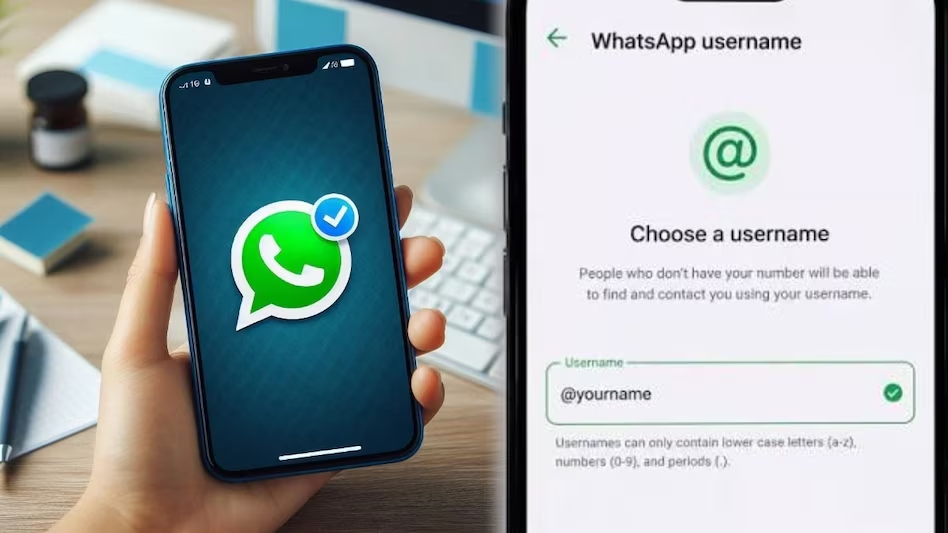
WhatsApp's recent move to introduce usernames, allowing individuals to connect via a handle rather than their phone number, is a significant shift for the messaging giant. While Meta, WhatsApp's parent company, frames this as an enhancement to user privacy, the rollout has swiftly triggered substantial concerns regarding impersonation, particularly in India, the application's largest market with more than 500 million users.
The transition from phone numbers as the primary identifier to platform-managed usernames marks a fundamental change in how users identify and interact on WhatsApp. This strategic pivot, designed to offer greater privacy by obscuring personal phone numbers, has paradoxically opened new avenues for malicious actors, prompting immediate scrutiny from security experts and regulatory bodies.
WhatsApp boasts over 500 million users in India, making it the app's largest market globally. This user base size amplifies the potential impact of any security vulnerability.
Early Red Flags and Unclaimed Identities
Initial testing of the username reservation system by TechCrunch revealed a landscape ripe for potential impersonation. Usernames closely mirroring prominent public figures, government entities, and major corporations were found to be readily available for reservation. Examples included "indiamodi," "shahrukh.actor," "teamamitabh," "ambanijio," and "rbi_verify." These handles directly reference high-profile Indian personalities and institutions, including Prime Minister Narendra Modi, Bollywood actors Shah Rukh Khan and Amitabh Bachchan, Mukesh Ambani's telecom venture Jio, and the Reserve Bank of India.
The availability of such high-value, identifiable usernames highlights a critical gap in the proactive protection mechanisms. This situation is further underscored by the experience of Binance founder Changpeng Zhao, who publicly stated on X that he was unable to reserve "cz_binance," a handle he already utilizes on other platforms, suggesting inconsistencies or limitations in the reservation process.
Meta, when questioned about its protective measures against impersonation, indicated that it reserves usernames for public figures, government entities, and "some variations" of these names to prevent illegitimate claims. However, the company did not provide a clear explanation for the criteria used to determine which lookalike usernames are proactively reserved and which are not. This lack of transparency around the reservation logic fuels the apprehension surrounding the feature's security implications.
WhatsApp's username rollout aims to enhance user privacy by replacing phone numbers with handles.
Immediate concerns have arisen over impersonation risks, particularly in India.
Early testing revealed prominent usernames like "indiamodi" and "rbi_verify" were available.
Meta states it reserves names for public figures but did not clarify its reservation criteria.
Regulatory Backlash in India
The concerns over increased impersonation risks have not gone unnoticed by regulators, particularly in India, a region frequently targeted by sophisticated cyber fraud schemes. These schemes often exploit messaging platforms to impersonate law enforcement, banking institutions, and government officials, leading to widespread financial and personal harm.
In response to the rollout, India's Ministry of Electronics and Information Technology (MeitY) issued a notice to WhatsApp. This notice, reviewed by TechCrunch, articulates severe apprehension that the username feature could "materially increase the incidence of online fraud, phishing, digital arrest scams and impersonation attacks." The ministry's primary concern stems from the ability of malicious actors to contact users without revealing their own phone numbers, thereby increasing anonymity and making fraud more difficult to trace.
MeitY further warned that the feature could facilitate the impersonation of "individuals, public authorities, financial institutions, and government agencies" through usernames that closely resemble genuine identities. The ministry's directive was explicit: it demanded an explanation from WhatsApp as to why regulatory action should not be initiated under India’s IT laws. Furthermore, it explicitly requested that WhatsApp halt the broader rollout of the feature until comprehensive consultations were concluded. This strong stance from a major global regulator underscores the severity of the perceived risks.
Meta's Stated Rationale and Implementation Challenges
The introduction of usernames on WhatsApp represents a strategic evolution for Meta, aimed at modernizing the user experience and aligning with contemporary digital identity trends. The core rationale often revolves around enhancing user privacy by decoupling identity from a personal phone number, thereby offering a more secure and flexible way to interact. This move also broadens the platform's utility, potentially attracting new user segments and use cases where phone number sharing is undesirable or impractical.
The inherent tension between rapid innovation and the deployment of robust security safeguards poses a challenge for platform developers. The pressure to roll out new features to maintain competitive edge and user engagement can sometimes lead to an underestimation of potential vulnerabilities, especially at scale. Proactively identifying and reserving every conceivable variation of a high-profile name or institution across linguistic and cultural contexts is an immense technical and logistical undertaking. While Meta has stated it reserves some names, the immediate availability of critical handles suggests the complexity of this task.
Business Implications and Potential Risks
The introduction of usernames presents a complex risk-reward analysis for the platform. On one hand, the feature promises to boost user engagement and potentially attract new users by offering a more private and flexible communication method, which could translate into sustained growth. On the other hand, the immediate regulatory pushback and widespread concerns about fraud represent substantial downside risks.
Increased instances of impersonation and cyber fraud could erode user trust, leading to user attrition or a slowdown in adoption. Regulatory intervention, such as that initiated by MeitY, carries the threat of fines, operational restrictions, and mandatory design changes that could be costly and delay feature deployment. The reputational damage from being perceived as a platform that facilitates fraud can have long-lasting effects on brand equity and market confidence. These factors necessitate a careful weighing of potential growth against the financial and reputational costs associated with security lapses and regulatory non-compliance.
User Experience: Balancing Privacy and Impersonation Risk
The introduction of usernames presents both convenience and heightened risk for users. The appeal of a username is clear: it offers a more discreet way to connect with new contacts without divulging a personal phone number, enhancing privacy for legitimate interactions. This is a significant benefit, particularly for those who guard their personal contact information closely.
However, this convenience comes at a potentially significant cost. The shift from phone numbers, which often have a degree of inherent verification, to easily creatable usernames, drastically lowers the barrier for impersonation. Users now face an added burden of verifying the authenticity of a contact, particularly if the username closely resembles a known entity. The threat of phishing attacks, "digital arrest" scams, and other forms of fraud where bad actors pose as legitimate organizations or individuals is amplified. User vigilance becomes paramount, as the platform's initial safeguards appear to be insufficient, placing the onus of identification and verification largely on the individual.
Technical Challenges and Regulatory Scrutiny
The WhatsApp username rollout highlights several critical technical challenges. Managing a global namespace for usernames, especially one that must account for common names, public figures, and institutions across diverse languages and cultures, is immense. Meta's approach of reserving "some variations" highlights the difficulty in comprehensively addressing this. The absence of a robust, proactive system to identify and block problematic usernames from the outset suggests either a rushed deployment or an underestimation of the scale of potential abuse.
The regulatory response, particularly from India, serves as a significant bellwether for how other global jurisdictions might react. India's history with cyber fraud on messaging platforms positions its regulators to be particularly sensitive and proactive. The demand for an explanation and the call to halt the rollout underscore a growing global trend where technology companies are being held to higher standards of accountability for the societal impact of their platforms. How Meta responds to these demands will set a precedent for future feature rollouts and regulatory engagements globally. The effectiveness of its future anti-impersonation measures and its ability to work constructively with regulators will be key indicators of its long-term success in integrating this new identity layer.
Broader Context and Future Considerations
While the immediate and most vocal concerns have emerged from India, the challenges posed by WhatsApp usernames are not unique to the subcontinent. Impersonation and cyber fraud are global phenomena, and the vulnerabilities exposed in India could easily manifest in other markets as the feature rolls out more broadly. Platforms like X (formerly Twitter) and Instagram have long grappled with impersonation, often relying on verification badges and user reporting. WhatsApp's entry into username-based identification presents an opportunity to learn from these predecessors and implement robust solutions.
The platform faces a delicate balancing act to uphold its commitment to user privacy and innovation while simultaneously addressing the security risks introduced by this new feature. This will require a comprehensive strategy for username reservation and clearer guidelines for reporting and resolving impersonation complaints. Engaging with regulators will also be crucial for building trust and ensuring the long-term viability and security of this platform evolution.
Frequently asked questions
What is the new WhatsApp username feature?
WhatsApp is rolling out a feature allowing users to find and message each other using a unique handle instead of a phone number. This aims to improve privacy by letting individuals connect without sharing their personal phone numbers.
Why are WhatsApp usernames raising impersonation concerns?
Critics worry that the feature could enable bad actors to create usernames closely resembling public figures, government entities, or financial institutions, leading to increased online fraud and phishing scams.
How is Meta addressing the impersonation issue?
Meta states it reserves usernames for public figures, government entities, and some variations of those names, but the criteria for proactive reservation of lookalike names remains unclear.
Which country is most concerned about WhatsApp impersonation?
India, WhatsApp's largest market with over 500 million users, has expressed significant concerns through its Ministry of Electronics and Information Technology (MeitY).
What kind of scams could WhatsApp usernames facilitate?
Regulators in India fear the feature could increase incidents of online fraud, phishing, digital arrest scams, and impersonation attacks.
Has India taken any action regarding the WhatsApp username rollout?
Yes, India's MeitY has sent a notice to WhatsApp, warning against the feature's rollout until consultations are completed and asking for an explanation under IT laws.