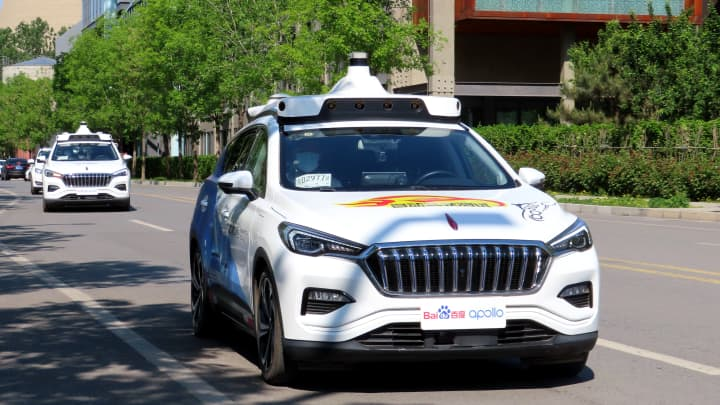
Chinese internet giant Baidu became known for its search engines, making significant advances in autonomous driving.
Starting this week, the public will be able to ride its robotaxis in Wuhan between 7 a.m. and 11 p.m. without the need for safety drivers. Previously, its unmanned vehicles could only operate in the city from 9 a.m. to 5 p.m. The revised scheme is expected to serve one million customers in selected areas of Wuhan, a city of more than ten million people. In contrast to Tesla’s vision-based solution, Baidu, like most autonomous vehicle startups, uses a combination of third-party cameras, radars, and lidars to help its cars see better in low-visibility conditions.
Disclaimer
We strive to uphold the highest ethical standards in all of our reporting and coverage. We StartupNews.fyi want to be transparent with our readers about any potential conflicts of interest that may arise in our work. It’s possible that some of the investors we feature may have connections to other businesses, including competitors or companies we write about. However, we want to assure our readers that this will not have any impact on the integrity or impartiality of our reporting. We are committed to delivering accurate, unbiased news and information to our audience, and we will continue to uphold our ethics and principles in all of our work. Thank you for your trust and support.
StartupNews.fyi is a leading global startup and technology media platform known for its end-to-end coverage of the startup ecosystem across India and key international markets. Launched with the vision of becoming a single gateway for founders, investors, and ecosystem enablers, StartupNews.fyi has grown steadily over the years by publishing tens of thousands of verified news stories, insights, and ecosystem updates, reaching millions of startup enthusiasts every month through its digital platforms and communities.
Chinese internet giant Baidu became known for its search engines, making significant advances in autonomous driving.
Starting this week, the public will be able to ride its robotaxis in Wuhan between 7 a.m. and 11 p.m. without the need for safety drivers. Previously, its unmanned vehicles could only operate in the city from 9 a.m. to 5 p.m. The revised scheme is expected to serve one million customers in selected areas of Wuhan, a city of more than ten million people. In contrast to Tesla’s vision-based solution, Baidu, like most autonomous vehicle startups, uses a combination of third-party cameras, radars, and lidars to help its cars see better in low-visibility conditions.
Disclaimer
We strive to uphold the highest ethical standards in all of our reporting and coverage. We StartupNews.fyi want to be transparent with our readers about any potential conflicts of interest that may arise in our work. It’s possible that some of the investors we feature may have connections to other businesses, including competitors or companies we write about. However, we want to assure our readers that this will not have any impact on the integrity or impartiality of our reporting. We are committed to delivering accurate, unbiased news and information to our audience, and we will continue to uphold our ethics and principles in all of our work. Thank you for your trust and support.
StartupNews.fyi is a leading global startup and technology media platform known for its end-to-end coverage of the startup ecosystem across India and key international markets. Launched with the vision of becoming a single gateway for founders, investors, and ecosystem enablers, StartupNews.fyi has grown steadily over the years by publishing tens of thousands of verified news stories, insights, and ecosystem updates, reaching millions of startup enthusiasts every month through its digital platforms and communities.