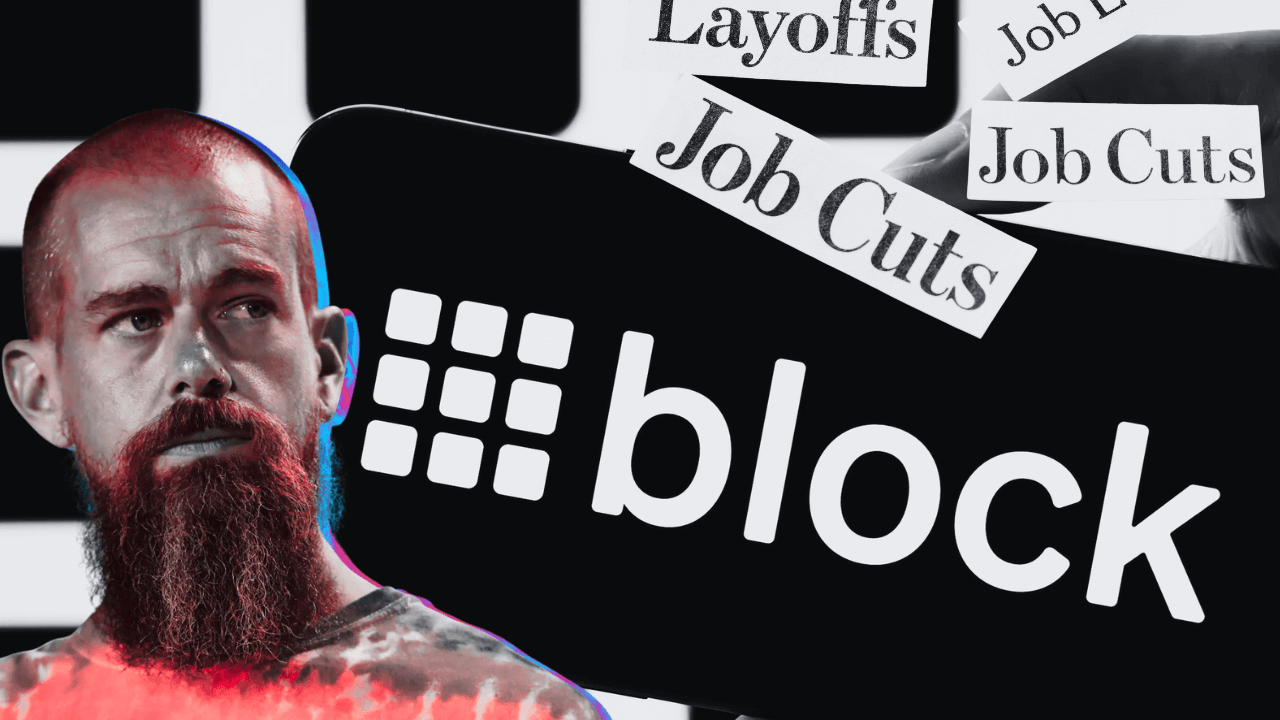
Jack Dorsey's Block launches BuilderBot, an advanced AI coding tool managing millions of lines of code amid recent job cuts.
Block, the fintech conglomerate led by Jack Dorsey, has unveiled BuilderBot, an advanced internal AI coding tool, signaling a major strategic shift towards AI-driven operational efficiency while simultaneously navigating a significant workforce reduction. This move could redefine engineering productivity metrics across the tech sector and intensifies the debate around AI's impact on employment, potentially influencing investor sentiment toward companies demonstrating clear AI leverage.
BuilderBot is designed to operate across hundreds of millions of lines of code and hundreds of internal services, addressing a critical scalability challenge that existing coding assistants struggle with in large, complex software estates. The announcement follows Block's recent layoff of 4,000 workers, part of an ongoing restructuring effort to streamline operations and reallocate resources towards artificial intelligence initiatives. Jack Dorsey, Block's CEO, underscored the company's commitment, stating on X that this is "the beginning of the beginning" for their intelligence tools.
The company asserts that while 100 percent of its engineers already integrate AI into their workflows, conventional tools falter when tasked with managing the vast scale of Block's codebase. BuilderBot acts as an orchestration layer, coordinating multiple AI agents to traverse and modify codebases, even enabling an engineer from Cash App to implement changes within a Square service they have never directly worked on. This cross-domain capability, which allows tasks to be completed in days rather than months, is a substantial leap in development agility.
What It Means
This development is not merely an internal efficiency gain for Block; it represents a significant inflection point for the broader tech industry and the venture funding landscape. The introduction of Block's BuilderBot, alongside its substantial layoffs, underscores a critical narrative emerging across the global tech ecosystem: the pursuit of hyper-efficiency through AI. This isn't just about incremental improvements; it’s about fundamentally rethinking the cost structure of software development and, by extension, the capital intensity required for scaling tech businesses.
The ability of an AI system to execute over 200,000 operations daily and merge approximately 1,500 pull requests weekly—representing about 15 percent of all production code changes at Block—demonstrates a tangible impact on output. This level of automated code contribution could allow engineering teams to reallocate human capital to higher-order strategic tasks, or conversely, achieve similar output with significantly fewer personnel. For investors, this signals a potential for enhanced EBITDA margins and a more attractive long-term valuation trajectory for companies that successfully integrate such technologies.
**Block's Workforce Reduction:** Block laid off 4,000 employees as part of an AI-driven restructuring, indicating a strategic pivot towards leveraging automation for core engineering functions and a recalibration of human capital requirements.
Background
Block's journey towards this AI-centric model has been methodical, spanning several years of foundational work. The company has actively invested in AI capabilities, including open-sourcing its Goose project and co-developing the Model Context Protocol (MCP) with Anthropic. MCP is emerging as an industry standard for connecting AI agents with diverse tools and data sources, highlighting Block's proactive role in shaping the broader AI ecosystem rather than simply adopting existing solutions. Brad Axen, Block's head of AI capabilities, described BuilderBot as "the missing layer between AI coding tools and how engineering actually works at scale," emphasizing its role in bridging theoretical AI potential with practical, enterprise-level application.
The current restructuring, characterized by significant layoffs, marks the third such announcement from Block in the past two years. The company previously cut 931 employees in March 2025, following an earlier reduction of around 1,000 roles in January 2024. These repeated workforce adjustments, despite Jack Dorsey's assurances of business strength, underscore a determined effort to pivot Block's operational structure towards a leaner, more AI-dependent future. This aggressive stance on AI integration reflects a broader trend among major tech players seeking to gain a competitive edge through advanced automation.
What Analysts Say
From a venture capital perspective, companies demonstrating this level of AI-driven operational leverage are becoming increasingly attractive. The narrative shifts from simply funding growth to funding intelligent growth, where every dollar invested in R&D or expansion is amplified by AI. This redefines what "lean startup" truly means in the age of AI. It’s no longer just about minimal viable products and rapid iteration; it’s about minimal human intervention in repeatable, high-volume tasks, freeing up highly skilled engineers for truly innovative work.
This trend will inevitably lead to a bifurcation in the market: companies that effectively integrate AI into their core operations will command premium valuations, while those that lag risk becoming less competitive and less appealing to institutional investors. The expectation is that AI tools will move beyond mere assistance to become orchestrators, fundamentally altering the unit economics of software development. This poses both an opportunity and a challenge for the startup ecosystem, demanding a sharper focus on AI-native solutions and a re-evaluation of traditional scaling strategies.
Moving forward, the industry will be closely watching for further iterations of Block's intelligence tools, particularly if components of BuilderBot are eventually open-sourced or offered as services, potentially setting new benchmarks for enterprise AI adoption. Key triggers will include quarterly earnings calls, where Block's management will likely elaborate on the financial impact of these AI efficiencies on margins and revenue per employee. Additionally, the actions of other major tech players in developing similar internal AI orchestration layers will signal the acceleration of this productivity revolution across the global tech landscape, further solidifying AI's role not just as a feature, but as a foundational operating system for modern enterprises.
Frequently asked questions
What is Block's BuilderBot?
Block's BuilderBot is an internal AI coding tool designed to manage hundreds of millions of lines of code and services. It acts as an orchestration layer for AI agents, speeding up software development tasks significantly.
Why did Block develop BuilderBot?
Block developed BuilderBot because existing AI coding assistants couldn't handle the massive scale of its software estate, which includes hundreds of millions of lines of code and services across various platforms like Cash App and Square.
How does BuilderBot impact Block's engineering work?
BuilderBot automates and accelerates engineering tasks, executing over 200,000 operations daily and merging about 1,500 pull requests weekly. This has reduced work timelines from months to days, enhancing developer productivity.
Is BuilderBot related to Block's recent layoffs?
The launch of BuilderBot follows Block's layoff of 4,000 workers as part of an AI-driven restructuring. While Block states the tool enhances efficiency, the timing raises questions about AI's role in workforce changes.
Does BuilderBot access customer data?
No, Block states that BuilderBot operates only on source code and system configuration. It does not access or process customer data, payment information, or personally identifiable information.
Who is Jack Dorsey and what is his role at Block?
Jack Dorsey is the co-founder and CEO of Block (formerly Square), an American tech startup focused on fintech services. He is driving the company's strategic shift towards AI, as evidenced by the introduction of BuilderBot and plans for more AI tools.