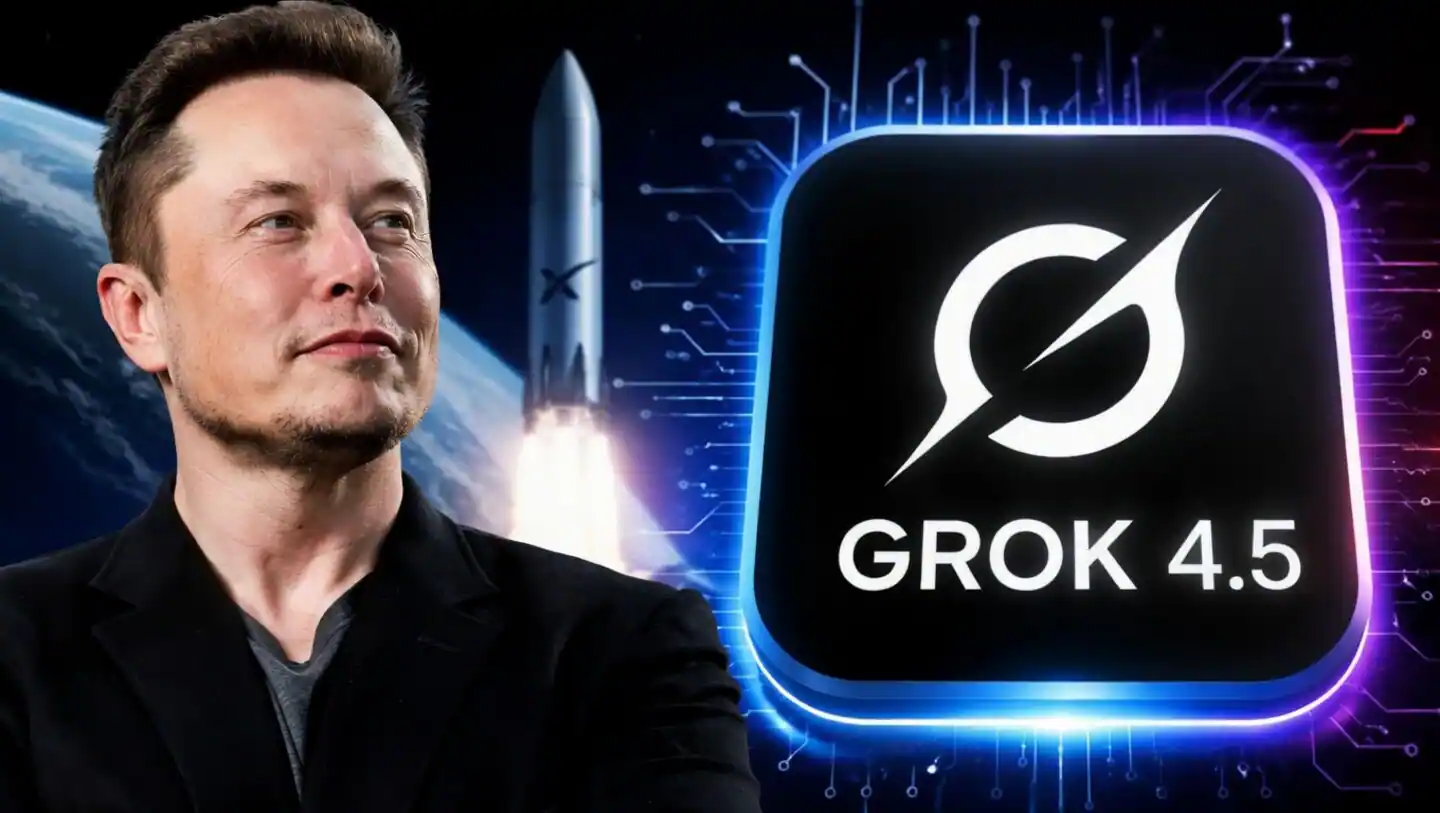
Musk's XAI announces Grok 4.5 will debut July 9, touting 'Opus-class' performance and challenging rival generative AI models in a competitive market.
Elon Musk's declaration that Grok 4.5, his latest large language model, will debut on July 9 with an "Opus-class" designation, immediately intensifies the already fierce competition among generative AI developers, signaling a potential shift in market perception and investor focus towards XAI's capabilities. This ambitious timeline and performance claim suggest a direct challenge to established leaders, potentially influencing venture capital deployment and strategic partnerships across the global tech ecosystem.
The announcement positions Grok 4.5 as a formidable contender against models like OpenAI's GPT-4o and Anthropic's Claude 3 Opus, which have set the benchmark for advanced reasoning and multimodal understanding. Such a bold pronouncement, made directly by Musk, necessitates a close examination of XAI's underlying architecture, training data, and the strategic implications for its integration within the X platform. The market will undoubtedly scrutinize its actual performance against these high-flying claims.
For startup founders and venture capitalists navigating the crowded AI landscape, Grok 4.5's arrival could reshape the narrative around foundational models. It implies that the race for superior intelligence is far from settled, suggesting that data access, compute power, and an iterative development cycle remain critical differentiators. The promised July 9 launch date creates a tangible milestone for the industry to observe and evaluate XAI's progress in real-time.
What Does "Opus-Class" Mean for the AI Landscape?
Attaining "Opus-class" status implies Grok 4.5 possesses advanced capabilities across several critical metrics, including complex problem-solving, nuanced language understanding, multimodal reasoning, and perhaps even coding proficiency. This classification is not merely marketing hyperbole; it refers to a benchmark performance typically associated with the highest-tier models capable of handling highly sophisticated tasks that demand deep cognitive abilities and contextual awareness. Achieving this level would position Grok as a general-purpose powerhouse.
The implications for incumbents are significant. OpenAI, with its GPT series, and Anthropic, through its Claude models, have largely defined the "frontier model" category. A truly "Opus-class" Grok 4.5 would fragment mindshare, potentially siphoning away developer talent and enterprise customers seeking alternatives or redundancy in their AI tooling. It also validates the multi-polar view of AI development that many, including myself, have championed, suggesting that innovation can emerge from diverse philosophical and operational approaches.
From an ecosystem perspective, this competition is ultimately beneficial. It forces all players to accelerate their research and development, pushing the boundaries of what AI can achieve. Founders building on top of these foundational models gain more options and potentially more competitive pricing, fostering a healthier, more dynamic market for AI-powered applications and services. The pressure to innovate will intensify, potentially leading to faster advancements in areas like efficiency, cost, and specialized domain expertise.
Elon Musk’s official launch of Grok 4.5 under the newly minted SpaceXAI banner changes the calculus for developer infrastructure. While the "Opus-class" marketing headline aims directly at Anthropic's flagship, the real disruption lies under the hood: aggressive pricing combined with token efficiency. By training the 1.5-trillion-parameter model alongside Cursor, SpaceXAI has built a technical powerhouse optimized for agentic workflows. Priced at just $2 per million input tokens, it natively consumes up to four times fewer output tokens than legacy models on SWE-Bench Pro tasks. For the startup ecosystem, this release transforms Grok from an X-bound novelty into a highly competitive, production-ready enterprise utility. The narrative is no longer just about access to real-time social data, but rather a direct price-to-performance assault on OpenAI and Anthropic's developer dominance.
XAI raised significant funding in a Series B round, underscoring investor confidence in its potential to compete with leading AI developers.
What is XAI's Strategic Context and Origin?
XAI was founded by Elon Musk with a stated mission to "understand the true nature of the universe," positioning itself as a counterpoint to other large AI labs. The company’s unique value proposition stems from its deep integration with the X platform, formerly Twitter, granting Grok access to real-time, vast, and diverse datasets that are unavailable to competitors. This data moat is a critical asset, enabling Grok to process current events and emerging trends with an immediacy that other models often lack.
Musk’s vision for XAI also encompasses a strong emphasis on "truth-seeking AI" that is less susceptible to political correctness or ideological biases, a direct critique of what he perceives as shortcomings in other leading models. This philosophical stance resonates with a segment of the market and aligns with Musk’s broader public persona and his commitment to free speech principles. The integration of Grok directly into X Premium subscriptions further solidifies this strategic alignment, making the AI a core feature of the platform's value proposition.
The initial launch of Grok 1, followed by a series of rapid iterations, highlights XAI's agile development methodology, a common trait in high-growth startups within the tech sector. This rapid pace of development is crucial in the fast-evolving AI space, where first-mover advantage and continuous improvement are paramount. The company’s ability to attract top-tier AI researchers and engineers, despite a lean operational structure, speaks to the allure of its mission and leadership.
What Are the Commercial and Ecosystem Implications?
My read on Grok 4.5’s "Opus-class" claim is that it's a strategic move to re-center the narrative around XAI as a top-tier player, capable of challenging the existing duopoly or triumvirate at the bleeding edge of AI. For founders, this means increased optionality when selecting foundational models for their applications. The availability of multiple high-performing models can drive down API costs, improve performance, and foster specialized applications tailored to each model's unique strengths and biases. I think this competitive pressure is exactly what the industry needs to avoid stagnation.
The direct integration with X also presents a compelling commercial avenue. If Grok 4.5 delivers on its promises, it could significantly enhance the user experience on X, driving subscriber growth for X Premium and creating new monetization opportunities through advanced AI features. This tight coupling of an AI model with a widely used social platform is a unique differentiator that competitors will struggle to replicate, reinforcing the network effects between X and XAI.
For the broader venture funding landscape, a successful Grok 4.5 launch could reignite interest in AI infrastructure startups that focus on optimizing model performance, fine-tuning, or developing novel applications that leverage real-time data feeds. It underscores the continued importance of owning or having preferential access to proprietary data for competitive advantage in the AI arms race. What strikes me here is the potential for XAI to attract developers to build directly on Grok's APIs, creating an ecosystem that mirrors the success seen with other leading platforms.
The immediate focus following the July 9 launch will be on independent benchmarks and user feedback regarding Grok 4.5's performance and stability. Investors and developers will closely watch for specific use cases where Grok demonstrably outperforms rivals, particularly in areas leveraging its unique access to real-time information from the X platform. Key triggers to watch include developer adoption rates, enterprise partnerships, and any announcements regarding further expansion of XAI's model capabilities or accessibility beyond X Premium.
Frequently asked questions
When is Elon Musk's Grok 4.5 launching?
Elon Musk announced that Grok 4.5, XAI's latest large language model, is scheduled to launch on July 9. This highly anticipated release marks a significant moment in the generative AI space.
What designation did Elon Musk give Grok 4.5?
Elon Musk described Grok 4.5 as 'Opus-class.' This designation suggests a high level of performance and capability, positioning it as a direct competitor to leading generative AI models.
Which company developed Grok 4.5?
Grok 4.5 was developed by XAI, Elon Musk's artificial intelligence company. XAI focuses on creating advanced AI systems to compete with other major players in the industry.
What kind of AI model is Grok 4.5?
Grok 4.5 is described as a large language model (LLM). It falls under the category of generative AI, designed to understand and generate human-like text.
How will Grok 4.5 impact the generative AI market?
Grok 4.5's launch is expected to intensify competition among generative AI developers. Its 'Opus-class' performance claim could shift market perception and investor focus towards XAI's capabilities.
What is the significance of the 'Opus-class' designation for Grok 4.5?
The 'Opus-class' designation signifies that Grok 4.5 is intended to be a top-tier large language model. This claim positions it as a formidable challenger to established AI models, potentially redefining performance benchmarks in the industry.