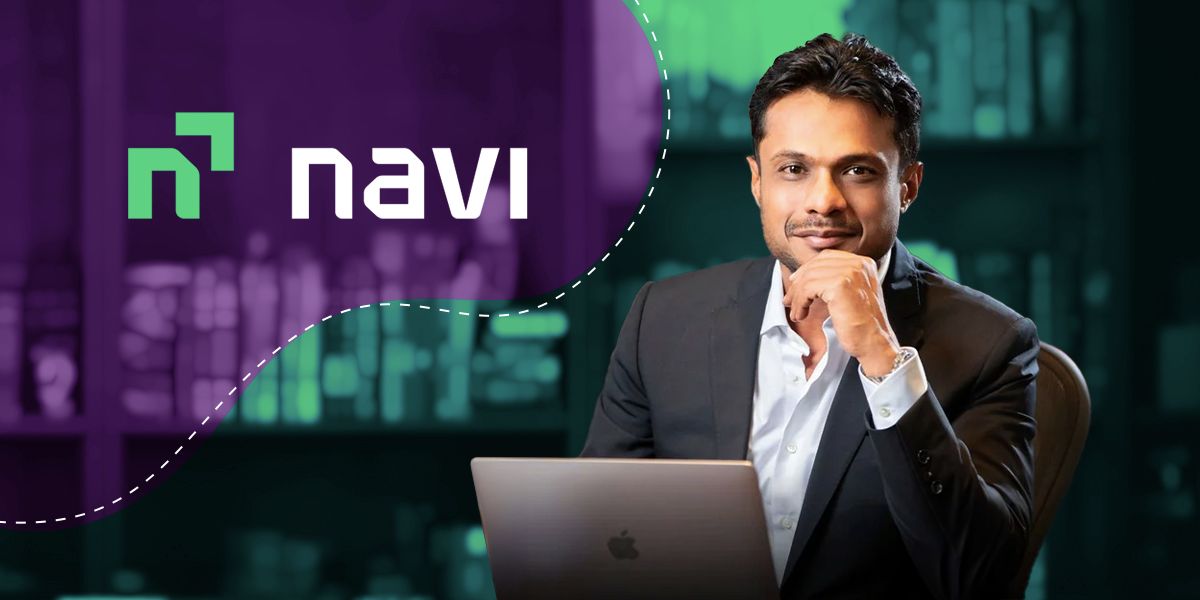
Flipkart co-founder Sachin Bansal's fintech venture, Navi Technologies, eyes a significant public offering, targeting SEBI filing by Q1.
Navi Technologies, founded by Flipkart co-founder Sachin Bansal in 2018, plans a ₹3,000 crore (~$360 million) IPO.
The digital-first financial services company aims to file its Draft Red Herring Prospectus (DRHP) with SEBI by the March quarter.
Navi operates across personal loans, home loans, general insurance, and asset management, pursuing a full-stack Fintech strategy.
The IPO signals a critical juncture for founder-led, capital-intensive ventures in India's evolving public markets.
This move will gauge investor appetite for comprehensive financial service providers amidst a cautious IPO environment.
Navi Technologies, the Bengaluru-based full-stack financial services platform spearheaded by Flipkart co-founder Sachin Bansal, is reportedly gearing up for a significant public market debut. Established in 2018, the company, which offers digital-first solutions across lending, insurance, and asset management, aims to raise approximately ₹3,000 crore (around $360 million) through an Initial Public Offering, with plans to file its Draft Red Herring Prospectus (DRHP) with SEBI by the close of the March quarter. This development positions Navi at a pivotal moment, testing the maturity of India's fintech landscape and investor confidence in comprehensive financial technology models. Navi's journey has been distinct, largely fueled by Sachin Bansal's substantial personal capital injection post his Flipkart exit, rather than traditional venture capital rounds. This unique funding model has allowed the company to pursue an aggressive build-out strategy, acquiring several entities and expanding its product suite to cover a broad spectrum of financial needs, from micro-lending to home finance and health insurance. The ambition is clear: to create a seamless, technology-driven alternative to conventional financial institutions, leveraging data and digital distribution for efficiency and reach. The decision to pursue an IPO now, amidst a global environment marked by cautious investor sentiment towards tech valuations, speaks to a calculated risk and a belief in the inherent value of Navi's diversified offerings. India's digital financial services sector continues to witness rapid growth, driven by smartphone penetration and government initiatives like the UPI. However, building a profitable, compliant, and scalable full-stack model requires immense capital, regulatory navigation, and sustained operational excellence — challenges that the public markets will scrutinize closely.
Navi Technologies is targeting an Initial Public Offering (IPO) of approximately ₹3,000 crore, equivalent to around $360 million (at current exchange rates). This capital raise is intended to fuel the company's expansion and deepen its market penetration across various financial service verticals.
Why This IPO Matters Now
This planned IPO is more than just a capital-raising exercise for Navi; it's a barometer for the broader Indian fintech ecosystem. In a market that has seen its share of IPO disappointments in recent years, particularly for highly valued tech companies, Navi's offering will provide crucial insights into public investor appetite for founder-led, capital-intensive digital financial service providers. The company's unique approach of building a full-stack model, which includes owning NBFCs and insurance licenses, is a stark contrast to many asset-light fintechs that rely heavily on partnerships. This deep integration offers greater control but also brings higher regulatory burden and capital requirements, a trade-off that public investors will weigh. Furthermore, Sachin Bansal's personal reputation and track record as a pioneering e-commerce entrepreneur will undoubtedly be a key factor in how the market perceives Navi. His vision for a digitally integrated financial services giant, while ambitious, must now meet the exacting standards of public market scrutiny, where consistent profitability, robust governance, and clear growth pathways are paramount. The success or struggle of Navi's IPO could set a precedent for other heavily capitalized, founder-backed ventures contemplating a public listing in India.
Sachin Bansal’s planned ₹3,000 crore IPO for Navi Technologies is a watershed moment for India's fintech ecosystem, serving as a high-stakes litmus test for asset-heavy digital finance models. Unlike common asset-light peers relying on partnership arbitrage, Navi’s full-stack strategy—owning NBFC and insurance licenses—demands immense capital and faces unrelenting regulatory friction. Having been fueled primarily by Bansal’s personal post-Flipkart fortune rather than traditional institutional VC rounds, this public debut shifts the narrative from venture-backed growth metrics to public-market unit economics. In a cautious tech IPO climate, Navi’s listing will gauge investor appetite for deeply integrated, digital-first financial conglomerates over legacy banks. Ultimately, Bansal’s founder pedigree won't be enough to carry the day; Navi must prove its capital-intensive infrastructure can deliver sustainable margins, setting a critical valuation precedent for the next wave of homegrown tech giants aiming for local bourses.
The Road Ahead and Market Implications
For Navi, the road to IPO and beyond involves navigating a complex regulatory environment, particularly with the Reserve Bank of India (RBI) and IRDAI's evolving frameworks for digital lending and insurance. While a full-stack model offers the advantage of owning the customer journey and retaining higher margins, it also places significant responsibility on the company for compliance, risk management, and consumer protection. My read is that the public markets will demand transparency on these fronts, alongside clear indications of sustainable unit economics and a pathway to consistent profitability, especially given the competitive intensity from both traditional banks expanding their digital footprint and agile, niche fintech players. The broader implications for the Indian startup ecosystem are substantial. A successful IPO for Navi could inject renewed confidence into the market, potentially encouraging other well-capitalized, later-stage startups, particularly in the deep tech and financial services sectors, to consider public listings. Conversely, any significant hurdles could reinforce existing investor caution. What strikes me here is that Navi's journey represents a critical test of the 'build vs. partner' strategy in fintech, and its public market performance will offer valuable lessons for future entrepreneurs contemplating similar capital-intensive, full-stack plays in South Asia's dynamic digital economy. The industry will be watching closely to see how a vision backed by one of India's most iconic founders translates into public market value.
Frequently asked questions
What is Navi Technologies planning?
Navi Technologies, founded by Sachin Bansal, plans to launch an Initial Public Offering (IPO) to raise approximately ₹3,000 crore.
Who founded Navi Technologies?
Navi Technologies was founded in 2018 by Sachin Bansal, co-founder of Flipkart.
When will Navi file its IPO papers with SEBI?
Navi Technologies aims to file its Draft Red Herring Prospectus (DRHP) with SEBI by the March quarter.
What services does Navi Technologies offer?
Navi operates as a full-stack fintech company, offering personal loans, home loans, general insurance, and asset management services.
What is the estimated size of Navi's IPO?
Navi's IPO is estimated to be around ₹3,000 crore, which is approximately $360 million.
Why is Navi's IPO significant?
The IPO signifies a critical step for Navi in scaling its digital financial services and signals the company's growth and ambition in the Indian fintech sector.