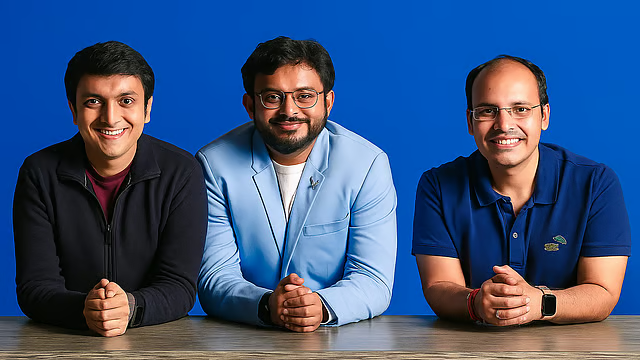
After PharmEasy's challenges, its founders' new startup, All Home, secures significant funding, signaling a strong pivot in the Indian startup ecosystem.
In the often-turbulent world of venture capital and high-growth startups, a story of redemption, or perhaps just relentless entrepreneurial drive, is unfolding that should grab the attention of anyone tracking disruptive business models. The very founders behind PharmEasy, an Indian online pharmacy once valued in the billions but more recently grappling with significant valuation markdowns and delayed IPO plans, have wasted no time launching their next big bet: a home services platform called All Home. And in a surprising twist that speaks volumes about investor confidence, this new venture has already raised a substantial Rs 200 crore, or approximately $24 million USD, in its latest funding round, reportedly doubling its valuation in the process.
Here's why this swift turnaround and immediate success are so compelling: it signals a potent blend of founder resilience and a sharp eye for untapped market potential, even as their previous unicorn navigates choppy waters. For consumers, this could mean a more streamlined, reliable way to manage everything from a leaky faucet to a deep clean, a convenience that has long been a holy grail in a fragmented industry. For investors, it's a testament to the enduring belief in proven operators, even when their last endeavor didn't quite hit every mark.
The architects of All Home are none other than Dharmil Sheth, Dhaval Shah, and Siddharth Shah, the trio who built PharmEasy into one of India's most prominent online healthcare platforms. Their previous venture, while revolutionary in bringing prescription drugs and diagnostic tests to consumers' doorsteps, faced the harsh realities of a tightening funding environment and intense competition, leading to investor-led valuation adjustments. Yet, instead of licking their wounds, they've pivoted with remarkable speed, channeling their operational prowess into a completely different, but equally massive, consumer problem: home maintenance and services.
The Rs 200 crore capital injection into All Home isn't just a number; it’s a strong vote of confidence from investors who have clearly backed the founders themselves, recognizing their ability to scale and execute, regardless of the sector. This rapid infusion of capital, which has led to a doubled valuation in what appears to be a very short timeframe since the company's inception, positions All Home for aggressive expansion in a market that, while mature in some North American cities, remains largely unorganized and ripe for disruption in many parts of the world.
The home services market is a behemoth, encompassing everything from routine cleaning and pest control to complex appliance repairs and renovation projects. In North America, companies like Angi (formerly Angie's List and HomeAdvisor), Handy (acquired by Angi), TaskRabbit (acquired by IKEA), and Thumbtack have carved out significant niches, demonstrating the sheer demand for reliable, digital-first solutions to household woes. All Home aims to replicate and possibly expand upon this success, bringing a modern, tech-enabled approach to a sector often characterized by word-of-mouth referrals, inconsistent quality, and opaque pricing.
Why this matters
This development is significant for several reasons, extending far beyond the immediate news of a funding round. First, it underscores the enduring "founder-led" investment thesis. Venture capitalists often say they invest in people, not just ideas, and the rapid backing of Sheth, Shah, and Shah despite PharmEasy's recent struggles is a potent example. It suggests that while the market context for PharmEasy might have shifted, the founders' perceived ability to identify market gaps, build robust operational frameworks, and attract talent remains undiminished. It’s a powerful narrative about second acts in entrepreneurship, where lessons learned from previous ventures, even challenging ones, become invaluable assets for new undertakings.
Second, it highlights a crucial strategic shift. PharmEasy operated in a highly regulated, high-burn, and fiercely competitive e-pharmacy space, where profitability often took a back seat to market share at any cost. The home services market, while competitive, often allows for stronger unit economics and a more direct path to profitability through service fees and subscription models. This move could signal a more mature approach to business building, prioritizing sustainable growth over hyper-growth at all costs – a sentiment increasingly favored by investors in the current economic climate.
Third, it points to the continued digitalization of traditional, offline services. The pandemic accelerated the adoption of on-demand services for everything from groceries to healthcare. Home services, which have always been essential, are now benefiting from this trend, with consumers increasingly comfortable booking and managing service providers through apps. All Home is tapping into this broader societal shift, aiming to aggregate a fragmented supply of service providers and match them with a growing demand for convenience and reliability. This market opportunity is vast, especially in regions where professional, standardized services are still a luxury or difficult to find.
What comes next for All Home
The immediate challenge for All Home will be rapid, but controlled, expansion. With $24 million in fresh capital, the company will likely focus on building out its platform, onboarding a robust network of vetted service professionals, and establishing a strong brand presence. This involves significant investment in technology, marketing, and ensuring a consistent quality of service – a critical factor in the trust-dependent home services sector. For a North American audience, think about the early days of companies like TaskRabbit establishing trust with both gig workers and consumers; All Home faces a similar, albeit geographically distinct, hurdle.
Another key aspect will be navigating the competitive landscape. While the market is fragmented, various local players and specialized service providers already exist. All Home’s success will depend on its ability to offer a superior, integrated experience that aggregates multiple services under one roof, potentially evolving into a "super app" for home maintenance. This integration could be its differentiating factor, saving consumers the hassle of dealing with multiple vendors for different household needs.
The founders' background with PharmEasy also provides a unique advantage and a potential pitfall. Their experience in building a large-scale, tech-enabled service platform will be invaluable for All Home. They understand the complexities of logistics, customer acquisition, and managing a large network of partners. However, they must also ensure that the mistakes or challenges faced by PharmEasy – perhaps related to burn rate or regulatory hurdles – are not replicated in this new venture. The home services sector has its own set of regulatory compliance, particularly regarding worker classifications and safety standards, which All Home will need to master.
Ultimately, the story of All Home and its rapid rise is a compelling narrative about the enduring power of entrepreneurial vision and adaptability. It demonstrates that even when a previous venture faces headwinds, the ability of proven founders to attract capital and pivot to new opportunities remains strong. For the average consumer, it means the promise of a more efficient and trustworthy way to maintain their homes, a concept that resonates universally. For investors, it's a reminder that sometimes, backing the jockey is indeed the smartest bet, particularly when they've learned valuable lessons from a previous race.
Frequently asked questions
What is the new venture by PharmEasy founders?
The new venture by the founders of PharmEasy is called All Home. It recently secured Rs 200 crore in funding, leading to a significant doubling of its valuation.
How much funding did All Home raise?
All Home successfully raised Rs 200 crore in its latest funding round.
What is All Home's current valuation status?
Following the recent funding round, All Home's valuation has doubled.
Who are the founders behind All Home?
All Home was founded by the same entrepreneurs who previously founded the online pharmacy platform, PharmEasy.
What challenges did PharmEasy face?
PharmEasy, once a billion-dollar company, had recently been grappling with significant valuation markdowns and delistings.
What does this funding mean for the Indian startup ecosystem?
This funding for All Home signals a strong entrepreneurial pivot and resilience within the Indian startup ecosystem, demonstrating continued investor confidence in experienced founders.