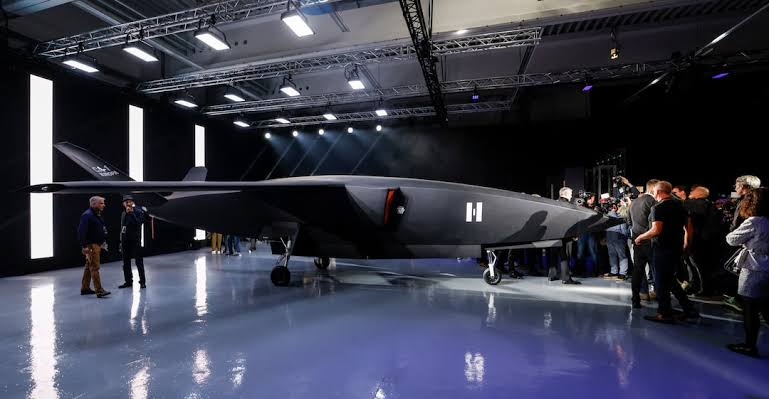
Wall Street giant Goldman Sachs invests in European drone startup Helsing, signaling a major shift in defense technology and national security.
A seismic shift is underway in the world of defense technology, and Wall Street is taking notice. Investment banking giant Goldman Sachs has thrown its considerable weight behind Helsing, a European drone startup, in a move that values the company at an eye-watering $18 billion. This isn't just another venture capital deal; it's a clear signal that the future of national security is increasingly tied to cutting-edge artificial intelligence and autonomous systems, fundamentally altering how governments and militaries approach defense.
Here's why this matters to everyone from taxpayers to tech workers: this massive investment underscores a pivotal moment where agile, software-first companies are challenging the long-held dominance of traditional defense contractors. Helsing's focus on AI-powered defense capabilities, from autonomous drones to battlefield intelligence software, represents a paradigm shift from hardware-centric warfare to a future where data and algorithms could be the decisive advantage.
Goldman Sachs' backing of Helsing at such a high valuation is a bold endorsement of the company's vision and the burgeoning defense tech sector. While Helsing might be a relatively new name to many, it has rapidly positioned itself at the forefront of developing AI solutions for defense, working with European governments to integrate its technology into existing military platforms. This significant capital injection not only provides Helsing with immense resources for expansion and R&D but also validates the immense potential, and indeed the urgent necessity, of advanced AI in modern geopolitical landscapes.
The deal reflects a broader trend of institutional investors, traditionally wary of the defense sector due to ethical concerns or perceived slow procurement cycles, now actively seeking opportunities in companies that promise to revolutionize military capabilities. The $18 billion valuation itself speaks volumes, placing Helsing in the rarefied air of unicorns and decacorns, a valuation typically reserved for consumer tech giants or enterprise software powerhouses, not nascent defense contractors.
Helsing differentiates itself by emphasizing a software-first approach, developing AI that can process vast amounts of sensor data, improve situational awareness, and ultimately, enhance decision-making on the battlefield. This includes everything from optimizing drone swarms to providing real-time intelligence analysis, moving away from static hardware and towards dynamic, adaptable digital solutions. The company's European origins are also significant, highlighting a growing ambition within the continent to build its own sovereign defense technology capabilities independent of traditional U.S. or Asian suppliers.
Why this matters for global security and innovation
The urgency driving this investment isn't just about technological advancement; it's deeply rooted in the current geopolitical climate. The conflict in Ukraine has starkly demonstrated the critical role of advanced, accessible technology, particularly drones and AI, in modern warfare. It has exposed the vulnerabilities of traditional military hardware against smaller, more agile, and technologically adept adversaries. This wake-up call has accelerated defense spending and spurred a hunt for innovative solutions that can provide a decisive edge.
Helsing's rapid rise, fueled by this Goldman Sachs investment, is a direct response to this new reality. The company positions itself as a partner to democratic governments, aiming to provide them with the technological superiority needed to deter aggression and protect national interests. This mission resonates powerfully in an era marked by increasing geopolitical instability, competition from state actors with advanced technological ambitions, and the need for rapid deployment of effective defense systems.
The push for AI in defense is also about efficiency and effectiveness. AI can analyze data faster than any human, identify patterns, predict movements, and manage complex systems, reducing cognitive load on soldiers and commanders. This isn't just about building better weapons; it's about building smarter defense systems that can adapt to rapidly evolving threats, something traditional, slow-moving procurement processes often struggle with. Goldman's bet here isn't just on drones, but on the entire intellectual infrastructure that powers modern conflict.
What does this mean for the North American market?
While Helsing is a European company, Goldman Sachs' investment at such a colossal valuation sends ripples across the North American defense and tech landscape. For American defense tech startups, this deal sets a new benchmark for ambition and potential investor interest. It signals to venture capitalists and private equity firms in Silicon Valley and beyond that the "dual-use" market — technology with both civilian and military applications — is not just viable but potentially highly lucrative, capable of commanding valuations previously unheard of in the sector.
This European success story also intensifies the competitive landscape for established American defense primes and emerging tech players alike. Companies like Anduril, Palantir, and various smaller startups in the U.S. are already innovating in AI and autonomous systems for defense. Helsing's substantial backing means that a well-funded, technologically advanced competitor is rapidly scaling on the global stage, potentially vying for talent, market share, and influence in allied defense strategies that often intertwine with U.S. interests.
Furthermore, the Goldman Sachs investment highlights a broader trend where the lines between traditional finance, technology, and defense are blurring. Large institutional investors are increasingly looking beyond conventional sectors, identifying defense tech as a critical growth area driven by undeniable global demand. This could lead to a surge in similar investments in North America, as investors seek to replicate or counter the success seen with Helsing, driving up valuations and accelerating innovation across the board.
The implications for procurement are also significant. If European companies like Helsing can rapidly develop and deploy cutting-edge AI-driven defense solutions, it could put pressure on the U.S. Department of Defense and its acquisition arms to streamline their own processes, embrace faster innovation cycles, and potentially look to international partners or even direct commercial off-the-shelf solutions more readily. This could foster greater transatlantic collaboration but also intense competition for mindshare and contracts among allied nations.
The ethical considerations surrounding AI in warfare remain a complex but crucial part of this discussion. As companies like Helsing advance autonomous capabilities, questions about human oversight, accountability, and the potential for unintended consequences become more pressing. Investors, technologists, and governments are grappling with how to harness the power of AI for defense while ensuring responsible development and deployment, an ongoing debate that will shape the industry's future trajectory.
Ultimately, Goldman Sachs' massive vote of confidence in Helsing is more than just a financial transaction; it's a strategic move that reflects a profound shift in global priorities. It underscores the belief that software, AI, and autonomous systems are not merely augmenting traditional defense but fundamentally redefining it. For North America, this means a renewed focus on nurturing its own defense tech ecosystem, ensuring it remains at the forefront of innovation, and adapting to a future where the battlefield is increasingly digital.
Looking ahead, we can expect to see continued rapid expansion in the defense tech sector, fueled by significant private investment and ongoing geopolitical pressures. Companies that can effectively integrate AI, automation, and advanced data analytics into practical, deployable defense solutions will be the ones to watch. This investment by Goldman Sachs in Helsing is a powerful testament to the fact that the race for technological supremacy in defense is no longer confined to government labs or established primes; it's a global sprint, and Wall Street is placing its bets on the agile innovators leading the charge.
Frequently asked questions
What is Helsing and why is Goldman Sachs investing in it?
Helsing is a European drone startup at the forefront of defense technology, specializing in AI-powered autonomous systems. Goldman Sachs' $18 billion investment underscores the growing importance of advanced tech in national security and signals a major shift in venture capital focus.
What is the valuation of Helsing after Goldman Sachs' investment?
Following the investment from Goldman Sachs, Helsing is valued at an impressive $18 billion.
How does this investment impact the defense technology sector?
This significant investment by Goldman Sachs highlights a seismic shift towards advanced AI and drone technology in defense, potentially accelerating innovation and adoption across national security frameworks.
Is Helsing a European company?
Yes, Helsing is identified as a European drone startup, based on the article's preview.
What does this investment signify for national security?
The investment signals that the future of national security is increasingly tied to cutting-edge technological advancements, particularly in areas like autonomous drones and AI.
What kind of technology does Helsing specialize in?
Helsing specializes in advanced drone technology, likely involving AI and autonomous systems for defense applications.