Jeff Bezos's Blue Origin reportedly eyes $130B funding, hinting at accelerated space settlement goals and big impacts on the global economy.
Jeff Bezos's Blue Origin is reportedly seeking a massive funding round at a $130 billion valuation, signaling a pivotal shift for the private space venture.
This move could dramatically accelerate Blue Origin's long-term vision for human space settlement and industrialisation, with significant implications for the global space economy and emerging markets like India.
For Jeff Bezos, the founder of Amazon, the dream of space has been a lifelong obsession, a passion ignited by childhood science fiction and a deep conviction about humanity's future among the stars. While Amazon redefined commerce on Earth, Blue Origin, founded in 2000, was his quiet, patient pursuit of an even grander ambition: to build a road to space, enabling millions to live and work beyond our planet. This deeply personal mission, largely self-funded by billions from his Amazon fortune over two decades, now stands at a crucial inflection point as the company reportedly seeks external investment at a staggering $130 billion valuation, marking a significant evolution from its traditionally cloistered approach.
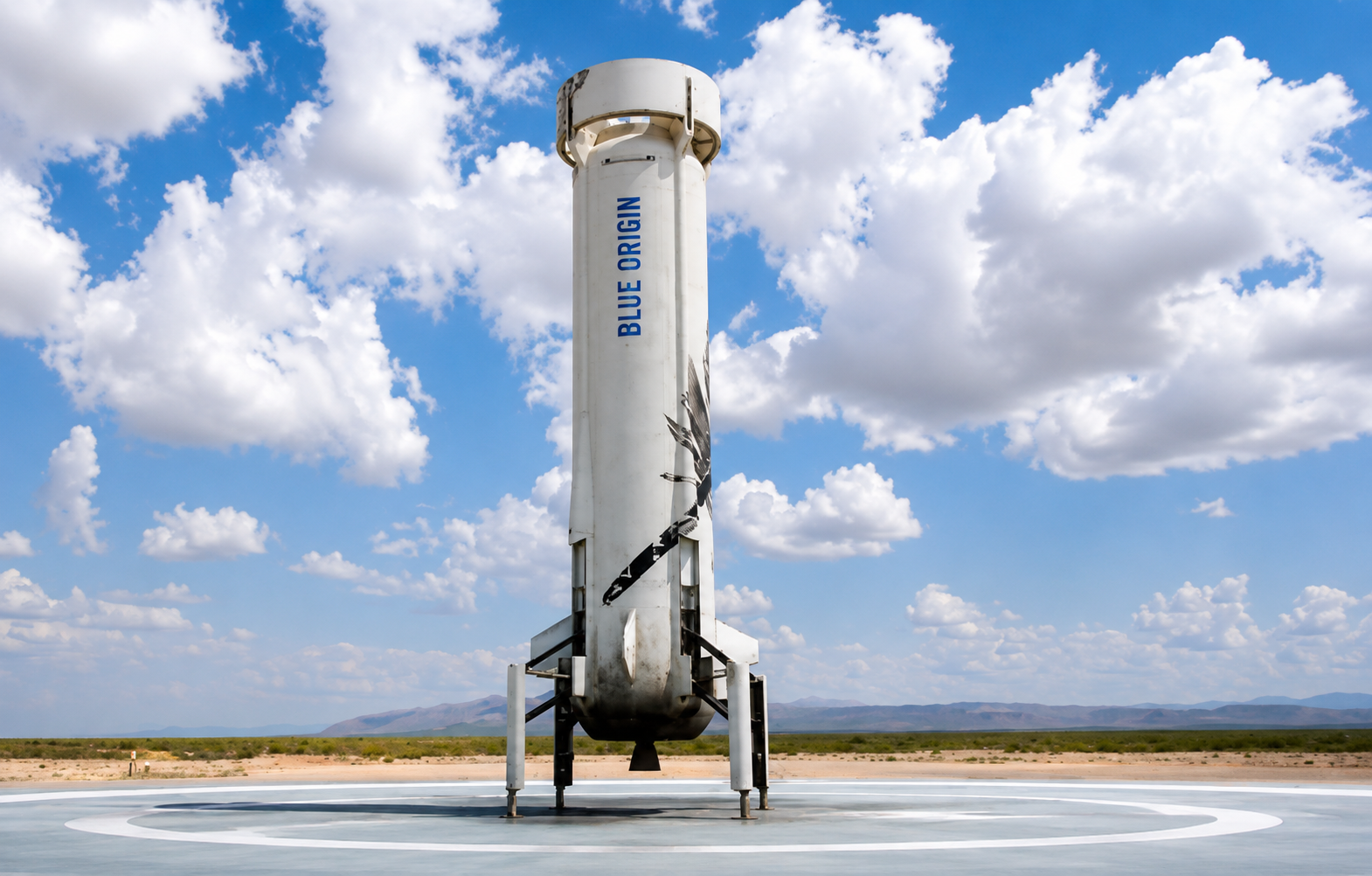
What started as a small, secretive idea on Bezos’s private land in Texas has steadily grown into a formidable contender in the rapidly expanding private space sector. Unlike the breakneck speed often associated with tech startups, Blue Origin adopted a motto of "Gradatim Ferociter" — step by step, ferociously. This philosophy guided the meticulous, often slow, development of its various projects. The initial focus was on reusable suborbital rockets, leading to the creation of New Shepard, a vehicle designed for short trips to the edge of space, providing passengers with a few minutes of weightlessness and breathtaking views of Earth. Its first crewed flight in July 2021, with Bezos himself aboard, was a symbolic culmination of years of dedicated engineering and a powerful statement of intent for the burgeoning space tourism market.
The journey has been one of immense technological challenge and significant capital investment. Bezos has consistently poured an estimated $1 billion annually into Blue Origin, funding the development of not just New Shepard, but also the much larger New Glenn orbital rocket, named after astronaut John Glenn, and the powerful BE-4 engine. The BE-4 engine, running on liquid oxygen and liquefied natural gas, is not only critical for New Glenn but also for United Launch Alliance's (ULA) Vulcan Centaur rocket, showcasing Blue Origin’s foundational role in the wider American space ecosystem. Beyond launch vehicles, the company has also been developing Blue Moon, a lunar lander conceptualised to support NASA’s Artemis program and facilitate a sustained human presence on the Moon. These projects, each monumental in scope, underscore the breadth of Blue Origin's long-term aspirations, aiming to provide comprehensive infrastructure for space access and habitation.
The reported quest for external funding, and the ambitious $130 billion valuation, signifies a maturation of Blue Origin's business model and a recognition of the immense potential within the space economy. This valuation places it in the upper echelons of private companies globally, reflecting not just its existing assets and technological prowess but also the projected growth of the space sector. This shift from almost sole reliance on Bezos's personal wealth to actively seeking outside capital could unlock new levels of acceleration for its ambitious roadmap. It suggests a strategic move to scale operations, expedite development timelines, and compete more aggressively in an increasingly crowded and competitive market, potentially reducing development timelines for projects like New Glenn, which has faced its share of delays in a complex engineering landscape.
Blue Origin’s reported move to seek a massive $10 billion external funding round at a $130 billion valuation marks the end of an era. For 25 years, Jeff Bezos treated the company as a fiercely cloistered, self-funded passion project. Stepping into the open market signals that "Gradatim Ferociter" (step by step, ferociously) is hitting a capital-intensive wall that even an Amazon fortune cannot scale alone. Following SpaceX’s record-breaking public market debut, this fundraising is purely a chase for velocity. Blue Origin desperately needs to accelerate its heavy-lift New Glenn operational cadence and overcome recent launchpad setbacks. For emerging space hubs like India, this unprecedented private valuation serves as a powerful validation. As homegrown startups expand beyond satellite deployment into deep tech infrastructure, Blue Origin's shift proves that commercial spaceflight is no longer a billionaire’s hobby—it is a competitive, high-stakes global marketplace.
For the broader global space industry, and particularly for emerging space hubs like India, this development carries significant weight. India's own private space sector is experiencing a boom, with startups like Agnikul Cosmos and Skyroot Aerospace attracting substantial investment and successfully launching their own rockets. The validation of such high valuations for private space ventures on a global scale can only embolden investors and entrepreneurs in regions like South and Southeast Asia, demonstrating the vast commercial viability and strategic importance of space. It signals a robust, expanding market where innovation, rather than solely government funding, is increasingly driving progress. This global trend of private capital flowing into space could lead to more cross-border collaborations, technology exchanges, and even opportunities for talent from India's deep pool of engineers and scientists.
Moreover, Blue Origin's long-term vision extends beyond merely launching rockets; it aims to establish a permanent human presence in space, mitigate Earth's environmental pressures by moving heavy industry off-world, and unlock vast resources. This vision aligns with the broader global trend of space industrialisation, where the focus is shifting from exploration to commercial utilisation and sustainable expansion. The pursuit of such a high valuation in the private markets highlights a strong belief in the eventual profitability of these audacious goals, from space tourism and satellite deployment to lunar resource extraction and in-orbit manufacturing. This is not just about a single company; it reflects a paradigm shift where space is increasingly seen as the next frontier for economic growth, a sector projected to reach trillions of dollars in value within decades.
The implications for the competitive landscape are also profound. Blue Origin's methodical approach has often been contrasted with the rapid iterative development seen at competitors like SpaceX. A substantial injection of external capital could allow Blue Origin to accelerate its pace, bringing its advanced projects, particularly New Glenn, to operational status faster and allowing it to capture a larger share of the heavy-lift launch market. This intensified competition is ultimately beneficial for the entire industry, driving innovation, reducing costs, and expanding the capabilities available for scientific missions, commercial ventures, and national security objectives. It also puts more pressure on traditional players and national space agencies to adapt to the agility and capital-raising prowess of private entities, fostering a dynamic and rapidly evolving ecosystem.
This pursuit of significant funding at a monumental valuation represents a new chapter for Blue Origin, transforming it from a billionaire's passion project into a major player vying for dominance in the trillion-dollar space economy. It underscores the immense potential and the growing investor confidence in the future of space. For aspiring entrepreneurs in India and across the globe, it serves as a powerful testament to the fact that even the most ambitious, long-term visions, when backed by persistent innovation and a clear strategy, can attract the capital and attention needed to redefine humanity's future, inspiring a new generation to look beyond the horizon and reach for the stars.
Frequently asked questions
What is Blue Origin seeking funding for?
Blue Origin, founded by Jeff Bezos, is reportedly seeking a significant funding round at a $130 billion valuation to accelerate its long-term vision. This funding is crucial for advancing its goals in human space settlement and industrialisation, further expanding its presence in the private space economy.
What is the reported valuation Blue Origin is seeking?
Blue Origin is reportedly seeking funding at a massive $130 billion valuation.
Who is the founder of Blue Origin?
Blue Origin was founded by Jeff Bezos, the founder of Amazon.
How might this funding impact the global space economy?
This significant funding round could dramatically accelerate Blue Origin's long-term vision, leading to substantial shifts and new opportunities within the global space economy.
What are Blue Origin's long-term strategic goals?
Blue Origin's long-term strategic goals include human space settlement and industrialisation, expanding humanity's presence in space.
Is India relevant to Blue Origin's future plans?
Yes, the article notes that Blue Origin's moves have significant implications for emerging markets like India, suggesting potential impact or collaboration.