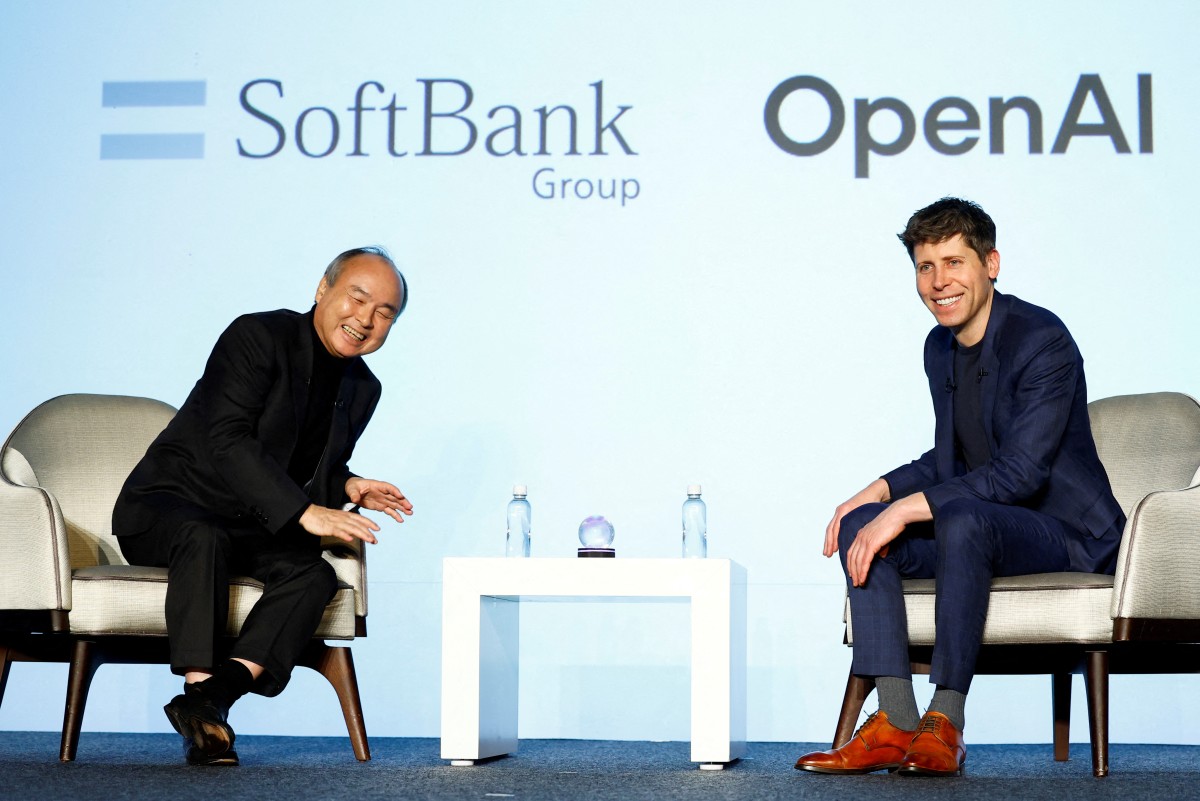
SoftBank seeks $10 billion loan collateralized by its OpenAI stake, offering new concessions to boost liquidity in a volatile AI market.
SoftBank Group Corp. has reportedly renewed discussions for a $10 billion loan collateralized by its substantial stake in OpenAI, offering additional concessions to lenders as the Japanese conglomerate seeks to bolster its liquidity amidst a fervent yet volatile artificial intelligence market. This renewed push signals SoftBank's strategic intent to leverage its most prized AI assets, potentially indicating a broader trend among major tech investors to monetize high-growth, illiquid holdings to fuel new ventures or manage existing capital commitments. The intricate financing structure underscores the ongoing private market appetite for exposure to leading AI innovators, even as public market sentiment fluctuates. The proposed $10 billion facility would be secured against a portion of SoftBank's indirect ownership in OpenAI, primarily held through its Vision Fund vehicles. Sources familiar with the matter indicate the renewed talks include more favorable terms for lenders, reflecting SoftBank’s eagerness to close the deal after previous attempts faced hurdles related to valuation and collateral specifics. While the exact concessions remain undisclosed, they likely involve enhanced yield spreads, more robust covenants, or a larger equity buffer against the underlying asset’s valuation, providing a more attractive risk-reward profile for potential creditors. This financing initiative follows a pattern for SoftBank, which has historically utilized its most valuable portfolio companies, such as Alibaba Group Holding Ltd. and Arm Holdings Plc, as instruments for capital generation. The discussions come as OpenAI's valuation has soared in recent private market transactions, reaching approximately $80 billion to $90 billion, making it one of the most valuable private technology companies globally. SoftBank’s ability to secure such a substantial loan against its stake underscores the perceived value and future growth prospects of generative AI, yet it also highlights the challenges of liquidity in a private market often characterized by lengthy holding periods and limited exit opportunities. The proceeds from the loan could provide SoftBank with significant dry powder, potentially earmarked for new AI investments or to manage its substantial debt load, which stood at ¥13.7 trillion ($88 billion) at the end of December.
What It Means
This renewed financing effort by SoftBank carries significant implications for both the company's capital strategy and the broader AI investment landscape. For SoftBank, it represents a continued pivot towards monetizing its successful AI bets to fuel future growth, a strategy that has become increasingly critical following the mixed performance of its earlier Vision Funds. The ability to secure a loan of this magnitude, even with concessions, reflects persistent institutional investor confidence in OpenAI’s foundational technology and market position, despite nascent profitability and intense competition. It also indicates a sophisticated approach to capital allocation, where illiquid private equity stakes are treated as viable collateral for debt financing, expanding the toolkit for large-scale tech investors. The transaction could set a precedent for other private equity firms and venture capitalists holding significant, illiquid stakes in high-growth AI companies. As the AI sector matures, the demand for creative financing solutions will likely intensify, allowing investors to recycle capital without fully divesting their positions. This dynamic can help sustain high valuations in the private market longer than traditional exit routes might allow, potentially delaying or influencing the timing of future public listings for prominent AI firms. My read is that this move underscores a disciplined response to market conditions, demonstrating SoftBank's agility in navigating capital markets to optimize its portfolio's financial leverage.
SoftBank's proposed $10 billion loan, secured against its OpenAI stake, represents roughly 11-12% of OpenAI's estimated $80-90 billion private market valuation.
The Context
SoftBank’s journey with artificial intelligence investments has been central to its strategy, particularly after the restructuring of its Vision Funds following the tumultuous performance of several high-profile bets, including WeWork. Masayoshi Son, SoftBank’s founder and CEO, has consistently championed AI as the "information revolution," positioning the company to be at the forefront of this technological shift. The investment in OpenAI, though indirect via existing Vision Fund holdings and follow-on rounds, aligns perfectly with this long-term vision. The company's previous capital-raising activities, such as the partial sale of its Alibaba stake and the initial public offering of Arm Holdings Plc, provide a clear operational blueprint for leveraging strategic assets. The Arm IPO in September 2023, which raised nearly $5 billion and saw SoftBank retain a significant majority stake, demonstrated the market's appetite for AI-enabling semiconductor technology and SoftBank's capacity to orchestrate large-scale financial maneuvers. This OpenAI-backed loan is a logical extension of that strategy, seeking to extract value from a non-public asset without relinquishing control, thereby maintaining exposure to its future upside. The ongoing talks also reflect a broader trend of large-cap private technology companies seeking alternative financing avenues amidst a more challenging IPO market and a higher cost of capital.
The Bear Case
While the renewed loan discussions highlight confidence in OpenAI's potential, a bear case perspective would point to the inherent risks associated with such highly leveraged positions in a rapidly evolving sector. The implied valuation of OpenAI, while impressive, is largely predicated on future growth and market dominance that is far from guaranteed. Intensifying competition from tech giants like Google, Microsoft, and Meta, coupled with the open-source community’s rapid advancements, could erode OpenAI’s competitive edge or force margin compression in the long term. Moreover, regulatory scrutiny on AI models, data privacy, and potential monopolistic practices could introduce unforeseen headwinds, impacting OpenAI’s operational freedom and revenue potential. For SoftBank, layering substantial debt against a single, albeit valuable, private asset increases concentration risk within its portfolio. A significant downturn in AI valuations, or specific challenges faced by OpenAI, could trigger covenant breaches or require further collateral, potentially forcing SoftBank to sell more of its stake at an unfavorable time. This mirrors some of the challenges faced by earlier Vision Fund investments where valuations proved unsustainable against market realities. The final paragraph... Investors will closely monitor the progress of these loan negotiations, as their successful closure could signal sustained bullish sentiment for top-tier private AI companies and potentially free up SoftBank to pursue new strategic investments. Beyond the immediate deal, key indicators to watch include OpenAI's commercialization trajectory, particularly its ability to translate technological leadership into consistent revenue and profitability. Further, any shifts in broader macroeconomic conditions, interest rate policies, or regulatory frameworks governing AI will undoubtedly influence both the cost and availability of such bespoke financing solutions for major tech players in the coming quarters.
Frequently asked questions
What is SoftBank doing with its OpenAI stake?
SoftBank Group is reportedly renewing discussions for a $10 billion loan, using its significant stake in OpenAI as collateral. This move is aimed at boosting the Japanese conglomerate's liquidity amidst the dynamic artificial intelligence market.
Why is SoftBank seeking this loan?
SoftBank is seeking the loan to bolster its liquidity and leverage its valuable AI assets, particularly its OpenAI investment, in the current market.
What concessions is SoftBank offering?
SoftBank is offering additional concessions to lenders, though specific details are not disclosed in the preview, to secure the $10 billion loan.
What is OpenAI?
OpenAI is a leading artificial intelligence research and deployment company known for developing large language models like GPT and image generation models like DALL-E.
Who is the CEO of SoftBank?
Masayoshi Son is the founder and CEO of SoftBank Group Corp., the Japanese multinational conglomerate.
How big is SoftBank's stake in OpenAI?
The article preview describes SoftBank's stake in OpenAI as "substantial," indicating a significant investment, though the exact percentage is not specified.