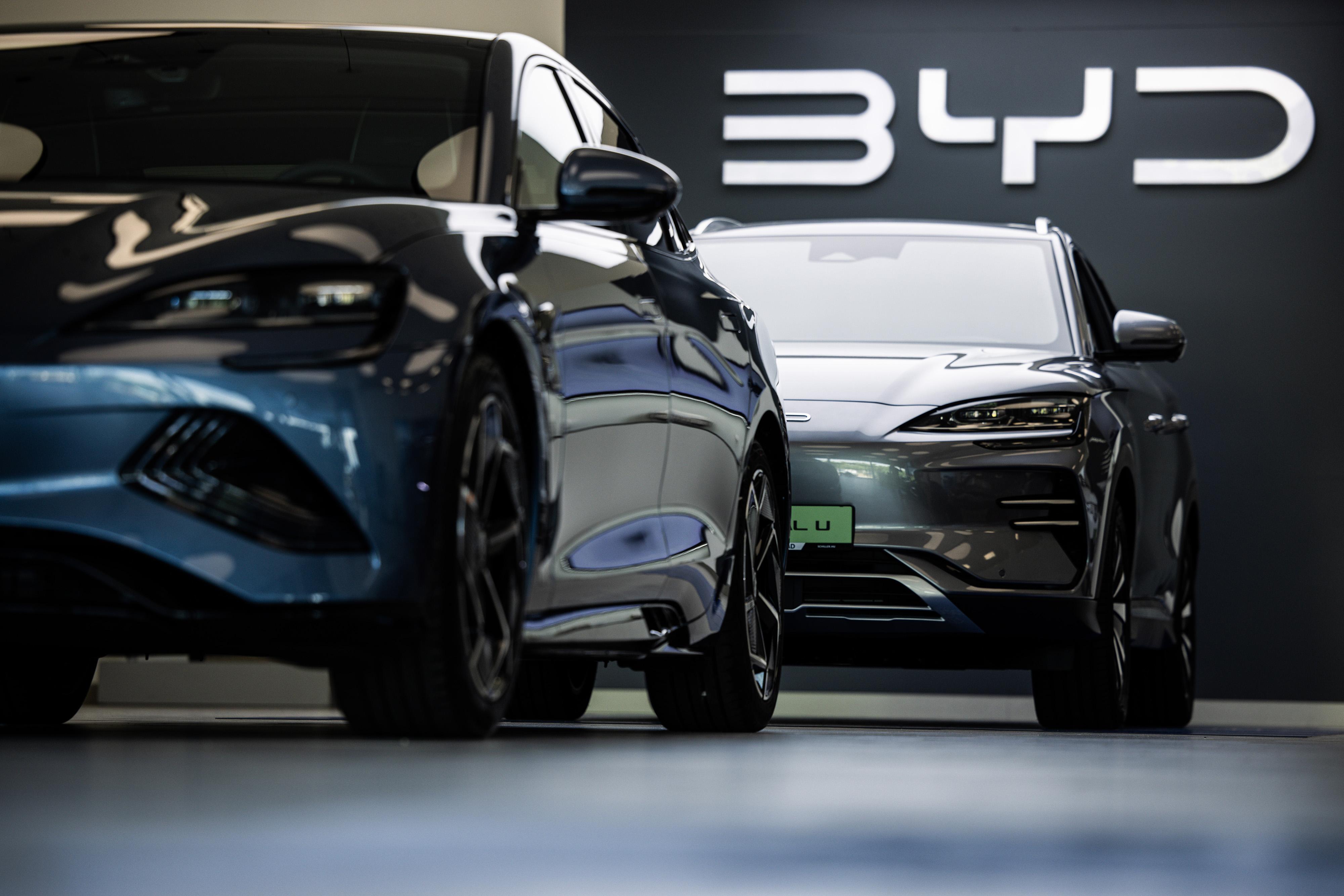
The Chinese automotive giant is poised to reclaim its top spot in fully electric vehicle sales, signaling a major shift in the global EV market.
The global electric vehicle race is heating up, and a familiar challenger is once again making a significant move against the reigning champion. Chinese automotive giant BYD is on track to reclaim its title as the world's top seller of fully electric vehicles, potentially unseating Tesla in the coming quarters. This isn't just a contest between two companies; it signals a pivotal shift in the broader EV market, one that could redefine everything from vehicle pricing to technological innovation, eventually impacting consumers and investors far beyond China's borders.
Here's what happened: For a brief period at the end of 2023, BYD surpassed Tesla in quarterly EV sales, a monumental achievement that underscored its rapid ascent. While Tesla clawed back the lead in the first quarter of 2024, the underlying trends suggest BYD's momentum is relentless, driven by aggressive pricing, diverse model offerings, and unparalleled vertical integration. The company's strategic expansion, particularly outside its domestic market, indicates that its previous overtaking of Tesla was not a fluke but rather a preview of an ongoing, structural shift in the automotive industry's future.
BYD's rise is fundamentally different from Tesla's. While Tesla built its brand on innovation, premium positioning, and a direct-to-consumer model, BYD's strength lies in its ability to produce a vast array of affordable electric and plug-in hybrid vehicles, alongside its comprehensive control over the entire supply chain. This includes everything from battery production – its proprietary Blade Battery is a significant differentiator – to semiconductors and even raw materials, a level of integration that Tesla, for all its manufacturing prowess, has yet to fully achieve. This allows BYD to offer compelling value propositions across multiple market segments, from entry-level sedans to luxury SUVs, often at price points that are difficult for competitors to match.
The company's product portfolio is staggering. Beyond passenger cars like the Dolphin hatchback, the Seal sedan, and the Atto 3 SUV, BYD also manufactures electric buses, trucks, forklifts, and even monorails. This diversified approach hedges against market fluctuations in any single segment and provides economies of scale that few automotive companies, electric or otherwise, can replicate. While Tesla has largely focused on a narrower range of premium models and its nascent Cybertruck, BYD’s "ocean series" of vehicles, named after marine animals, has flooded the market with attractively priced, well-equipped EVs.
One critical factor in BYD's current trajectory is its aggressive push into international markets. While China remains its largest market, BYD has made significant inroads into Europe, Southeast Asia, Latin America, and Australia. It's establishing manufacturing plants in Brazil, Thailand, and Hungary, reducing reliance on exports from China and cementing its global footprint. This expansion is chipping away at the market share of established players and increasingly puts direct pressure on Tesla's global sales, even in regions where BYD might not be the direct sales leader.
Why this matters for North America
For consumers and investors in North America, BYD's ascent, even without a direct passenger vehicle presence in the US and Canada, has significant implications. First, it intensifies the global competition in the EV space, putting pressure on Tesla to innovate faster and potentially adjust pricing strategies worldwide. Tesla’s strategic price cuts throughout 2023 were, in part, a response to increasing competition, especially from value-oriented players like BYD. This competitive pressure ultimately benefits consumers through potentially lower prices and a wider range of features from all EV manufacturers.
Second, BYD's dominance in battery technology, particularly its LFP (lithium iron phosphate) Blade Battery, is a major trend to watch. These batteries are safer, more durable, and more cost-effective than traditional NMC (nickel manganese cobalt) batteries, which have been more common in North American EVs. While Tesla itself has started incorporating LFP batteries from suppliers like CATL into some of its standard-range models, BYD's vertically integrated approach and proprietary tech could set new industry benchmarks for battery performance and cost. This push for cheaper, more efficient battery tech will inevitably influence battery development and adoption by other automakers operating in North America, even if BYD isn't supplying them directly.
Third, while BYD does not currently sell passenger cars in the US due to geopolitical tensions, tariffs, and regulatory hurdles, its strategic moves into the North American commercial vehicle market cannot be ignored. BYD has been selling electric buses and trucks in the US for years, operating a manufacturing plant in Lancaster, California. This establishes a beachhead and a supply chain infrastructure that, while distinct from passenger vehicles, could theoretically be leveraged for broader market entry in the future, should the political and economic landscape shift. The company's growing influence also forces North American policymakers and automakers to consider the implications of a global EV market increasingly dominated by Chinese manufacturers, shaping investment in domestic production and technology.
The Battle for the EV Future
The rivalry between BYD and Tesla encapsulates the evolving philosophy of the electric vehicle market itself. Tesla largely champions a future driven by advanced software, autonomous driving, and a premium brand experience, effectively positioning itself as a tech company that happens to make cars. BYD, on the other hand, embodies the idea of democratizing electric mobility through mass-market affordability, robust engineering, and vertical integration, positioning itself as a manufacturing powerhouse delivering accessible transportation solutions. This fundamental divergence in strategy reveals two distinct paths for the future of the automotive industry.
My read on this dynamic is that while Tesla continues to push the boundaries of technology and perception, BYD is mastering the art of efficient, large-scale EV production and distribution. The ability to control the entire value chain, from raw materials to final assembly, gives BYD a significant cost advantage, especially in a market increasingly sensitive to price. As government subsidies for EVs begin to wane in many markets, this cost efficiency will become an even more critical differentiator. Tesla, for its part, is responding with efforts to streamline its manufacturing, scale its 4680 battery production, and develop next-generation, lower-cost platforms, but it faces a formidable competitor that has optimized for volume and affordability from day one.
The expansion of BYD, particularly its push into markets where Tesla is also present, means that the competition will only intensify. This isn't just about who sells the most cars in a given quarter; it's about which company can most effectively capture the imagination and wallets of the global middle class as they transition to electric vehicles. For Tesla, maintaining its premium appeal while attempting to achieve greater affordability will be a delicate balancing act. For BYD, the challenge will be to build brand recognition and trust in new markets, proving that its cost-effectiveness doesn't come at the expense of quality or desirable features.
Ultimately, the ongoing battle between BYD and Tesla is a clear indicator that the global automotive landscape is in constant flux. The electric revolution is still in its early stages, and as we move from early adopters to the mass market, the companies that can best combine technological prowess with manufacturing efficiency and aggressive pricing will likely emerge as the true long-term leaders. This competitive dynamic ensures a vibrant, innovative, and increasingly diverse EV market, benefiting consumers worldwide with more choices and advanced, affordable electric transportation solutions.
Frequently asked questions
Why is BYD set to overtake Tesla in EV sales?
BYD's growth is driven by its strong domestic market presence in China, a diverse range of affordable EV models, and a vertically integrated supply chain, allowing for competitive pricing and rapid production scaling.
What does this mean for the global electric vehicle market?
This shift signals increased competition and diversification in the global EV market, moving beyond a Tesla-dominated landscape and highlighting the growing influence of Chinese manufacturers.
How does BYD's strategy differ from Tesla's?
BYD focuses on a broader range of vehicle types, from sedans to buses, and emphasizes affordability and battery technology, while Tesla often targets premium segments and software integration.
Will Tesla lose its market share significantly?
While BYD may lead in unit sales, Tesla continues to dominate in certain segments and profitability. The market is expanding, so both companies can grow, but Tesla's relative market share might adjust.
What role does the Chinese market play in BYD's success?
The vast and rapidly growing Chinese EV market is BYD's primary engine of growth, providing a strong base for sales and production volumes that enable its global expansion.
Are BYD's electric cars available globally?
Yes, BYD is expanding its presence beyond China, actively entering markets in Europe, Southeast Asia, Australia, and South America with various EV models.