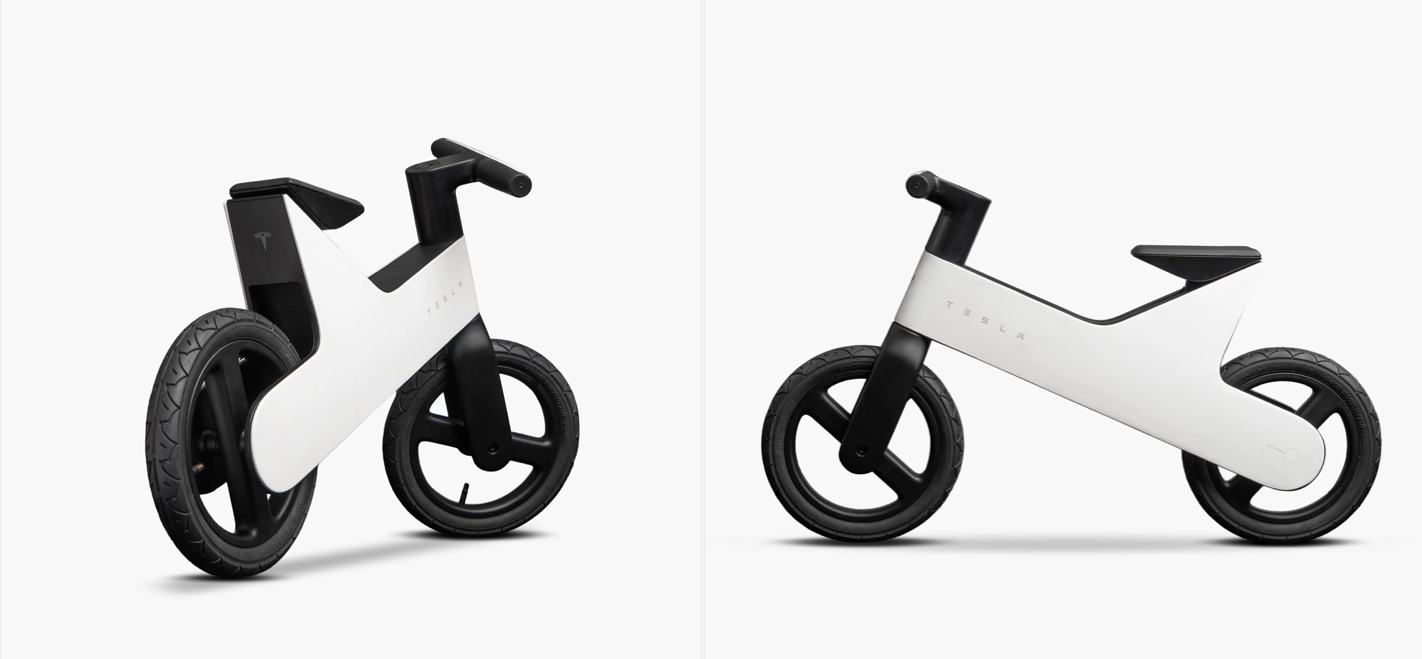
Fans awaited an e-bike, but Tesla debuted a $225 balance bike for toddlers, sparking debate on its brand strategy and premium accessory market push.
Tesla Finally Launches a Bike — But It’s a Balance Bike for Toddlers, Sparking Debate on Brand Strategy
After years of speculation about an e-bike, Tesla has launched a $225 balance bike for toddlers, positioning itself in the premium children's lifestyle market.
This move reflects a broader trend of leveraging strong brand equity into high-margin accessories, raising questions about Tesla's core product expansion versus lifestyle branding.
For years, the fervent community of Tesla enthusiasts and even casual observers have speculated about the company’s entry into the electric bicycle market. Dreams of a "Tesla Model B" e-bike, complete with cutting-edge tech and sleek design, have circulated widely, often fueled by surveys showing high consumer demand for such a product from the EV giant. The moment that finally arrived, however, was not what most expected: a balance bike for toddlers, signaling a curious strategic sidestep. The newly launched "Balance Bike for Kids," priced at $225 on Tesla’s online shop, is designed for children aged two to five. This product is a departure from the high-performance electric vehicles Tesla is known for, offering a lightweight magnesium frame, an adjustable seat with five height levels, and the distinct Tesla wordmark and ‘T’ logo. Crucially, it has no motor and no pedals, embodying the fundamental design of a balance bike where children propel themselves with their feet to learn coordination and steering. From a product standpoint, the balance bike is functional, adhering to specifications like a minimum leg length of 13.7 inches and a maximum weight limit of 77 lbs, with assembly tools included. However, its pricing immediately positions it at the upper echelon of the market. This pricing strategy suggests a deliberate play on brand cachet rather than competitive value. My read is that this isn't merely about selling a bicycle; it's a calculated move into lifestyle branding, aligning Tesla with companies that extend their core identity into high-margin merchandise. This approach resonates with a growing global trend where aspirational brands, whether in automotive or luxury goods, cultivate an ecosystem of branded products that reinforce loyalty and brand affinity from an early age. It’s a strategy for monetising brand equity without diverting significant R&D resources from core vehicle development. What strikes me here is the contrast with other prominent automakers and EV brands that have taken a different path into the two-wheeler space. These companies are engaging directly with the electric mobility trend that Tesla fans had hoped for. Tesla’s choice to enter with a children's balance bike, rather than a full-fledged e-bike, highlights a distinct focus on brand ecosystem building over immediate market expansion in a related mobility segment. For Tesla, the goal appears to be less about diversifying its product line with a functional e-bike and more about solidifying its position as a lifestyle brand. This move could be interpreted as testing the waters for brand extension, cultivating a loyal customer base from childhood, or simply capitalising on its iconic status for immediate revenue through merchandise. It certainly prompts a re-evaluation of how tech giants, especially those with such passionate followings, choose to expand their market presence and brand narrative. This strategic pivot offers a fascinating case study for aspiring entrepreneurs. It underscores the immense power of brand equity and the diverse avenues through which a company can expand its footprint beyond its primary offerings. The message is clear: a strong brand, built on innovation and aspirational value, can unlock opportunities in unexpected market segments, demonstrating that brand building is as crucial as product innovation in today's competitive landscape.
Frequently asked questions
What kind of bike did Tesla finally launch?
Tesla finally launched a balance bike designed for toddlers, priced at $225. This came as a surprise to many fans who had been anticipating an electric bicycle.
Is Tesla planning to release an e-bike?
While there has been years of speculation about a Tesla e-bike, the company has not yet confirmed any plans for an electric bicycle. The current launch is a balance bike for young children.
How much does the Tesla balance bike cost?
The Tesla balance bike, targeting the premium children's lifestyle market, is priced at $225. This reflects its positioning as a high-margin accessory for the brand.
Why did Tesla launch a balance bike instead of an e-bike?
Tesla's move into children's balance bikes reflects a broader strategy to leverage its strong brand equity into high-margin accessories and explore new market segments beyond its core automotive business.
What is a balance bike?
A balance bike is a two-wheeled, pedal-less bicycle designed to help young children learn to balance and steer. It serves as an introductory step before riding a traditional pedal bike.
Does this launch affect Tesla's brand image?
The launch has sparked debate, with some seeing it as a clever brand extension into premium lifestyle goods, while others question its alignment with Tesla's high-tech, sustainable transport image.