ePlane Company's prototype signals India's entry into the urban air mobility market, intensifying global eVTOL competition.
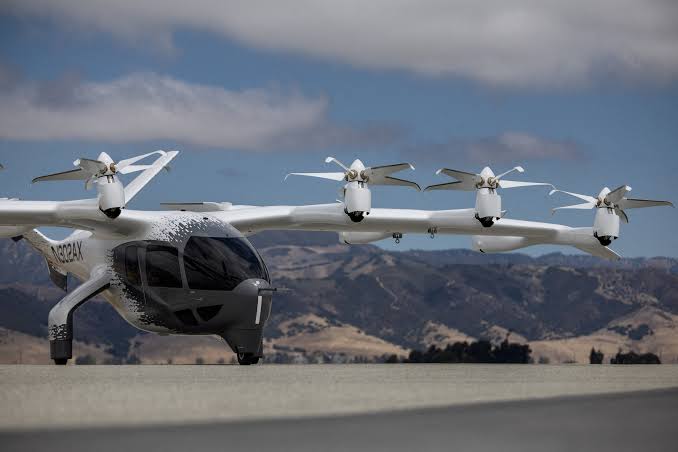
ePlane Company Prototype Signals India's Entry into Urban Air Mobility Race, Projecting a Future Launch Chennai-based ePlane Company has advanced its electric air taxi project from a conceptual stage to a full-scale prototype, indicating a significant step toward commercial urban air mobility solutions and intensifying competition within the global electric Vertical Take-Off and Landing (eVTOL) market. This development, aiming for a planned launch, could reshape short-haul passenger transport dynamics and presents new investment opportunities in India's burgeoning aerospace technology sector. The newly unveiled prototype, measuring specific dimensions, is touted by the company as a compact air taxi of its kind, offering a distinct advantage for operations within congested urban environments. This innovative design directly addresses critical infrastructure concerns, particularly the spatial requirements for landing and takeoff, which are often cited as primary barriers to widespread eVTOL adoption in metropolitan areas. The compact footprint minimizes the need for extensive real estate, potentially accelerating the deployment of vertiports in dense urban landscapes. Engineered for efficiency and practical application, the ePlane taxi is designed to achieve a significant range on a single electric charge, providing viable inter-city or intra-city travel options for commuters and businesses. The company projects a premium fare structure, positioning the service as a premium yet potentially accessible alternative to conventional ground transportation for time-sensitive journeys. This pricing strategy aims to capture a segment of the market willing to pay a premium for significantly reduced travel times and enhanced convenience, differentiating it from mass-market public transport solutions. A long development timeline underscores the complex engineering and significant research and development investment required to bring such advanced aerospace technology to fruition, highlighting the long lead times inherent in aviation innovation.
What Are the Market Implications for Urban Mobility?
The successful prototyping by ePlane Company marks a pivotal moment for urban air mobility in Asia, a region characterized by dense populations and severe traffic congestion across its megacities. The introduction of eVTOLs promises to alleviate urban gridlock, reduce travel times dramatically, and offer a cleaner alternative to existing transport networks, driving substantial interest from both public and private sectors seeking sustainable infrastructure solutions. This shift represents a potential paradigm change, moving beyond traditional ground-based transportation models to embrace a multi-modal urban transport ecosystem. The global eVTOL market, while nascent, is attracting significant capital, with venture firms and established aerospace players pouring investments into a diverse array of startups globally. EPlane Company's specific focus on a compact design and a competitive pricing model could carve out a distinct niche in a market increasingly crowded with contenders like Joby Aviation, Archer Aviation, and Lilium, each pursuing different operational scales and mission profiles. The long-term viability of these ventures hinges not only on technological prowess and manufacturing scale but also critically on developing robust regulatory frameworks and expansive ground infrastructure to support widespread commercial operations and ensure public safety. Effective integration of eVTOLs into existing air traffic control systems presents a formidable technical and regulatory challenge that requires extensive collaboration between aviation authorities and industry innovators. Beyond airworthiness certification, regulators must address concerns such as noise pollution, visual impact, and public acceptance, which are crucial for gaining community buy-in and enabling widespread adoption. The establishment of dedicated vertiports, equipped with charging infrastructure and maintenance facilities, will necessitate significant capital expenditure and strategic urban planning, further impacting the timeline for commercial deployment.
What Is the Background of eVTOL Development?
The emergence of ePlane Company from the Indian Institute of Technology Madras (IIT Madras) ecosystem underscores the growing role of academic research and incubation centers in fostering advanced technological innovation within the aerospace sector. This trend mirrors developments globally, where university spin-offs and deep-tech startups are at the forefront of pioneering next-generation transportation solutions, supported by a confluence of engineering talent and strategic early-stage funding. Such institutional backing provides critical resources and expertise, enabling complex projects to transition from theoretical concepts to tangible prototypes. The broader eVTOL industry has seen rapid technological advancements in recent years, particularly in battery energy density, electric propulsion systems, and sophisticated autonomous flight control software. These innovations have been instrumental in moving electric aviation from theoretical concepts to viable prototypes, overcoming previous limitations in range, payload capacity, and operational safety. However, the path to full commercialization remains challenging, requiring extensive flight testing, rigorous certification processes from aviation authorities such as the Federal Aviation Administration (FAA) in the United States and the European Union Aviation Safety Agency (EASA), and the establishment of dedicated air traffic management systems for low-altitude urban airspace. The coming years will be crucial for ePlane Company as it navigates the stringent certification processes and aims for series production ahead of its ambitious target. Key indicators for market watchers will include the company's progress in securing additional financing rounds, forging strategic partnerships for manufacturing, vertiport development, and operational support, and demonstrating consistent compliance with evolving global aviation safety standards, which are paramount for investor confidence and public acceptance of urban air mobility solutions.
Frequently asked questions
When will India's first electric air taxi launch?
India's first electric air taxi, developed by ePlane Company, is projected for a commercial launch in 2028, following the successful unveiling of its full-scale prototype.
What company is developing India's electric air taxi?
The Chennai-based ePlane Company is the innovator behind India's first electric air taxi project.
What is eVTOL technology?
eVTOL stands for electric Vertical Take-Off and Landing, referring to aircraft that use electric power to hover, take off, and land vertically.
How does India's electric air taxi contribute to urban air mobility?
India's electric air taxi aims to provide a sustainable and efficient solution for short-distance intra-city travel, reducing traffic congestion and emissions.
What is the significance of ePlane Company's prototype?
The prototype signifies a major advancement from concept to a tangible, full-scale model, marking India's official entry into the global urban air mobility race.
What is the projected launch year for India's electric air taxi?
The ePlane Company is targeting a commercial launch for India's first electric air taxi in 2028.