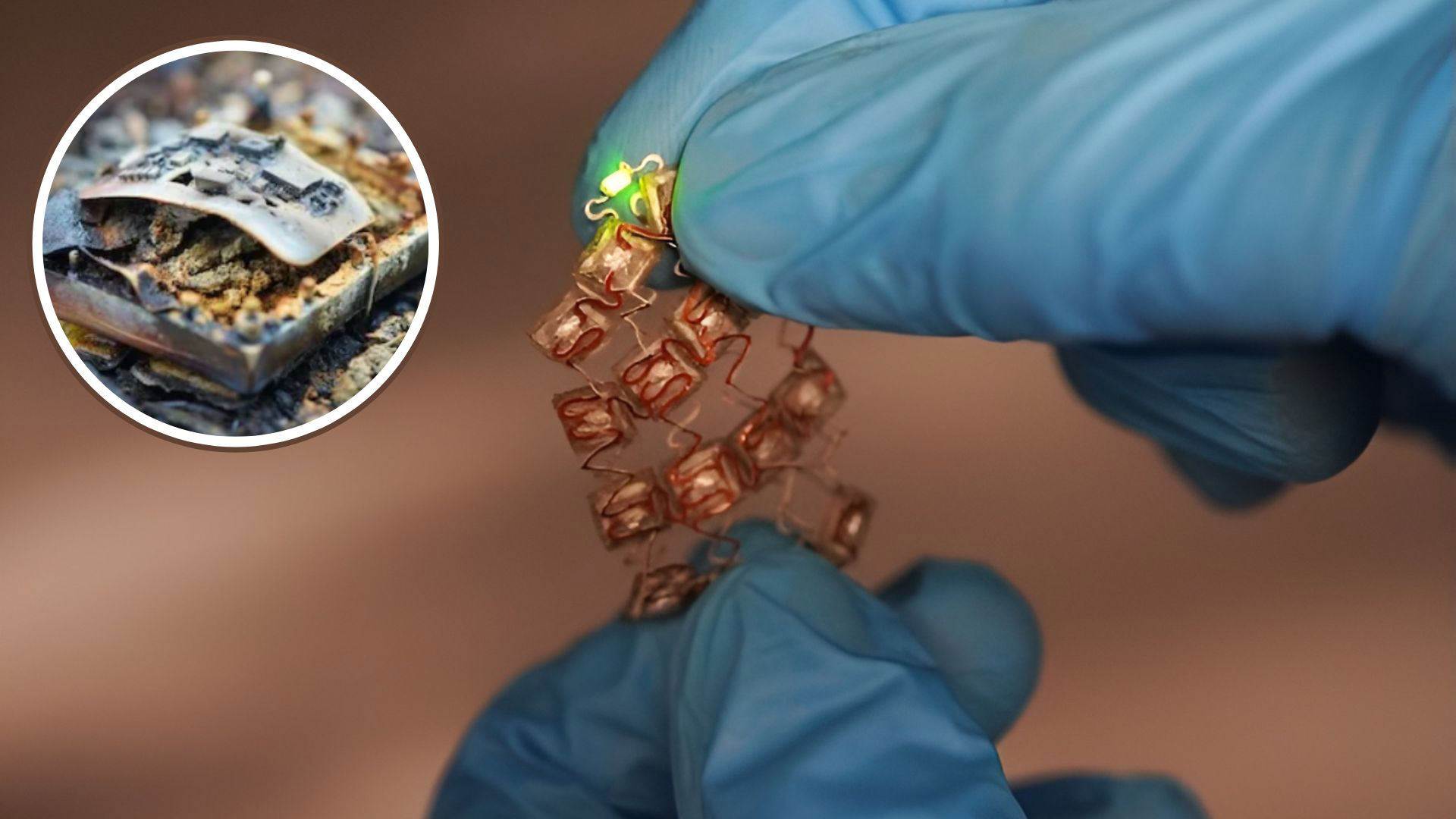
Researchers in China have developed the Qianjiyuan Tianshu, a powerful carbon-14 isotope nuclear battery designed for industrial use, offering unprecedented longevity.
Chinese scientists have achieved a significant advancement in nuclear battery technology, unveiling a new carbon-14 isotope battery designed for industrial applications that promises to deliver power for thousands of years, signaling a strategic shift in long-duration energy solutions and potentially opening new market segments for autonomous systems. This development, spearheaded by researchers at Northwest Normal University and Gansu Zhulong Technology, intensifies China's pursuit of energy independence and technological leadership in critical sectors, with profound implications for defense, space exploration, and remote infrastructure. The new battery, named Qianjiyuan Tianshu, represents a substantial leap from previous iterations, notably the 2024 Candle Dragon‑I model. It leverages a carbon-14 isotope in conjunction with a silicon carbide (SiC) transducer, dramatically improving efficiency and longevity. The design optimizes power output, delivering 2.6 times more energy than its predecessor without compromising voltage stability, while meticulously limiting the radioactive material content to 22 percent of the overall composition. This engineering feat positions China to address long-standing challenges in powering devices where human intervention for recharging or replacement is impractical or impossible. The inherent nature of nuclear batteries, which convert energy from the decay of radioactive isotopes into electricity, allows for operating lifetimes that far exceed conventional chemical batteries, presenting a compelling proposition for specialized industrial applications where extreme durability is paramount.
What Are the Global Stakes for Long-Duration Power?
The commercialization of ultra-long-life nuclear batteries like Qianjiyuan Tianshu carries significant global implications, particularly for industries requiring perpetual power in inaccessible or hazardous environments. My read is that this technology, while not a direct replacement for grid power or electric vehicle batteries, carves out a high-value niche in sectors where energy autonomy is a mission-critical factor, driving new venture capital interest in supporting infrastructure and integration. This includes deep-sea sensors, remote monitoring stations, specialized medical implants, and autonomous space vehicles that operate far beyond Earth’s orbital reach. Such enduring power sources could dramatically reduce operational costs and logistical complexities associated with maintaining remote infrastructure, impacting everything from arctic research outposts to transcontinental fiber optic repeaters. Moreover, the capacity for these batteries to deliver consistent power over millennia offers a compelling, albeit nascent, investment thesis for technologies requiring indefinite power, potentially creating entirely new markets for embedded intelligence and pervasive sensing. The strategic value extends into national security, offering unparalleled resilience for critical data collection and communication nodes.
China's new Qianjiyuan Tianshu nuclear battery delivers 2.6 times more power than its predecessor while maintaining voltage stability, a crucial metric for high-reliability industrial applications.
What Is the Background of Nuclear Battery Development?
Nuclear batteries, also known as radioisotope or atomic batteries, harness the energy released from the decay of radioactive isotopes to generate an electric current. Their operational principle has been understood for decades, with early applications focusing primarily on space exploration due to their unparalleled longevity and reliability in harsh conditions. NASA, for instance, has famously deployed radioisotope thermoelectric generators (RTGs) in its deep space missions, including the Voyager probes launched in 1977 and the Mars Curiosity rover in 2012, allowing these spacecraft to function for decades beyond their initial mission parameters. China has also been an active participant in this field, utilizing nuclear battery technology in its lunar missions, notably with the Chang’e-3 and Chang’e-4 lunar rovers. These prior deployments underscored the reliability and necessity of such power sources for extended extraterrestrial operations. The development of Qianjiyuan Tianshu marks a pivotal transition, shifting the focus from predominantly space-borne applications to a broader industrial strategy aimed at miniaturization and increased power density for terrestrial use, signaling a concerted effort to leverage this technology for economic and strategic advantage.
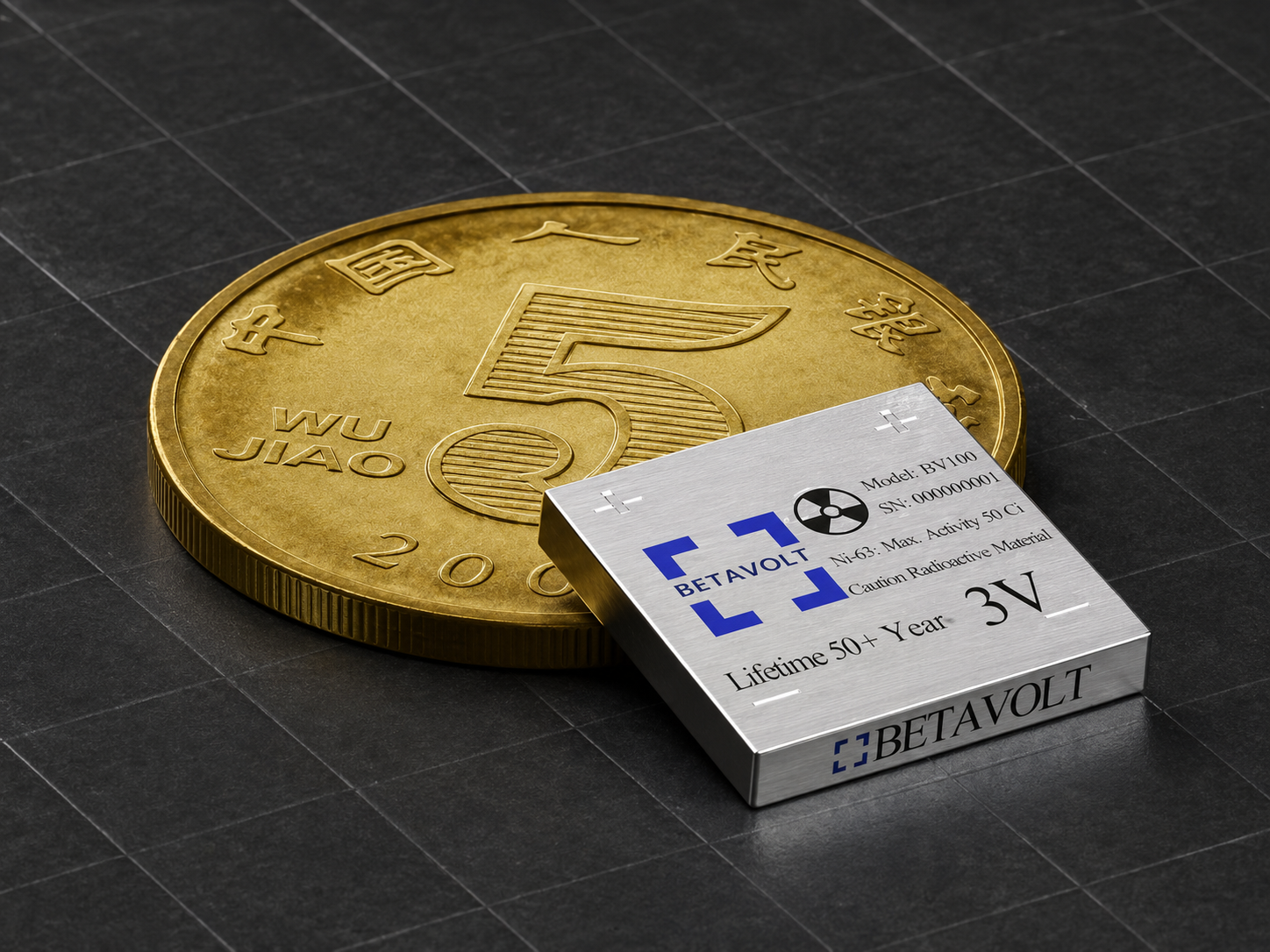
China’s unveiling of the Qianjiyuan Tianshu carbon-14 nuclear battery marks an undeniable leap in material engineering. Shrunk to roughly a cubic inch while delivering 2.6 times the output of its predecessor, the hardware brilliantly demonstrates how to optimize radiovoltaic efficiency using silicon carbide transducers. Yet, for hardware founders and deep-tech investors, it is vital to separate structural longevity from commercial viability. A theoretical lifespan spanning thousands of years sounds revolutionary, but the output remains strictly constrained to nanowatts. This is not an upcoming power pack for mainstream robotics or IoT fleets; it is a highly restricted, hyper-niche architecture built for inaccessible environments like deep-sea nodes and aerospace telemetry. The real hurdle for startups looking to commercialize this tech isn't the engineering footprint—it is navigating the brutal global web of radioactive material handling, regulatory compliance, and non-proliferation scrutiny.
What Are the Emerging Industrial Applications?
The shift in focus towards smaller, more powerful nuclear batteries for industrial applications reflects a broader trend toward autonomous systems and distributed intelligence. For me, the most significant impact here isn't just the battery itself, but what it enables: truly maintenance-free, long-term operation of critical infrastructure in previously unthinkable scenarios. Consider the implications for smart city sensors that never need battery replacement, or environmental monitoring equipment in extreme climates that can function continuously for centuries. This capability could fundamentally alter the economic models for remote asset deployment and management across various sectors. Beyond the immediate industrial applications, this development also intersects with the burgeoning space economy, where the demand for robust, long-lasting power systems for satellites, lunar bases, and asteroid mining operations is set to explode. While cost and regulatory hurdles remain substantial, the performance metrics of the Qianjiyuan Tianshu hint at a future where energy scarcity in challenging environments could be significantly mitigated. The ability to embed such self-sustaining power sources into a new generation of devices could catalyze innovation in areas ranging from biomedical implants to remote data centers. The path to widespread industrial adoption, however, will face rigorous regulatory scrutiny concerning safety, disposal, and international proliferation controls. Companies and investors will need to closely monitor global regulatory frameworks and international collaborations on nuclear material handling. Key milestones to watch include pilot deployments in critical infrastructure, any announced partnerships with major industrial conglomerates, and the evolution of international standards for the safe commercialization of radioisotope power sources beyond their traditional aerospace niche. ```
Frequently asked questions
What new nuclear battery did Chinese scientists develop?
Chinese scientists, specifically researchers at Northwest Normal University and Gansu Zhulong Technology, developed a new-generation carbon-14 isotope nuclear battery named Qianjiyuan Tianshu. This battery is designed for industrial applications and boasts a lifespan of thousands of years.
How does the Qianjiyuan Tianshu nuclear battery work?
The Qianjiyuan Tianshu is a radioisotope or atomic battery that generates electricity from the energy released during the decay of its radioactive carbon-14 isotope. It uses a silicon carbide (SiC) transducer to convert this energy into usable electricity.
What are the key improvements of the new Chinese nuclear battery?
The new Qianjiyuan Tianshu battery is a major improvement over its predecessor (Candle Dragon‑I) in terms of capacity. It maximizes power to 2.6 times without changing voltage or stability, and its development was indigenous to China.
What applications are nuclear batteries typically used for?
Nuclear batteries are ideal for applications requiring long-duration power without maintenance, such as spacecraft (e.g., NASA's Voyager, Mars Curiosity rover, China's Chang’e lunar rovers), remote environmental sensors, and specific medical implants.
What is the lifespan of a nuclear battery?
Due to the long half-life of radioactive isotopes used, nuclear batteries can remain active for much longer than chemical batteries, often running into decades, centuries, or even thousands of years, as claimed for the new Chinese battery.
Who developed the Qianjiyuan Tianshu nuclear battery?
The Qianjiyuan Tianshu nuclear battery was developed by researchers at Northwest Normal University in collaboration with Gansu Zhulong Technology, both located in China.