Researchers unveil a stretchable, moisture-activated battery that powers IoT devices and self-destructs for ultimate data security.
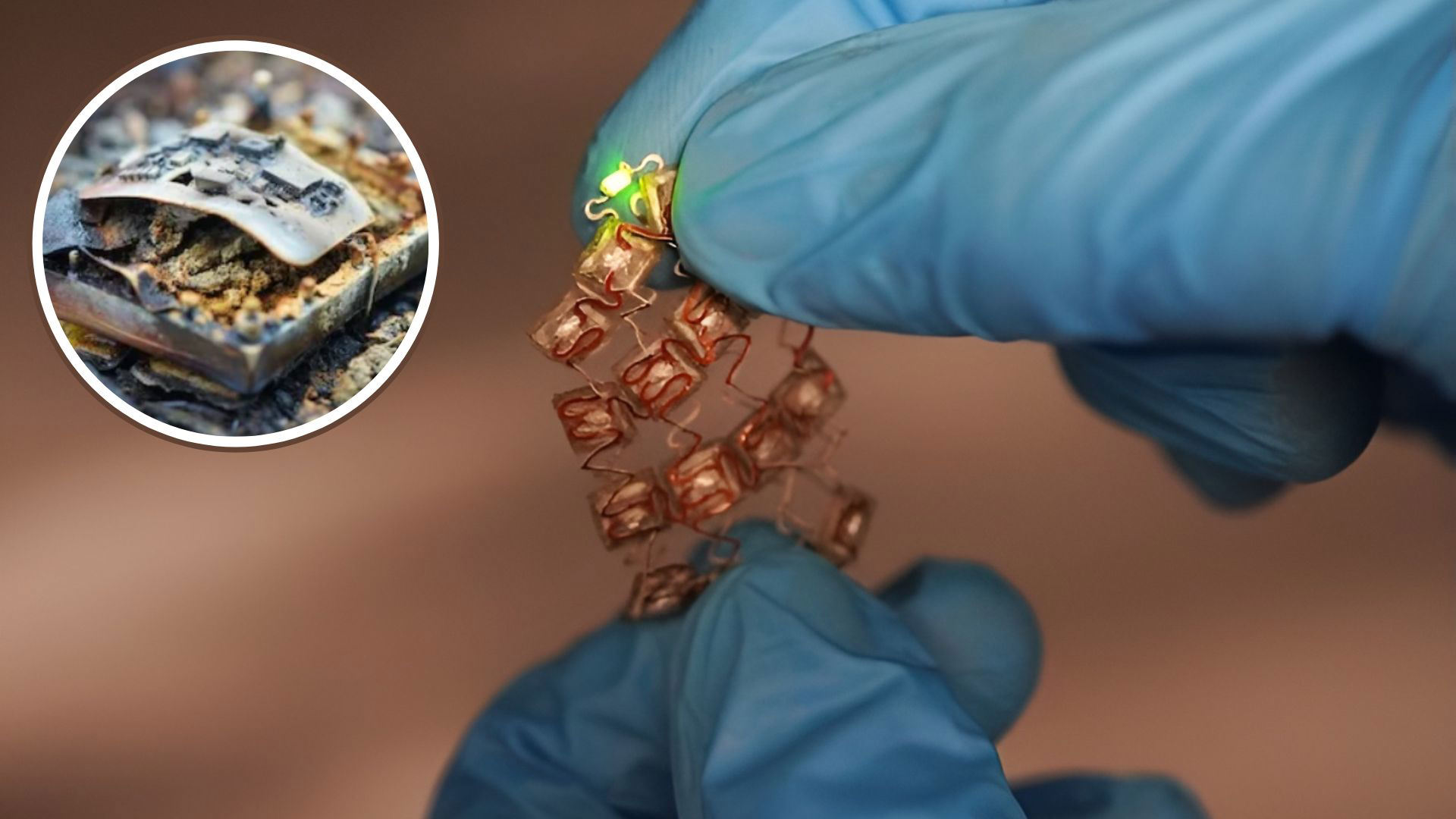
Researchers at Rice University and North Carolina State University have developed a stretchable, moisture-activated battery (MAB).
The MAB powers wearable and Internet of Things (IoT) devices by drawing moisture from the air, eliminating the need for conventional liquid electrolytes.
A novel feature is its integrated self-destruction mechanism, designed to enhance security for sensitive electronics if tampered with.
The innovation promises safer, more sustainable power solutions, capable of operating effectively even in low-humidity environments.
This advancement challenges existing battery paradigms, opening new possibilities for health monitors, miniature robotics, and secure remote sensors, with significant implications for the burgeoning tech markets in South and Southeast Asia.
A groundbreaking development by researchers at Rice University and North Carolina State University has unveiled a stretchable, moisture-activated battery (MAB) that could redefine power solutions for the rapidly expanding wearable and Internet of Things (IoT) sectors. This innovative power source eliminates the need for conventional liquid electrolytes by drawing moisture directly from the air to generate electricity. Crucially, the MAB incorporates a built-in self-destruct mechanism, an advanced security feature designed to destroy sensitive electronic devices if they are compromised, marking a significant leap in both energy storage and device integrity. The Moisture-Activated Battery (MAB) operates on a sophisticated yet elegant principle, utilising a magnesium anode, a silver/silver chloride cathode, and a cellulose membrane infused with lithium chloride salts. This membrane actively absorbs ambient moisture, dissolving the embedded salts to form an electrolyte that enables the battery to produce an electrical current. Beyond its power generation capabilities, the MAB offers distinct advantages over traditional batteries, including extended storage periods while inactive in sealed packaging, and the elimination of toxic and flammable electrolytes commonly found in existing power cells. This makes the technology inherently safer and more environmentally friendly, addressing critical concerns in the deployment of ubiquitous electronics. The MAB's robust design allows it to function efficiently even in low-humidity environments, significantly broadening its potential applications beyond what typical moisture-sensitive technologies can achieve. This adaptability makes it a viable solution for a diverse range of devices, from wearable health monitors and compact robots to remote sensors deployed in various environmental conditions. Its stretchable nature is particularly suited for integration into flexible electronics, a segment seeing rapid innovation, especially within the context of D2C (Direct-to-Consumer) health tech and personal monitoring devices across the Asia Pacific region.
The Innovation Driving the Shift
The conventional wisdom surrounding portable power has long been tethered to rigid, often bulky, and chemically complex battery systems, predominantly relying on liquid or gel electrolytes. These systems, while effective, present inherent limitations in terms of form factor flexibility, safety due to flammable components, and environmental impact upon disposal. The MAB directly challenges this paradigm by introducing an entirely new approach to energy generation that leverages a ubiquitous resource: atmospheric moisture. Amay Bandodkar, assistant professor of electrical and computer engineering at North Carolina State University and co-corresponding author of the research, stated that their battery eliminates toxic and flammable electrolytes because it’s essentially running on salt water. This simple yet profound shift not only mitigates safety risks but also simplifies the material science, potentially leading to more cost-effective and scalable manufacturing processes in the long term. Furthermore, the integration of a self-destruct mechanism represents a significant leap in hardware security, an aspect often overlooked in the rush for smaller, more powerful devices. In an era where data breaches and intellectual property theft are rampant, especially in competitive markets like India and Southeast Asia, the ability to remotely or automatically render a device inoperable if tampered with provides an unprecedented layer of protection. This feature could prove invaluable for sensitive government applications, defence electronics, or corporate IoT deployments handling proprietary data, offering a physical safeguard beyond software-based encryption. The MAB, therefore, is not merely an energy source; it is an enabling technology for a new generation of secure, resilient, and adaptable electronics.
The global market for wearable technology and IoT devices is projected to witness significant expansion over the next decade, with Asia emerging as a key growth driver, intensifying the need for advanced, flexible, and secure power sources.
Market Implications and Future Trajectories for South & Southeast Asia
The implications of such a development for the South and Southeast Asian markets are profound, particularly given the region's aggressive adoption of digital technologies and its burgeoning startup ecosystem. India, for instance, is witnessing an explosion in wearable tech adoption, from smartwatches to fitness trackers, alongside a robust expansion in IoT deployments across smart cities, agriculture, and industrial automation. The demand for flexible, sustainable, and safe power solutions that can integrate seamlessly into these diverse applications is immense. Startups in the healthtech, agritech, and smart manufacturing sectors within these regions could leverage MAB technology to create more durable, less environmentally impactful, and intrinsically more secure products, thereby gaining a significant competitive edge. This aligns with a broader trend towards green technology and circular economy principles that are gaining traction across the continent. The MAB's ability to operate in low-humidity environments also makes it exceptionally well-suited for the varied climatic conditions found across South and Southeast Asia, from arid regions to humid coastal areas. This versatility ensures reliable performance, a critical factor for remote sensors monitoring environmental data, agricultural parameters, or infrastructure integrity in challenging terrains. Moreover, the self-destruct feature could be a game-changer for startups developing secure payment wearables or sensitive data collection devices, offering peace of mind to both consumers and enterprises regarding data integrity and device security in an increasingly connected, yet vulnerable, digital landscape. This innovation marks a clear trend towards integrating advanced materials and novel power chemistries into high-value applications, moving beyond incremental improvements in traditional battery technology towards truly disruptive solutions.
Frequently asked questions
What is the new air-powered battery?
It's a stretchable, moisture-activated battery (MAB) developed by researchers at Rice University and North Carolina State University. It draws electricity from air moisture, powering wearables and IoT devices without traditional liquid electrolytes.
How does the self-destruct feature work?
The article implies it's built-in for sensitive devices, suggesting it could be triggered to protect data if tampered with, though specific mechanisms aren't detailed in the provided text.
What makes this battery unique?
Its unique features include drawing power from moisture in the air, a stretchable design, the absence of toxic/flammable liquid electrolytes, and an integrated self-destruction mechanism.
What components are in the moisture-activated battery?
It consists of a magnesium anode, a silver/silver chloride cathode, and a cellulose membrane infused with lithium chloride salts.
What devices can this battery power?
It is designed to power wearable health monitors, miniature robots, remote sensors, and various Internet of Things (IoT) devices.
Who developed this new battery technology?
Researchers at Rice University and North Carolina State University collaboratively developed this stretchable, moisture-activated battery.