MIT expert Phillip Isola discusses the rise of agentic AI systems, differentiating them from generative models, and exploring their applications, risks, and future development.
The proliferation of agentic artificial intelligence systems is rapidly reshaping enterprise software landscapes and attracting significant venture capital, with a recent report indicating a substantial portion of businesses already deploying or planning to implement these action-oriented AIs. This pivotal shift from generative models that create content to systems that execute tasks has profound implications for market efficiency and investment strategy, signaling a new frontier in automation. Founders and investors are now keenly assessing where value accrues as these intelligent agents move beyond dialogue to direct action within business operations.
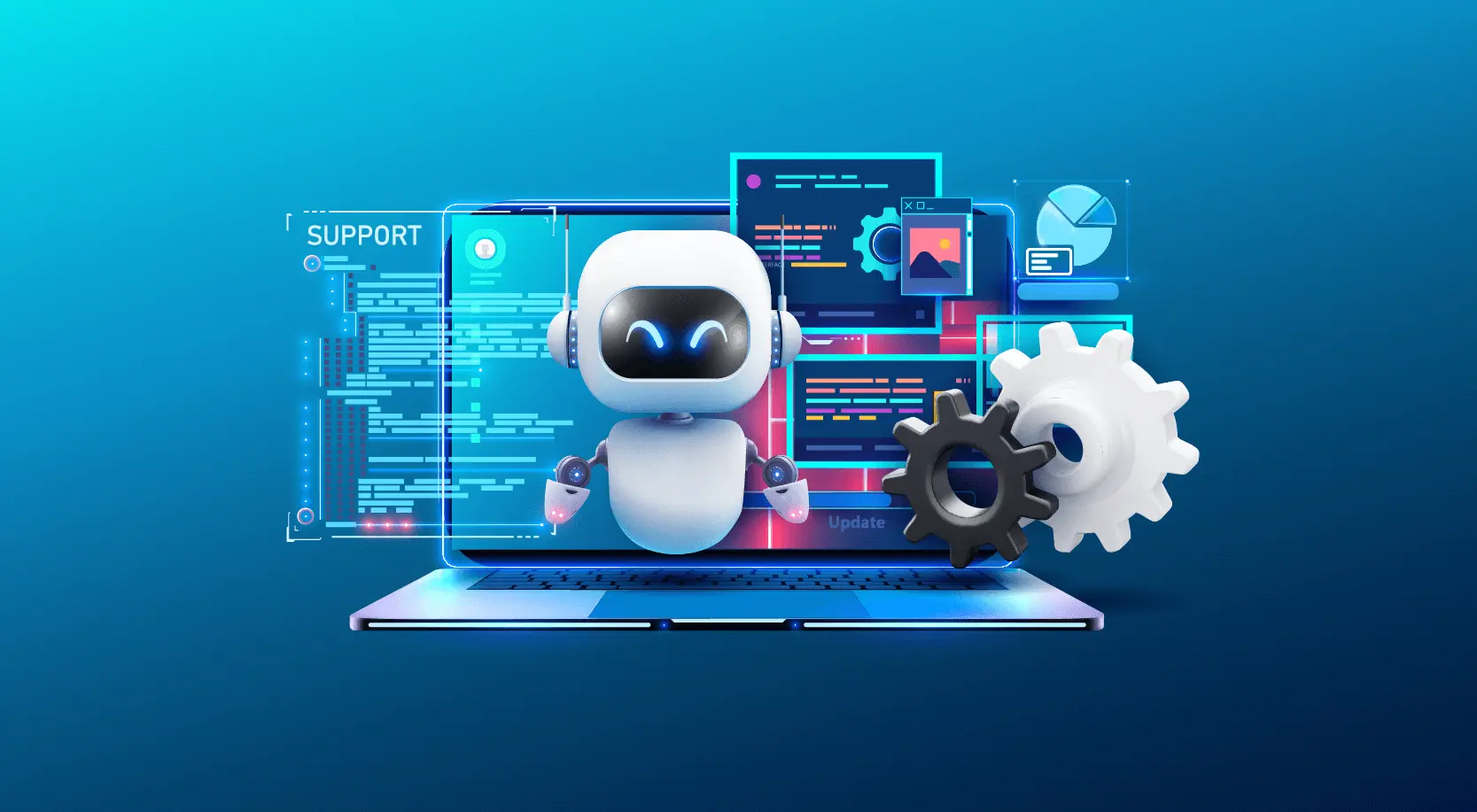
Agentic AI distinguishes itself by its capacity to initiate and complete actions in the digital or physical world, a stark contrast to generative AI primarily focused on producing text, images, or code. These systems typically leverage core generative AI models, such as Claude, but are augmented with specialized "wrappers" or tools that grant them the ability to interact with applications, access data, or manipulate physical systems. For instance, an agent might utilize a calculator for complex financial computations or access a company's internal data for negotiation strategies, moving beyond mere information retrieval to operational execution. The current challenge for developers lies in the scarcity of comprehensive training data for these complex, real-world interactions, often necessitating iterative trial-and-error learning within varied environments.
What It Means
This move towards action-oriented AI agents represents a critical inflection point for the global tech ecosystem, demanding re-evaluation of business processes and software architecture. For startups, the opportunity lies in building specialized agentic platforms that solve specific industry pain points, while established enterprises face the imperative of integrating these systems to unlock new efficiencies or risk falling behind. My read is that the venture market is rapidly pivoting towards startups demonstrating clear, deployable use cases for agentic AI, particularly those addressing the data scarcity challenge through novel learning paradigms or proprietary datasets. This isn't just about incremental improvements; it’s about automating entire workflows that previously required significant human intervention, fundamentally altering productivity metrics and operational expenditures across sectors.
The strategic implication extends to the workforce, where the automation of tasks, from customer service to complex coding, raises questions about skill adaptation and future employment models. Phillip Isola, an associate professor at MIT’s Department of Electrical Engineering and Computer Science, notes the balance between full automation and human assistance remains critical, particularly in high-stakes or safety-critical fields like medicine or security, where complete AI autonomy may not yet be desirable or safe. The ease with which agents can perform tasks, such as generating code, also introduces risks of reduced human oversight, potentially leading to increased bugs or data security vulnerabilities if not managed meticulously.
The Stakes
The rapid deployment of agentic AI, with an additional 44 percent of businesses planning implementation soon according to the MIT Sloan/BCG report, underscores a collective drive for greater automation but also highlights significant risks. One pressing concern is the phenomenon Phillip Isola terms "vibe coding," where the simplicity of prompting an agent to generate code may lead to insufficient verification by human operators, inadvertently introducing errors or leaking private data. This ease of use, while a boon for productivity, could erode critical human skills as reliance on agents for complex tasks like coding or problem-solving grows. The long-term de-skilling of the workforce presents a societal challenge that needs proactive consideration, especially as the technology continues its rapid advancement.
From an innovation standpoint, the debate rages on whether the next generation of agentic AI will simply be current large language models equipped with more sophisticated tools and sensors, or if a fundamentally new architectural paradigm is required. Current models, rooted in text-based training, inherently limit their ability to fully grasp and interact with complex, multi-modal data such as physical forces, time series, or radar scans. For startups, this architectural frontier presents a fertile ground for disruption; those who can develop models capable of seamlessly integrating continuous, high-dimensional, and stochastic data could define the next wave of AI capabilities and command significant market premiums. My perspective is that investors seeking exponential returns should look beyond mere application layering to foundational advancements that address these multi-modal challenges.
Background
The journey to agentic AI traces its lineage directly from the breakthroughs in generative AI, particularly large language models. Initially, these models excelled at understanding and generating human-like text, demonstrating remarkable capabilities in content creation. The evolution saw developers begin to "wrap" these foundational models with specific tools and application programming interfaces (APIs), granting them the ability to not just say what to do, but to do it. Early successes, such as coding agents, exemplify this evolution, where language models trained on vast repositories of code can not only predict solutions but also iteratively test and refine their outputs, learning through a feedback loop until a correct answer is achieved. This shift from prediction to action, facilitated by tools, marks the true emergence of agentic systems.
The enterprise adoption curve for agentic AI is accelerating at a pace reminiscent of early cloud computing or mobile technology, driven by the tangible economic benefits of automating routine and complex tasks. Companies are recognizing that agents can handle everything from automating customer service interactions to orchestrating supply chain logistics, freeing human capital for more strategic endeavors. This broad applicability across diverse industries, from finance to manufacturing, underpins the robust investment climate currently surrounding agentic AI ventures. The market is increasingly segmenting into platform providers, tool developers, and specialized agent solution builders, creating a dynamic ecosystem ripe for both collaboration and competition.
The next few years will be critical in determining the trajectory of agentic AI development. Founders and investors should closely monitor advancements in multi-modal training techniques and novel AI architectures designed to process diverse data types beyond text. Key triggers will include breakthroughs in synthetic data generation for agent training, regulatory frameworks addressing AI ethics and accountability, and the emergence of standardized benchmarks for agent performance in complex, real-world environments. The companies that can demonstrate robust, auditable agentic systems capable of safe and effective operation in critical applications will be positioned to capture significant market share and shape the future of intelligent automation.
Frequently asked questions
What is agentic AI?
Agentic AI refers to artificial intelligence systems designed to take actions in the real world, whether physical actions like robotic control or digital actions such as booking flights. Unlike generative AI, which creates content, agentic AI actively performs tasks and interacts with environments.
How does agentic AI differ from generative AI?
Agentic AI takes actions and interacts with the world (e.g., booking a flight), while generative AI focuses on creating content like stories, poems, or images. Agentic AI often uses a generative AI model as its core, enhanced with tools and memory to perform specific tasks.
What are some promising applications of agentic AI?
Promising applications include coding agents, which can learn and debug code through trial and error, and digital agents for customer service or complex digital tasks. The technology aims to automate processes or assist humans in various domains.
What are the main risks associated with using AI agents?
Key risks include humans failing to verify agent actions, leading to bugs or data leaks, and agents making mistakes due to poor training or vague instructions. There's also a concern about de-skilling, where human reliance on agents diminishes personal abilities too quickly.
What challenges exist in developing agentic AI?
A significant challenge is the lack of sufficient training data for complex, real-world tasks, often requiring agents to learn through trial and error in hard-to-model environments. Creating systems that can handle unforeseen situations is also difficult.
What does the future hold for agentic AI?
The future of agentic AI involves evolving beyond current language model architectures to incorporate diverse data modalities like video, physical forces, and radar scans. The debate is whether enhanced LLMs with tools or entirely new architectures will drive the next wave of powerful AI agents.