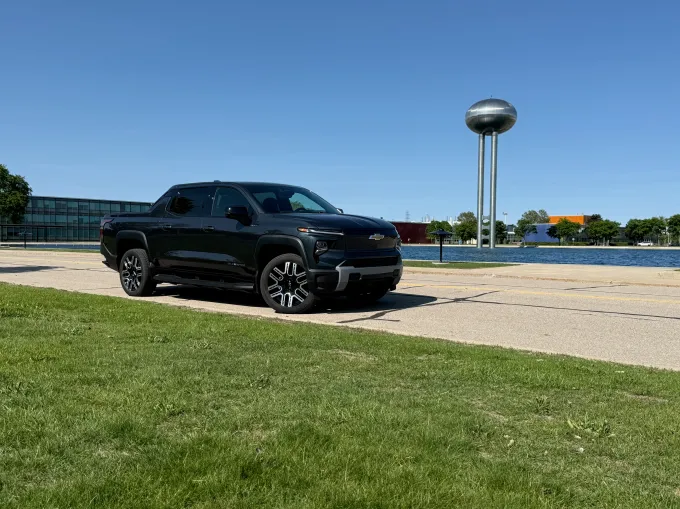
GM's Silverado EV offers 400+ miles range, Super Cruise, and car-like handling. So why isn't this 'perfect' American electric pickup flying off lots?
General Motors unveiled the Chevrolet Silverado EV with considerable fanfare, positioning it as an all-American electric truck built to win over the heartland. On paper, it boasts impressive features and capabilities that should appeal to traditional pickup buyers, yet the market has responded with a puzzling silence, leaving many to wonder why this seemingly ideal EV isn't flying off the lots.
Here's the core paradox: a vehicle designed from the ground up to embody the future of electric mobility, wrapped in a familiar form factor, is struggling to find its footing. Despite a promising review from an automotive journalist who spent time with the truck, highlighting its innovative design and utility, sales figures paint a stark picture of lukewarm consumer interest.
Last year, GM moved approximately 14,000 Silverado EVs across the U.S. and Canada. To put that in perspective, the gasoline-powered Silverado sells ten times that volume in a single quarter. This significant disparity indicates that something fundamental isn't connecting with the intended audience, despite the truck's advanced capabilities and a driving experience that has been described as surprisingly car-like for such a large vehicle.
The Silverado EV doesn't skimp on features. It offers a substantial 400-mile-plus range on a single charge for its LT Extended Range model, a cavernous front trunk (frunk) capable of swallowing multiple roller bags, and a massive bed that can be extended into the cabin thanks to its innovative mid-gate feature, a nod to the old Chevy Avalanche. Inside, the cabin is spacious, quiet, and equipped with a responsive, Google-powered infotainment system that integrates navigation with Super Cruise route planning, GM's hands-free driving assistance system.
The driving dynamics are also notable. Despite its nearly 20-foot length, rear-wheel steering allows for surprising maneuverability in tight spaces, while a 205 kilowatt-hour battery pack provides a smooth, stable ride. The efficiency, at around 2.1 miles per kilowatt-hour, is also commendable for a vehicle of its size. This combination of utility, range, and modern tech would typically be a strong selling point for any new vehicle, let alone an electric truck.
The Roadblocks to Adoption
Initially, some observers pointed to the Silverado EV's price tag as a potential deterrent. The LT Extended Range model starts around $71,000, which is just $5,000 above the average price full-size pickup buyers are already paying. While the LT Max Range version costs an additional $20,000 for slightly more range, the base EV model's pricing doesn't appear to be an insurmountable barrier compared to its fossil fuel counterparts or even other premium EVs on the market.
Another common concern for electric trucks is towing range, which for the Silverado EV is reportedly 60% shorter than its gasoline equivalent. This is a legitimate consideration for some, but industry data suggests that a vast majority of full-size truck owners—about 75%—tow at most once a year. This indicates that while towing performance is important, it shouldn't be a dealbreaker for the vast segment of the market that primarily uses their trucks for daily driving and light hauling.
My read is that the true obstacles are more deeply rooted in market inertia and the psychological hurdles associated with adopting new technology in a segment known for its strong brand loyalty and resistance to change. Truck buyers, especially in North America, have deeply ingrained habits and expectations. The idea of "range anxiety"—the fear of running out of charge—and "charging anxiety"—concerns about the availability and speed of charging infrastructure—are significant mental blocks, even if daily use often negates these fears.
It's not just about the vehicle itself, but the entire ecosystem. The transition to an EV requires a shift in mindset about fuel stops, maintenance, and even the "sound" of a truck. For many, the roar of an internal combustion engine is part of the truck identity. Automakers, including GM, might have underestimated the depth of this inertia, assuming that a superior product would naturally overcome these psychological barriers. The challenge extends beyond product features; it's about changing deeply held perceptions and habits.
Navigating the Broader EV Truck Landscape
The Silverado EV’s sales performance isn't entirely isolated; it reflects broader challenges in the nascent electric pickup market. While the Ford F-150 Lightning has seen more success, largely due to its earlier market entry and leveraging the ubiquitous F-Series brand, it too faces the same fundamental questions about widespread adoption. Then there's the Rivian R1T, which carved out a niche as a premium, adventure-focused EV pickup, attracting a different type of buyer who is perhaps more tech-forward and less traditional in their truck expectations.
The electric truck segment is inherently more complex to electrify than passenger cars. Trucks demand high payload and towing capacities, which necessitate larger, heavier batteries, impacting range and cost. They also often operate in areas where charging infrastructure might be less developed than in urban centers. This means that for a traditional truck buyer who might live in a rural area or use their vehicle for demanding work, the shift to EV is a bigger leap of faith than for someone buying an electric sedan for city commutes.
The current state of charging infrastructure, while improving, still presents a challenge. While GM has committed to supporting the North American Charging Standard (NACS) and joining the growing network, the perception of limited or unreliable charging options persists. For a buyer accustomed to gas stations on every corner, the planning required for longer trips in an EV, especially with a heavy load, remains a point of apprehension that even 400 miles of range might not fully alleviate.
GM is aware of the cost pressures and has hinted at a strategic move: the introduction of a new lithium-manganese-rich (LMR) battery chemistry later this decade. This technology promises to slash battery production costs by about $6,000 per vehicle while maintaining range. If these savings are passed directly to consumers, it could bring the Silverado EV closer to price parity with its gasoline counterparts, potentially removing one of the more tangible objections for buyers.
However, price parity alone might not be enough. To truly capture the market, GM and other manufacturers need to focus on educating consumers, simplifying the charging experience, and perhaps even offering more compelling incentives or lease options that de-risk the transition for skeptics. Building trust in the EV ecosystem, from reliable charging to simplified maintenance, will be paramount.
Ultimately, the Chevy Silverado EV is a compelling product, representing a solid "first draft" of what an electric pickup can be. Its struggle to gain traction underscores the reality that innovation, no matter how impressive, must still contend with deep-seated consumer habits and broader market dynamics. For GM, the path forward involves not just refining the vehicle itself but also transforming the entire purchase and ownership experience to make the leap to electric not just feasible, but genuinely desirable for the American truck buyer.
Frequently asked questions
Why aren't people buying the Chevy Silverado EV?
Despite impressive features like a 400+ mile range and advanced tech, the Silverado EV faces slow sales primarily due to market inertia and buyer anxieties surrounding EV range and charging infrastructure. Many traditional truck buyers are hesitant to switch from fossil fuel vehicles.
What is the range of the Chevy Silverado EV?
The Silverado EV LT Extended Range offers 410 miles on a full charge, while the LT Max Range model provides an additional 68 miles.
Does the Silverado EV have Super Cruise?
Yes, the Chevy Silverado EV features Super Cruise, GM's hands-free, Level 2 advanced driver-assistance system, which aids in stress-free highway driving.
How does the Silverado EV compare to the Chevy Avalanche?
The Silverado EV shares stylistic resemblances with the old Chevy Avalanche, including four doors, a short bed extendable into the cabin, and a 'sail' between the cabin and bed.
What are the main criticisms of the Silverado EV?
Common criticisms include its high price point (though comparable to average full-size pickups) and perceived mediocre towing range, though the article suggests these aren't the primary reasons for slow sales.
Will the Chevy Silverado EV get cheaper?
GM has indicated that the Silverado EV will eventually receive new lithium-manganese-rich (LMR) battery chemistry, which could slash costs by about $6,000 and potentially bring it to price parity with fossil fuel versions.