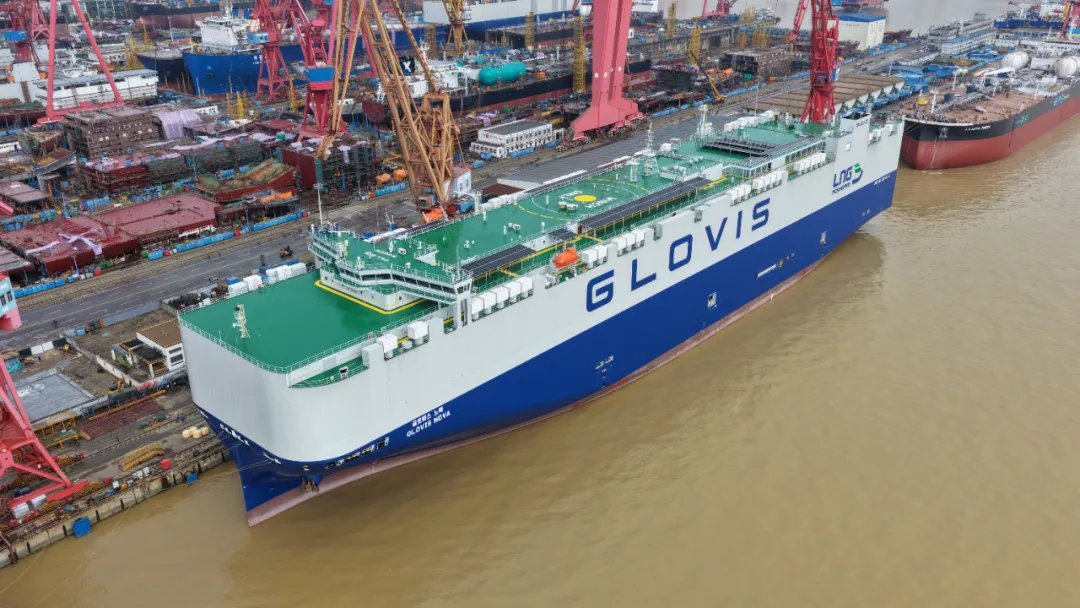
This mega car carrier from China, boasting a 10,800-vehicle capacity and a 200kW solar system, revolutionizes global automotive logistics with sustainable maritime transport.
China's New Mega Car Carrier: A 10,800-Vehicle Behemoth with Solar Power Redefines Global Automotive Logistics
The world's first 10,800-vehicle capacity car carrier, developed in China, marks a significant leap in global automotive logistics.
Integrated with a solar power system, the vessel highlights an emerging trend towards more sustainable maritime transportation solutions.
In the relentless pursuit of optimizing global trade, particularly the burgeoning automotive sector, the vision for unprecedented scale and efficiency has driven remarkable engineering feats. What sparked this latest leap was the sheer demand for moving vehicles across continents, prompting a collective drive to reimagine the very vessels that make it possible. For the engineers and visionaries at Guangzhou Shipyard International, part of the China State Shipbuilding Corporation (CSSC), the goal was always to push the boundaries of maritime transport, delivering not just a ship, but a solution to a rapidly expanding global need. This ambition culminated in the delivery of a colossal new car carrier, a vessel that is set to reshape how vehicles, especially electric vehicles, reach markets worldwide. The journey to build such a leviathan began with a clear understanding of market dynamics. China, having firmly established itself as a global manufacturing hub, particularly for automobiles and increasingly for electric vehicles, needed a way to transport its output efficiently and on an enormous scale. The existing fleet of Pure Car and Truck Carriers (PCTCs) simply couldn't keep pace with the exponential growth in demand. This new vessel was conceived to address this bottleneck directly. Its design focuses on maximising capacity, able to ferry a staggering 10,800 standard cars in a single voyage, a figure that sets a new industry benchmark and significantly alters the economics of international car shipping. Constructing a vessel of this magnitude and complexity required overcoming substantial engineering challenges. From hull design to propulsion systems, every aspect was meticulously planned to ensure stability, efficiency, and safety. What truly elevates this ship beyond mere scale is its integrated solar power system. While it remains largely reliant on conventional marine fuels, this solar array represents a tangible step towards greener shipping, providing auxiliary power and reducing the ship's carbon footprint. It’s a pragmatic nod to the International Maritime Organization's (IMO) increasingly stringent emissions regulations and the broader industry push for decarbonisation. My read is that this integration points to a strategic long-term vision, gradually embedding renewable energy solutions into traditional maritime infrastructure. The implications of such a vessel are profound, particularly for South and Southeast Asia. India, for instance, with its burgeoning automotive manufacturing sector and a growing appetite for both domestic and imported vehicles, stands to benefit from the enhanced logistical capacity. Reduced shipping costs per unit due to economies of scale could translate into more competitive pricing for consumers and exporters alike. For other rapidly developing economies in the region like Vietnam, Thailand, and Indonesia, which are also significant players in the automotive supply chain, this mega-carrier offers an efficient pathway to global markets, solidifying their roles in the international trade matrix. The sheer efficiency of moving 10,800 vehicles at once streamlines supply chains that often grapple with bottlenecks and escalating costs, especially in an era of global volatility. This development also highlights a broader trend in global logistics: the increasing reliance on mega-ships across various cargo categories. Just as container shipping saw the rise of vessels capable of carrying over 24,000 TEUs (twenty-foot equivalent units), the automotive sector is now witnessing its own scale revolution. What strikes me here is not just the size, but the blend of established maritime engineering with emerging sustainable technologies. This isn't just about moving more cars; it's about moving them with an eye towards future environmental mandates. We're seeing a trend where even traditional heavy industries are beginning to integrate distributed renewable generation, albeit incrementally, into their core operations. This strategic move by China's shipbuilding industry reinforces its dominance, not just in volume but also in pioneering the next generation of logistics infrastructure. For nations like India, this presents both opportunities and challenges. While it offers efficient access to global markets for 'Made in India' automobiles, it also underscores the need for robust port infrastructure capable of handling such large vessels and the accompanying surge in cargo. Furthermore, it encourages a deeper look into our own maritime technology and shipbuilding capabilities, urging innovation in areas like green propulsion and smart logistics systems. The global race for cleaner, more efficient transportation is ongoing, and this 10,800-vehicle carrier is a clear signal that the future of logistics will be defined by scale, technology, and an increasing commitment to sustainability. This monumental achievement in maritime engineering serves as a powerful testament to human ingenuity in solving complex logistical problems on a global scale. For India and aspiring entrepreneurs across South and Southeast Asia, it's a potent reminder that the intersection of technology, scale, and sustainability is where the next wave of disruptive innovation will emerge. Whether in shipbuilding, green energy integration, or smart logistics platforms, the opportunity to contribute to a more connected and efficient global trade ecosystem remains vast and incredibly inspiring.
Frequently asked questions
What is unique about China's new 10,800-vehicle ship?
This vessel is the world's first car carrier with a 10,800-vehicle capacity, making it the largest of its kind. It also integrates a significant 200 kW solar power system, marking a key step towards sustainable maritime transportation.
How much solar power does the ship generate?
The ship features a 200 kW solar power system, utilizing renewable energy to power onboard operations.
What is the primary purpose of this mega car carrier?
Its primary purpose is to transport a massive number of vehicles, specifically 10,800, across oceans, redefining global automotive logistics through sheer scale and efficiency.
What impact does this ship have on sustainable shipping?
By integrating a large solar power system, the ship significantly reduces its reliance on traditional fossil fuels, contributing to lower carbon emissions and promoting greener maritime transport practices within the automotive industry.
Which country developed this record-breaking ship?
This record-breaking 10,800-vehicle capacity ship, featuring advanced solar power technology, was developed and delivered by China, showcasing its leadership in maritime engineering.
How does this ship impact global automotive logistics?
It revolutionizes global automotive logistics by offering unprecedented capacity for vehicle transport, potentially streamlining supply chains, reducing per-unit shipping costs, and setting new benchmarks for efficiency and sustainability in the industry.