This groundbreaking sensor provides robots with human-like touch, transforming automation, manufacturing, healthcare, and logistics in Asia.
A groundbreaking color-changing tactile sensor is poised to imbue robots with an unprecedented, human-like sense of touch, revolutionizing automation.
This innovation promises to unlock new applications across manufacturing, healthcare, and logistics, driving efficiency and precision across South and Southeast Asia.
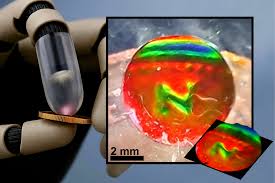
The world of robotics has long been a domain of paradox. While machines have soared to astonishing heights of visual acuity, processing complex data streams faster than any human, their ability to truly "feel" the world around them has remained surprisingly rudimentary. A robot might flawlessly assemble a microchip using vision, yet struggle to gently pick up a delicate piece of fruit without crushing it, or discern the subtle texture of a fabric. This fundamental disconnect — the chasm between seeing and truly sensing — has been a persistent barrier, limiting the full potential of robotic assistance and automation. But what if robots could not only see, but also *feel* with a sensitivity approaching that of human skin? What if a machine could instantly interpret not just pressure, but also the subtle nuances of an object's surface, its pliability, its temperature? This vision, once a distant dream, is now taking tangible form, promising to redefine the very essence of human-robot interaction and unlock a new era of intelligent automation. For the visionary minds behind this latest breakthrough, the goal was always clear: to grant robots a sense of touch that goes beyond mere contact detection. The human hand, a marvel of biological engineering, possesses millions of nerve endings capable of differentiating between a feather and sandpaper, hot and cold, firm and fragile. Replicating this biological complexity with artificial sensors has been an enduring quest in robotics. Early tactile sensors, while functional, often provided only binary feedback — "touch" or "no touch" — or limited pressure readings from discrete points. Imagine trying to identify an object while wearing thick gloves; that's been the approximate level of tactile perception for many advanced robots. The motivation for this new development stemmed from this profound limitation, aiming to elevate robotic interaction from clumsy utility to nuanced dexterity, addressing critical needs across industries that demand precision and delicate handling, especially within the rapidly evolving economies of South and Southeast Asia. The journey to developing a truly intuitive robotic touch has been fraught with challenges, requiring an interdisciplinary symphony of materials science, optics, and advanced algorithms. Traditional tactile sensors often rely on arrays of pressure-sensitive elements, which can be bulky, expensive, and limited in resolution. The ingenious leap with this new color-changing tactile sensor lies in its ability to translate physical deformation into a visually interpretable signal. At its core, the sensor comprises a compliant, soft material embedded with microscopic structures that change color in response to applied force. When a robot 'touches' an object, the pressure exerted deforms the sensor's surface, causing these embedded structures to shift, which in turn alters the way light reflects or transmits through the material, resulting in a distinct, real-time color change. This subtle shift in hue and intensity, imperceptible to the naked eye for its speed and precision, is then captured by miniature cameras and interpreted by sophisticated machine learning algorithms. The algorithms are trained to correlate specific color patterns with precise tactile information – not just the magnitude of pressure, but also its distribution, the texture of the surface, and even indications of slip or shear forces. This optical interpretation means the sensor can provide a dense, continuous map of tactile data across its entire surface, mimicking the rich information stream that our own skin sends to the brain. What started as a small idea in a research lab, exploring the optical properties of novel polymers, has steadily evolved into a robust prototype demonstrating unprecedented capabilities in real-world simulations. The sheer elegance of this approach — converting mechanical deformation into an optical signal — bypasses many of the complexities and costs associated with traditional electronic tactile arrays, paving the way for more widespread and affordable integration into robotic systems. The implications of this color-changing tactile sensor are profound, especially for the burgeoning industrial and service sectors across South and Southeast Asia. In manufacturing, where precision assembly and quality control are paramount, robots equipped with this sensor could revolutionize production lines. Imagine a robot in a Singaporean electronics factory delicately handling fragile circuit boards, instantly detecting if a component is misaligned or if a surface is slightly marred, purely by touch. In Vietnam's rapidly expanding automotive industry, robots could perform tasks requiring a feather-light touch, such as installing intricate wiring harnesses or polishing delicate vehicle surfaces, significantly reducing defects and enhancing product quality. The ability to "feel" for imperfections could lead to substantial reductions in waste and rework, driving up efficiency and competitiveness for regional manufacturers. The region, already a global hub for manufacturing, stands to gain immense advantages from such advancements in automation. Beyond traditional manufacturing, the logistics and e-commerce sectors, experiencing explosive growth from India to Indonesia, present another fertile ground for this tactile innovation. The sheer volume and variety of packages handled daily, from irregularly shaped parcels to fragile goods, often pose challenges for conventional robotic grippers. A robot armed with a color-changing tactile sensor could adapt its grip in real-time, precisely gauging the fragility and shape of each item, minimizing damage during sorting and packing. This could translate to faster processing times and significantly lower rates of damaged goods, enhancing customer satisfaction in an industry where speed and reliability are critical differentiators. In warehouses across major e-commerce players, where automation is key to managing vast inventories, robots with this advanced sense of touch could navigate complex environments and handle diverse product ranges with newfound dexterity. The healthcare sector too stands on the cusp of a transformation. Robotic surgery, while highly advanced, still benefits immensely from enhanced sensory feedback. Surgeons operating remotely could gain a more intuitive "feel" for tissue density and resistance, enabling more delicate and precise procedures. In assistive robotics, particularly for elderly care, a robot capable of gentle, responsive touch could offer unparalleled support, aiding individuals with mobility, hygiene, and companionship in a way that feels more natural and less mechanical. Countries like Singapore, facing rapidly aging populations, are actively exploring robotic solutions for elder care, and this tactile sensor could be a game-changer, fostering trust and effectiveness in human-robot interaction. Furthermore, the development of sophisticated prosthetics that can truly "feel" the world through a direct interface with the user's nervous system could see unprecedented advancements, offering a new lease on life for countless individuals. Even in agriculture, a sector vital to the livelihoods of millions across Southeast Asia, this technology holds promise. Harvesting delicate fruits and vegetables, tasks that currently require immense human dexterity, could be automated with robots capable of discerning ripeness and applying just the right amount of pressure to pick produce without bruising. This could address labor shortages, improve consistency, and reduce post-harvest losses, strengthening food security and economic stability in agrarian nations like Thailand and Vietnam. The overarching impact is clear: a new color-changing tactile sensor gives robots the ability to perform tasks with a level of discernment and gentleness previously reserved for humans. The adoption curve for advanced robotics in South and Southeast Asia continues its steep ascent, fueled by demographic shifts, rising labor costs, and the relentless pursuit of efficiency. While precise figures for this specific sensor are still emerging as it moves towards commercialization, the broader robotics market in the region has witnessed robust, often double-digit, growth annually, with projections indicating a market value reaching into the tens of billions of dollars within the next decade. This growth is not merely about replacing human labor, but about augmenting capabilities, enabling new tasks, and fostering a safer, more productive work environment. The integration of advanced tactile sensing, like that offered by this color-changing technology, is expected to accelerate this trend, making robots more versatile and indispensable. This tactile sensor technology promises to significantly reduce error rates in delicate handling operations and boost throughput in automated processes, leading to substantial gains in productivity and quality. The cost-effectiveness of this optical approach, when compared to other high-resolution tactile sensing methods, suggests it could become a standard feature in a new generation of robots, democratizing access to advanced dexterity. Looking ahead, the vision extends far beyond current industrial applications. Imagine collaborative robots working seamlessly alongside human colleagues, distinguishing a human hand from a tool with absolute certainty, making human-robot interaction intuitive and inherently safe. The ability to "feel" allows robots to operate in unstructured environments, adapt to unexpected changes, and even learn through tactile exploration, much like a child learns about the world. This breakthrough is a significant step towards truly general-purpose robots, capable of adapting to a multitude of tasks rather than being confined to highly specialized, pre-programmed roles. It represents a paradigm shift, moving robotics closer to the realm of true intelligence and intuitive interaction, fostering a future where machines are not just tools, but intelligent partners. This groundbreaking development in tactile sensing marks a pivotal moment for robotics, poised to unlock unprecedented capabilities and redefine the landscape of automation. For India and the broader South and Southeast Asian region, known for their dynamism and embrace of technological advancement, this innovation represents a tremendous opportunity to leapfrog in various sectors, driving economic growth and creating new avenues for skilled employment. It underscores the power of persistent innovation and the entrepreneurial spirit to overcome long-standing challenges, inspiring a new generation of engineers and scientists to push the boundaries of what's possible, ushering in an era where robots truly understand the world by touch.
Frequently asked questions
What is a color-changing tactile sensor?
It's an innovative sensor that changes color in response to physical contact, providing robots with a real-time, visual representation of pressure and touch, similar to human skin.
How does this sensor improve robots' capabilities?
It gives robots a human-like sense of touch, allowing them to handle delicate objects, perform intricate tasks with greater precision, and adapt to varying physical interactions in real-time.
What industries will benefit most from this technology?
Manufacturing, healthcare (e.g., surgical robots), logistics, and any sector requiring precise object manipulation and delicate interaction will see significant benefits.
What is the impact of this innovation on South and Southeast Asia?
This technology is expected to drive efficiency and precision across manufacturing, healthcare, and logistics sectors in South and Southeast Asia, fostering regional innovation and growth.
Is this technology available for commercial use yet?
The article preview indicates it's 'poised to imbue robots,' suggesting it's a recent breakthrough nearing commercial application, though specific availability isn't detailed.
How does a color change indicate touch?
The sensor typically incorporates materials that deform under pressure, causing a visible change in color or light reflection, which can then be interpreted by the robot's vision system as touch data.