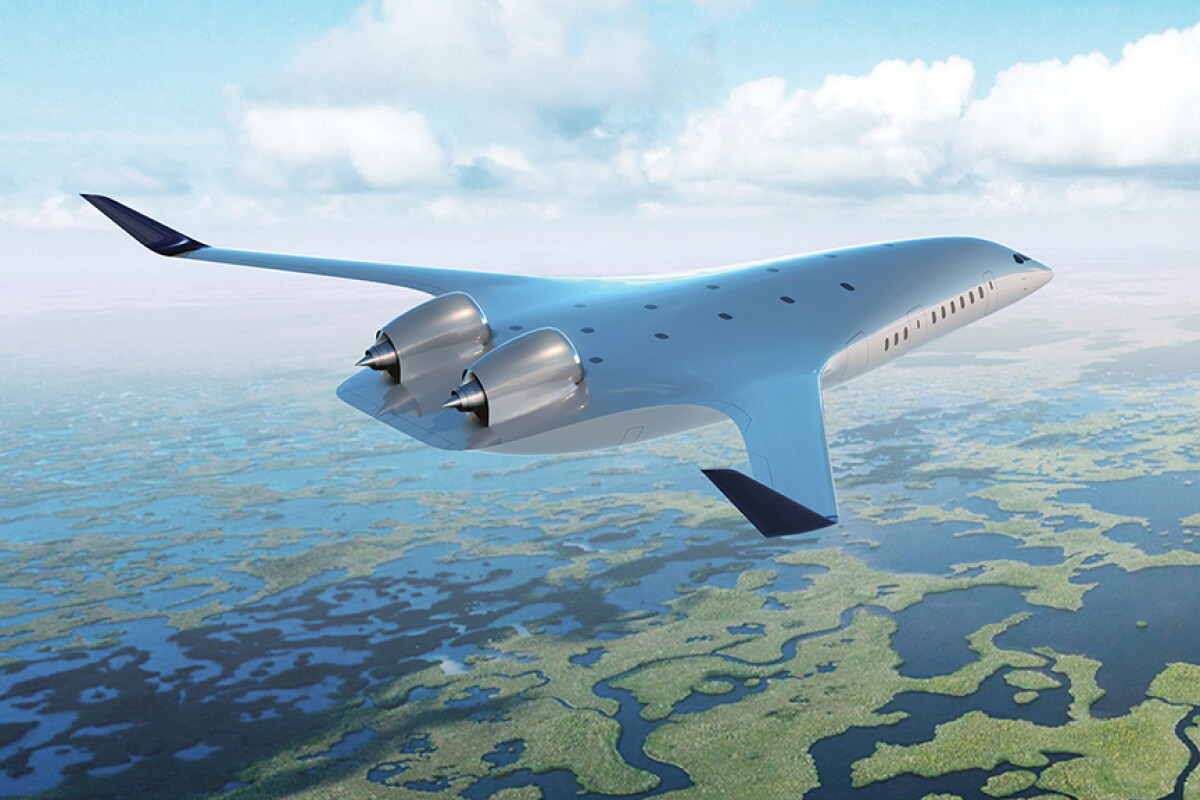
Revolutionary BWB design poised to transform aviation economics with unprecedented range and significant fuel reductions.
A revolutionary blended wing body (BWB) jet, promising an unprecedented 5,000 nautical mile range and a transformative 50% reduction in fuel consumption, is poised to fundamentally alter the aviation industry’s economic landscape. This radical design, if successfully brought to market, could drive a significant re-evaluation of airline operating models and fleet investment strategies, signaling a pivotal shift towards sustainable and cost-efficient air travel.
The projected 50% fuel savings represents a seismic shift for carriers battling volatile energy prices and tightening environmental regulations, directly impacting their operational expenditure (OpEx) and ultimately, their yield spreads. Such unprecedented efficiency gains could dramatically lower per-seat operating costs, allowing airlines to enhance profitability across existing networks and potentially unlock new long-haul point-to-point routes previously deemed uneconomical, especially those requiring high cargo capacity where volume and efficiency are paramount.
Achieving a 5,000 nautical mile range positions this next-generation aircraft to serve key transatlantic and transpacific corridors, directly competing with current-generation widebody jets while offering substantially reduced direct operating costs. The design integrates wings and fuselage into a seamless aerodynamic form, minimizing drag and maximizing lift, thereby unlocking efficiencies previously considered unattainable with traditional tube-and-wing configurations.
This breakthrough in aerodynamic efficiency also presents a compelling case for improved environmental performance, an increasingly critical metric for airlines and their investors. Reducing fuel burn by half translates directly into a commensurate decrease in carbon dioxide emissions, aligning with global climate targets and enhancing carriers' Environmental, Social, and Governance (ESG) profiles, which are under intense scrutiny from capital markets.
What It Means: How a Blended Wing Jet Could Reshape Aviation Economics
The advent of a commercially viable blended wing jet carries profound implications for the duopoly of Boeing and Airbus, compelling both manufacturers to accelerate their own research into disruptive airframe designs and potentially re-evaluate multi-billion-dollar investments in incremental improvements to existing models. Airlines, facing increasing pressure to decarbonize operations and navigate carbon pricing schemes, would gain a powerful tool to meet ambitious net-zero targets without compromising capacity or range, potentially accelerating fleet retirements of older, less efficient widebody and narrowbody aircraft ahead of their typical asset depreciation schedules.
Capital allocation decisions across the global aviation sector could pivot sharply towards next-generation designs that prioritize fuel efficiency and lower emissions, potentially re-directing investment away from traditional airframes. Investors would scrutinize manufacturers' strategic roadmaps for incorporating such radical innovations, with early movers potentially securing significant market share and long-term competitive advantages in a rapidly evolving environmental regulatory landscape, where sustainability metrics are increasingly tied to shareholder value.
The economic impact extends beyond direct airline operations, influencing the entire aerospace supply chain. Demand for new materials, advanced manufacturing processes, and specialized MRO (Maintenance, Repair, and Overhaul) services optimized for BWB structures would emerge, creating new market opportunities while potentially disrupting incumbent suppliers reliant on conventional aircraft architectures. This systemic shift necessitates significant retooling and reskilling across the industry, driving innovation in areas like additive manufacturing and advanced composite fabrication.
A 50% reduction in fuel consumption for a blended wing jet could translate into billions of dollars in annual savings for major global carriers, significantly impacting their bottom lines and accelerating industry-wide decarbonization efforts.
The Context: What Are the Historical and Regulatory Hurdles for BWB Designs?
The concept of a blended wing body has been explored by aerospace engineers for decades, with early NASA projects and academic research highlighting its theoretical aerodynamic advantages over the conventional tube-and-wing configuration. Previous iterations, however, grappled with significant engineering challenges, including manufacturing complexity, seamless integration of propulsion systems, and ensuring passenger comfort and safety within a non-cylindrical cabin, which proved difficult to reconcile with existing certification frameworks.
Certifying such a fundamentally different aircraft design presents a formidable challenge for regulatory bodies globally, including the Federal Aviation Administration (FAA) in the U.S. and the European Union Aviation Safety Agency (EASA). New safety standards and evacuation procedures would need to be established for an aircraft where traditional emergency exit configurations, structural integrity assumptions, and crashworthiness paradigms no longer apply. This process typically involves extensive testing, novel simulation methodologies, and a prolonged dialogue between developers and regulators, potentially extending development timelines and significantly increasing costs.
The shift from conventional tube-and-wing designs also necessitates a complete reimagining of airport infrastructure, from gate access and jet bridge compatibility to maintenance hangars and runway operations designed for different wing spans and fuselage footprints. While these infrastructure adaptations represent substantial upfront investment for airports, the long-term operational savings, noise reduction benefits, and environmental advantages could justify such expenditures, particularly for hub airports aiming for sustainable growth and seeking to future-proof their operations against increasingly stringent environmental mandates.
Challenges Ahead: What Are the Major Obstacles to Commercialization?
Developing a clean-sheet aircraft design, especially one as radical as a BWB, typically demands tens of billions of dollars in research, development, and certification costs, spread over a decade or more, before a single commercial delivery. Securing the necessary capital from private investors, government grants, and strategic partnerships will be paramount, particularly given the inherent risks associated with pioneering unproven technologies in a highly capital-intensive and regulated industry with long payback periods.
Manufacturing at scale poses another significant hurdle. The large, complex composite structures required for optimal BWB aerodynamic performance necessitate advanced fabrication techniques, robotic assembly, and a robust, specialized supply chain, differing significantly from those established for traditional aluminum or conventional composite airframes. This transition requires substantial upfront investment in tooling, automation, and workforce training, while simultaneously ensuring impeccable quality control for safety-critical components.
Passenger experience and public perception are also critical factors that can make or break market acceptance. The windowless or limited-window cabin environment, along with potential changes in seating arrangements and ingress/egress, could face initial resistance from travelers accustomed to conventional aircraft layouts. Addressing these concerns through innovative interior design, virtual window technologies, and rigorous safety demonstrations will be crucial for overcoming psychological barriers and ensuring widespread adoption.
Furthermore, the integration of advanced propulsion systems, potentially including hybrid-electric or hydrogen-powered options, into a blended wing architecture introduces additional layers of complexity and risk. While such integration could further amplify the environmental benefits and operational efficiencies, it demands concurrent advancements in battery technology, fuel cell development, and thermal management systems, all of which are still maturing for large-scale aviation applications, adding to the development timeline and cost profile.
Key milestones to watch include the successful completion of large-scale demonstrator flights that validate the aerodynamic and structural integrity of the design, the securing of substantial early-stage investment and definitive OEM partnerships, and the initiation of formal certification dialogues with aviation authorities outlining a clear pathway to market. The trajectory of this blended wing jet project will offer a critical litmus test for the aviation industry's willingness and capability to embrace truly transformative technologies in pursuit of both economic efficiency and environmental stewardship in the coming decade, shaping the future competitive landscape for aerospace manufacturers and global airlines alike.
Frequently asked questions
What is the world’s first blended wing jet?
The world's first blended wing jet is a revolutionary aircraft design that integrates the fuselage and wings into a seamless body, significantly improving aerodynamic efficiency. This innovative structure allows for greater fuel savings and extended flight ranges compared to traditional aircraft.
What is the promised range of this new jet?
This revolutionary blended wing jet promises an unprecedented 5,000 nautical mile range.
How much fuel will the blended wing jet save?
The blended wing jet is projected to achieve a transformative 50% reduction in fuel consumption compared to conventional aircraft.
How will this technology impact the aviation industry?
The successful introduction of this blended wing jet could fundamentally alter the aviation industry's economic landscape, driving a significant re-evaluation of airline operating models and fleet investment strategies.
What are the key benefits of a blended wing body design?
Key benefits of a blended wing body design include superior aerodynamic efficiency, significant fuel savings, reduced emissions, lower noise levels, and potentially increased passenger or cargo capacity.
When is this blended wing jet expected to be available?
The article indicates that this radical design is 'if successfully brought to market,' suggesting it is currently in development and not yet available for commercial use or public purchase.