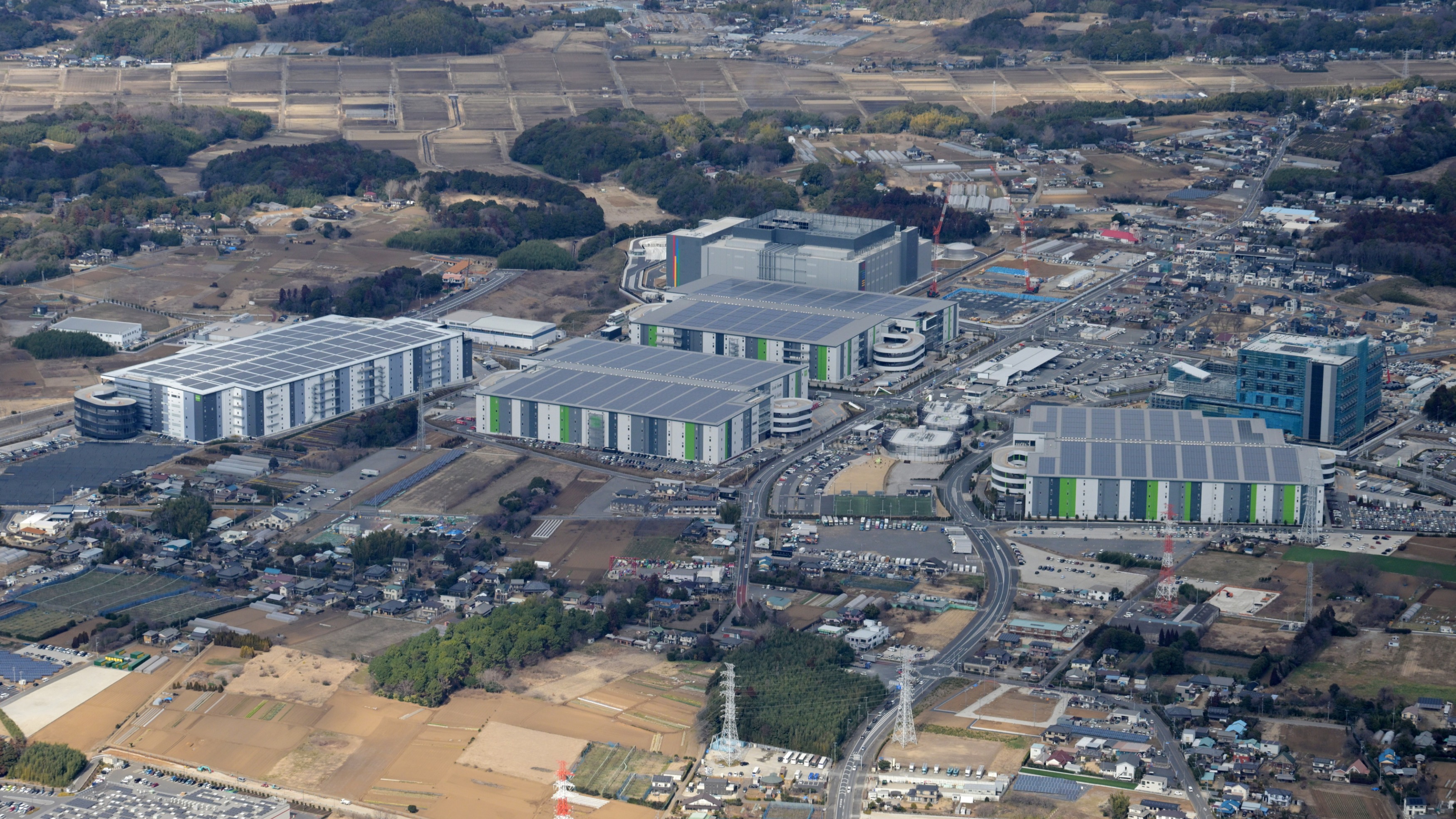
Urban Japan's data center opposition grows due to environmental concerns, threatening hyperscaler expansion and digital infrastructure costs.
Opposition to new data center developments is intensifying across urban Japan, signaling a significant headwind for hyperscalers and cloud service providers eyeing the region and potentially driving up the cost of digital infrastructure. This growing pushback, largely driven by environmental and resource concerns, threatens to reshape investment strategies and slow the expansion of critical compute capacity in a key Asian market.
Developers are encountering increased resistance from local communities and municipal authorities, particularly in densely populated areas like the Greater Tokyo and Osaka regions. The primary grievances revolve around substantial energy consumption, water usage, and the significant heat generation from these facilities, which place added strain on existing grids and natural resources.
The burgeoning demand for artificial intelligence and high-performance computing has exacerbated the need for more powerful data centers, creating a paradox where infrastructure growth clashes with local sustainability goals. This friction is compelling tech giants to reconsider traditional urban buildout models and explore more decentralized or environmentally conscious alternatives, potentially impacting latency and regional service delivery.
What It Means for Global Tech Infrastructure
This localized resistance in Japan carries broader implications for the global tech infrastructure build-out, particularly for venture-backed startups relying on robust, low-latency cloud services. Restricted data center expansion in a tech-forward nation like Japan could force a strategic re-evaluation of regional cloud deployments, potentially driving up operational costs for businesses accessing these services.
The immediate consequence is a potential increase in regional cloud pricing and a bottleneck for scaling AI-intensive applications that demand proximate, powerful compute resources. My read is that this will accelerate the shift towards smaller, more distributed edge data centers or innovative modular solutions that can integrate more seamlessly into existing urban fabrics or less dense locales without overwhelming local utilities.
Furthermore, this trend could spur greater investment in sustainable data center technologies, from advanced liquid cooling systems to renewable energy integration at the facility level. The market imperative to overcome community opposition will likely favor developers who can demonstrate tangible commitments to carbon neutrality and efficient resource management, turning sustainability into a competitive advantage.
Global data center IP traffic is projected to continue its massive increase, underscoring the escalating demand for digital infrastructure and the corresponding pressure on resources in prime locations.
The Context of Data Center Development
Japan has historically been an attractive market for data center investment due to its robust economy, high internet penetration, and strategic location as a gateway to other Asian markets. Major hyperscalers have heavily invested in the country to serve a digitally sophisticated populace and enterprise sector, driving a surge in new facility construction over the past decade.
However, the sheer scale and resource demands of modern data centers, especially those catering to AI workloads, are increasingly challenging to accommodate within Japan's compact urban environments. This mirrors a growing global trend where countries like Ireland, the Netherlands, and Singapore have also seen significant local opposition or even moratoriums on new data center projects due to concerns over energy, land, and water.
The global race to build out AI-ready infrastructure is fundamentally clashing with local environmental and social concerns. The current wave of generative AI, for instance, requires orders of magnitude more compute power than previous generations, translating directly into higher energy and cooling requirements that dense urban grids are struggling to absorb without significant upgrades or environmental compromise.
What Analysts Say About Resource Constraints
Industry analysts increasingly highlight resource constraints as a primary determinant of future data center location and design. The availability of clean, reliable energy and abundant water for cooling are now as critical as land cost and network connectivity. This perspective suggests a future where data centers are less concentrated in traditional tech hubs and more dispersed based on sustainable resource access.
This dispersion could challenge the established latency advantages of hyperscale hubs, but it could also foster new regional ecosystems and innovation in localized edge computing. The conversation is shifting from merely "where can we build?" to "how can we build sustainably and integrate responsibly?" a question with profound implications for capital expenditure and operational expenditures.
Looking ahead, policymakers in Japan are likely to introduce more stringent environmental regulations and zoning requirements for data center developments. Developers will need to prioritize proposals that demonstrate advanced energy efficiency, use renewable power sources, and implement innovative cooling solutions to gain approvals. The outcome of these local battles will define the future landscape of digital infrastructure investment and determine how quickly the region can scale its foundational compute capabilities to meet the relentless demands of the AI era.
Frequently asked questions
Why is opposition to data centers growing in urban Japan?
Opposition is intensifying primarily due to escalating environmental and resource concerns. Residents and local groups are increasingly worried about factors like energy consumption, water usage, and land availability in densely populated urban areas.
Who is most affected by the growing data center opposition in Japan?
Hyperscalers and cloud service providers planning expansion in Japan are significantly affected. This pushback threatens their investment strategies and could drive up the cost of digital infrastructure.
What environmental concerns are linked to data centers in Japan?
Key environmental concerns include the massive energy consumption required to power and cool data centers, and their substantial water usage. These factors put pressure on Japan's urban resources and environmental goals.
How will this opposition impact digital infrastructure investment?
The growing pushback threatens to reshape investment strategies for digital infrastructure. It could lead to increased costs, delays in development, and a need for providers to find more sustainable solutions or alternative locations.
Is Japan still an attractive market for new data centers?
While Japan remains a key market, the intensifying opposition signals a significant headwind. Hyperscalers and cloud providers will need to adapt their strategies to address local concerns and potential cost increases.
What does "cramped urban Japan" imply for data center development?
"Cramped urban Japan" highlights the challenge of limited space and high population density. This scarcity exacerbates concerns over land use, resource allocation, and the overall environmental footprint of large data center facilities.