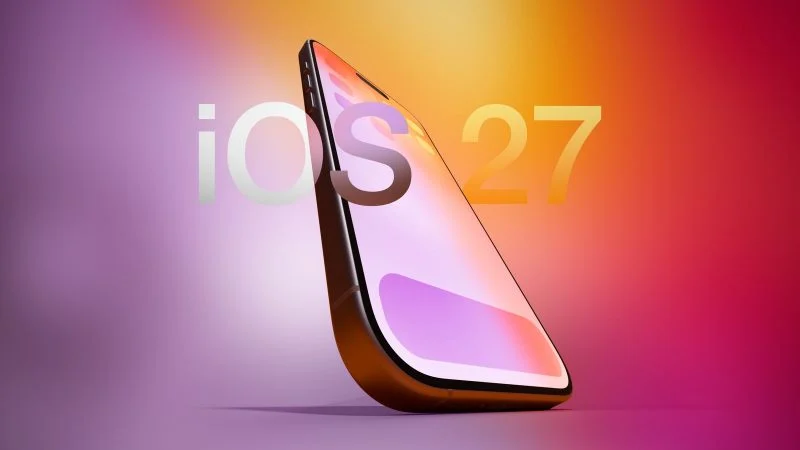
The iOS 27 public beta unleashes Apple's revamped AI-powered Siri, signaling a major strategic maneuver in the global tech race.
Apple's Siri AI Beta Signals Major Ecosystem Shift, Intensifying Global Tech Race
Apple Inc. has initiated a crucial strategic maneuver, releasing the iOS 27 public beta to integrate its revamped, AI-powered Siri across its vast device ecosystem, a move poised to reshape the competitive landscape for conversational AI and solidify the tech giant's market position. This widespread beta deployment provides millions of users with early access to a significantly more capable assistant, signalling Apple's aggressive entry into the advanced generative AI arena currently dominated by rivals.
The updated Siri transcends its previous role as a basic voice command tool, now functioning as a deeply contextual, intelligent agent capable of accessing and processing on-device data, including emails, photos, and messages. This enhanced functionality allows Siri to ground its responses in a user's personal context while also leveraging world knowledge, directly challenging the capabilities offered by contemporary AI chatbots like ChatGPT and Gemini. Its integration extends across the entire operating system, accessible not only through traditional voice commands and the side button but also via a swipe from the Dynamic Island and within the powerful Spotlight search interface.
This comprehensive integration signifies a paradigm shift for Apple, moving beyond a discrete application to embed AI as a foundational layer of the user experience. While a standalone Siri app is now available, its pervasive presence across the iPhone, iPad, Mac, Apple Watch, CarPlay, AirPods, Apple TV, and Vision Pro underscores a strategy focused on ubiquitous, seamless AI interaction. This broad rollout ensures that Apple's AI, powered by its proprietary Apple Intelligence and Foundation Models, will reach users across virtually every touchpoint within its walled garden.
My read is that Apple's move isn't just about catching up; it's about leveraging its unique strengths – a massive, integrated hardware-software ecosystem and a strong privacy-first brand. The company is taking a calculated risk by opening this up to a public beta, but it's a necessary step to gather real-world data at scale. For founders in the AI space, this means the playing field just got significantly tougher, but also potentially richer with new integration opportunities if they can navigate Apple's strict ecosystem rules. The distillation of Google's Gemini model for Apple Silicon, rather than a direct rebrand, speaks volumes about their commitment to on-device processing and data privacy, a key differentiator in a crowded market.
What Does This Mean for the Global Tech Ecosystem?
This broad public beta launch could trigger a fundamental re-evaluation of AI agent strategies across the industry. For years, Apple's Siri lagged behind competitors in conversational intelligence, ceding ground to more advanced models from Google, OpenAI, and Amazon. Now, by deeply embedding its enhanced AI into billions of devices, Apple is not merely improving a feature; it is establishing a new baseline for what users expect from their personal computing experience. This could force rival platforms to accelerate their own on-device AI initiatives, intensifying the arms race for omnipresent, intelligent assistance.
The implications for the startup ecosystem are profound. Startups building AI-powered applications must now consider how their offerings will integrate with a newly intelligent Siri, or risk being marginalized within the Apple universe. The potential for Siri to act as a primary interface for many tasks could shift user behavior, prioritizing native integrations over third-party app launches. This presents both a challenge and an opportunity for innovators to either align with Apple's AI framework or carve out niches that offer truly unique capabilities beyond Siri's growing reach.
Apple's ecosystem boasts a vast number of active devices globally, providing an unparalleled testing ground and immediate distribution channel for its new AI capabilities.
Apple's AI Strategy and Its Foundation
Apple Intelligence, the underlying framework for the revamped Siri, represents years of strategic investment and development, culminating in a hybrid approach that combines on-device processing with Private Cloud Compute. This architecture ensures that sensitive personal data remains protected, a critical distinction in an era of increasing data privacy concerns. The company’s Foundation Models, purpose-built for Apple Silicon, power these advanced capabilities, running directly on the device for speed and security.
The collaboration with Google, involving the distillation of its Gemini model, highlights Apple's pragmatic approach to accelerating its AI development without compromising its core principles. This process leverages Google's advanced model to train smaller, more efficient models optimized for Apple's hardware and software stack, ensuring high performance while maintaining a proprietary and secure user experience. It underscores a willingness to partner strategically where it makes sense, even with a direct competitor, to achieve a superior product outcome.
The Competitive and Investor Outlook
From an investor perspective, Apple's aggressive push into advanced AI is a necessary step to maintain its premium valuation and ecosystem stickiness. The risk of users migrating to platforms with superior AI experiences has been a quiet concern, and this upgrade directly addresses that. An intelligent Siri could drive future device upgrades, enhance service revenue through deeper engagement, and further lock users into the Apple ecosystem, bolstering its formidable competitive moat. The ability for Siri to manage complex, multi-application tasks on-device reduces reliance on cloud processing for many functions, offering a performance and privacy edge that could resonate strongly with consumers.
The move also pressures other device manufacturers and operating system providers to accelerate their own AI roadmaps. Google, with its Android dominance, and Samsung, as a leading hardware provider, must now counter Apple's integrated AI strategy with equally compelling, privacy-aware solutions. For venture capitalists, the landscape shifts; investments in generic AI chatbots may become less attractive, while startups focusing on highly specialized AI applications or innovative integrations with major platforms like Apple's could see renewed interest. I believe this move will significantly elevate the bar for consumer AI experiences across the board.
The tech world will be closely monitoring user feedback and adoption rates as the iOS 27 public beta scales, especially ahead of the official software launch anticipated this fall. Key metrics will include the perceived improvement in Siri’s utility, its seamlessness across device types, and the overall stability of the Apple Intelligence framework. Further integration announcements or expansion of Siri’s capabilities beyond the initial rollout will be critical triggers, as will any competitive responses from rivals like Google and Amazon, who are sure to counter with their own advancements in the intelligent agent space. The true test of this overhauled Siri will lie in its ability to transform everyday interactions and solidify Apple's leadership in the age of pervasive AI.
Frequently asked questions
When can I try Apple's new Siri AI?
Apple's new AI-powered Siri is now available to everyone through the iOS 27 public beta. You can download and install the beta on compatible Apple devices to experience the updated features.
What's new with Siri in iOS 27?
The iOS 27 update features a revamped, AI-powered Siri with enhanced capabilities, deeper integration across the Apple ecosystem, and more natural conversational interactions, marking a significant upgrade.
How does this impact the AI competition?
Apple's widespread deployment of its new Siri AI intensifies the global tech race for conversational AI, positioning Apple to solidify its market position against competitors like Google Assistant and Amazon Alexa.
Is the iOS 27 public beta stable?
As a public beta, iOS 27 may contain bugs and stability issues. Users should back up their devices before installing and be prepared for potential glitches, as it's not the final release.
Which devices support the iOS 27 beta?
Typically, new iOS betas support a wide range of recent iPhone models and potentially iPads. Users should check Apple's official developer or beta program website for a definitive list of compatible devices.
Why is this a 'major ecosystem shift' for Apple?
Integrating an advanced AI like Siri across its vast ecosystem means Apple can offer more seamless, personalized, and intelligent experiences across all its devices, from iPhones to HomePods, reinforcing user loyalty and platform stickiness.