The tech giant's massive infrastructure project signals a huge AI bet, raising concerns about unprecedented energy demands on local communities and power grids.
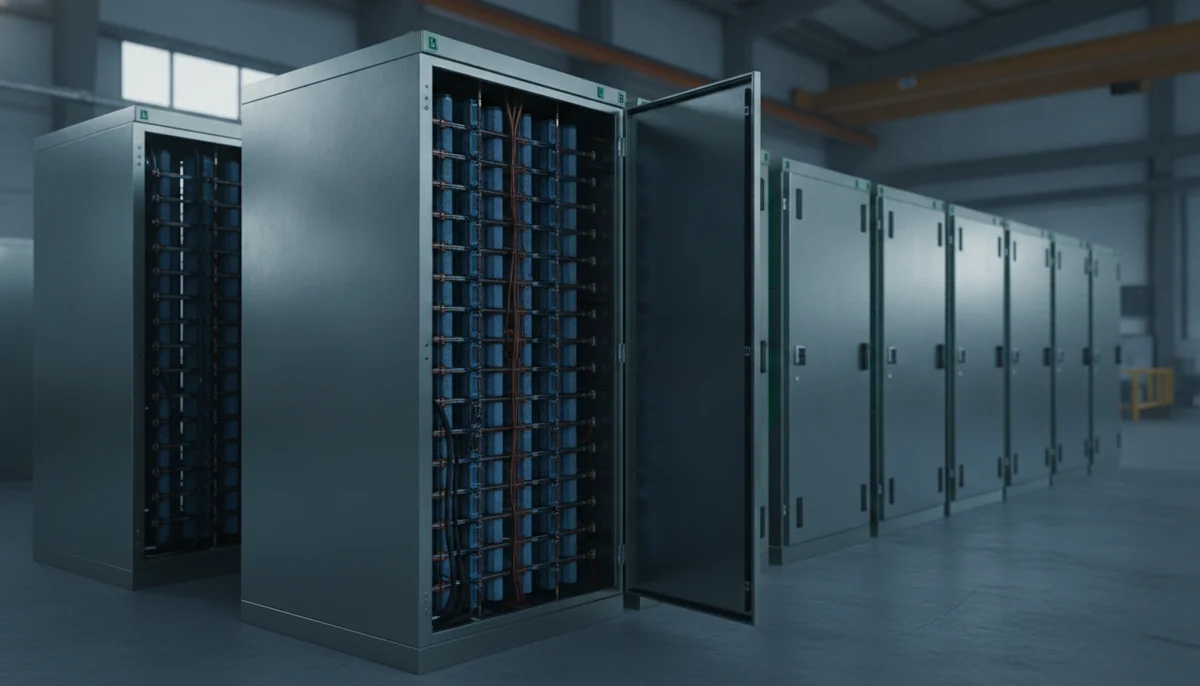
Meta is making a colossal bet on its future, with plans to construct a single data center valued at an eye-watering $9 billion. This massive infrastructure project underscores the tech giant's unwavering commitment to artificial intelligence, but also brings into sharp focus the unprecedented energy demands that will soon impact local communities and the broader power grid.
Here's what happened: This new facility, once fully operational, is projected to consume electricity equivalent to the needs of approximately 800,000 homes. Such an immense scale of power usage positions it as one of the largest single industrial energy consumers in the region, reflecting the intense computational needs driving the current, rapidly accelerating AI revolution.
The investment comes as Meta continues to push aggressively into generative AI, from developing its Llama series of large language models to integrating AI across its family of apps, including Facebook, Instagram, and WhatsApp. These ambitious AI initiatives, which include everything from enhanced content moderation to personalized user experiences and foundational work for the metaverse, require an infrastructure backbone capable of processing unimaginable volumes of data and executing complex algorithms at speed.
For Meta, owning and operating its hyperscale data centers is not merely a matter of operational efficiency; it represents a profound strategic imperative in the escalating AI arms race. This direct control allows the company greater autonomy over its proprietary AI models and hardware, reducing reliance on third-party cloud providers and ensuring a distinct competitive edge in a rapidly evolving technological landscape where compute power is increasingly a differentiator.
This commitment to building proprietary infrastructure signals a pivotal shift in how tech giants are approaching the foundational layer of their AI ambitions. Rather than exclusively leveraging existing cloud services, Meta is doubling down on self-sufficiency, a move that speaks to the critical importance of controlling the entire stack, from silicon to software, in the race to develop leading AI capabilities.
Why is Meta investing so heavily in data centers now?
My read is that this $9 billion data center is a tangible manifestation of the compute-intensive future we have been discussing in venture capital circles for years. The demands of large language models for both training and inference, sophisticated recommendation algorithms, and advanced virtual reality applications are pushing the limits of existing infrastructure in ways few anticipated even a decade ago. Each new iteration of AI requires exponentially more processing power and memory, making these data centers the true engines of the AI economy.
This significant investment by Meta is not an isolated incident; it signals a broader trend among tech behemoths. Companies like Google, Amazon, and Microsoft are also pouring billions into expanding their own data center footprints, recognizing that control over physical infrastructure is paramount to winning the generative AI competition. This isn't just about storing data anymore; it's about building the factories that produce intelligence, operating at a scale that necessitates direct ownership and optimization.
What strikes me here is the sheer scale of the energy challenge that comes with such ambition. To put the 800,000-home equivalent into perspective, that's roughly the residential power consumption of a major metropolitan area. This level of demand places immense pressure on local power grids, often requiring significant, multi-year upgrades to transmission lines, substations, and generation capacity, which can easily become multi-billion dollar endeavors in themselves, sometimes even surpassing the cost of the data center it is intended to serve.
The search for clean energy sources for these facilities is becoming a critical battleground. While Meta, like many tech companies, has publicly committed to powering its operations with 100% renewable energy, achieving this for a facility of this magnitude in regions not yet fully transitioned to renewables presents a formidable challenge. It often involves massive, long-term power purchase agreements with new solar or wind farms, effectively forcing the creation of new clean energy capacity to meet the data center's specific needs, rather than simply drawing from an existing grid mix.
Beyond the environmental aspect, there's a profound economic ripple effect. Constructing a $9 billion facility generates thousands of construction jobs, and once operational, hundreds of high-paying technical roles in areas like network engineering, server maintenance, and security. Local economies benefit significantly from increased tax revenues and the influx of ancillary services required to support such a large industrial footprint. However, this also means increased competition for skilled labor and local resources, which can strain communities unprepared for such rapid industrial expansion.
This investment highlights the strategic importance of geographical location for these mega-data centers. Regions with access to abundant, affordable land, stable and expandable power grids, and often, cooler climates for natural cooling, become prime targets for development, fostering localized tech hubs around these critical infrastructure assets, creating a new form of digital industrialization.
From a venture capital perspective, this massive spend by Meta and its peers also creates fertile ground for innovation in related industries. Companies developing advanced cooling technologies, grid optimization software, energy storage solutions, and more efficient server hardware are seeing increased demand and investment. The need for specialized solutions to manage these hyperscale facilities is a significant market opportunity emerging directly from this infrastructure boom.
What challenges lie ahead for Meta's expansion?
The future of data center design will undoubtedly be shaped by these escalating demands. We're already seeing accelerated innovation in areas like liquid cooling, which is far more efficient than traditional air cooling for high-density AI servers, often directly cooling the chips themselves. There's also a push for modular data centers and advanced power management systems to optimize energy use and improve resiliency. The development of custom silicon, like Meta's own AI chips, is also aimed at achieving greater compute efficiency per watt, directly addressing the energy challenge at the hardware level.
However, the biggest hurdle might not be technological innovation within the data center itself, but rather the modernization of the broader energy infrastructure that supports it. The pace at which these facilities are coming online often outstrips the grid's ability to adapt. This mismatch can lead to bottlenecks in power delivery, higher energy costs for all consumers, and even significant political and social pushback from communities concerned about resource depletion, environmental impact, and the stability of their own power supply.
This trend line of massive infrastructure investment by hyperscalers is set to continue, and even accelerate. As AI models grow more complex and pervasive, the underlying compute requirements will only intensify, making these data centers increasingly critical yet resource-intensive assets. This means greater competition for land, water, and energy, forcing difficult conversations about resource allocation and sustainable development practices.
My opinion is that we are entering a new phase of the digital era, one where the physical footprint of our virtual worlds becomes inescapably large and consequential. The challenge for companies like Meta, and indeed for governments, energy providers, and local communities, will be to balance the relentless pursuit of technological advancement with the critical need for environmental stewardship and seamless community integration. This isn't just about building data centers; it's about building the sustainable foundation for the next generation of digital experience, an endeavor that touches every facet of our infrastructure and societal planning.
The decisions made today regarding these colossal projects will shape not only the future of artificial intelligence but also the resilience and sustainability of our shared infrastructure for decades to come. The scale of Meta’s $9 billion data center is a stark reminder that the invisible world of data and algorithms has very real, and very substantial, physical consequences that demand our immediate and strategic attention.
Frequently asked questions
How much is Meta spending on its new data center?
Meta is investing an estimated $9 billion in a single new data center project. This massive expenditure highlights the company's significant commitment to expanding its AI infrastructure.
What is the primary purpose of Meta's new data center?
The primary purpose is to bolster Meta's artificial intelligence capabilities and support its growing AI-driven services and research.
How much electricity will Meta's new data center use?
The new data center is projected to use electricity equivalent to the consumption of 8 lakh (800,000) homes.
What are the concerns associated with Meta's new data center?
Key concerns include the unprecedented energy demands, potential strain on local power grids, and environmental impact of such massive electricity consumption.
Will this data center impact local communities?
Yes, the substantial energy requirements could significantly impact local communities by increasing demand on existing power infrastructure and potentially influencing energy costs.
Why is Meta building such a large data center now?
Meta is building this large data center now to support its aggressive expansion into artificial intelligence, requiring vast computational power and data storage.