ESS unveils Bridge, a modular sodium-ion battery system, offering safer, scalable, and lithium-free energy storage for critical infrastructure and grid applications.
ESS Launches Modular Sodium-Ion Battery Targeting Data Centers, Utilities
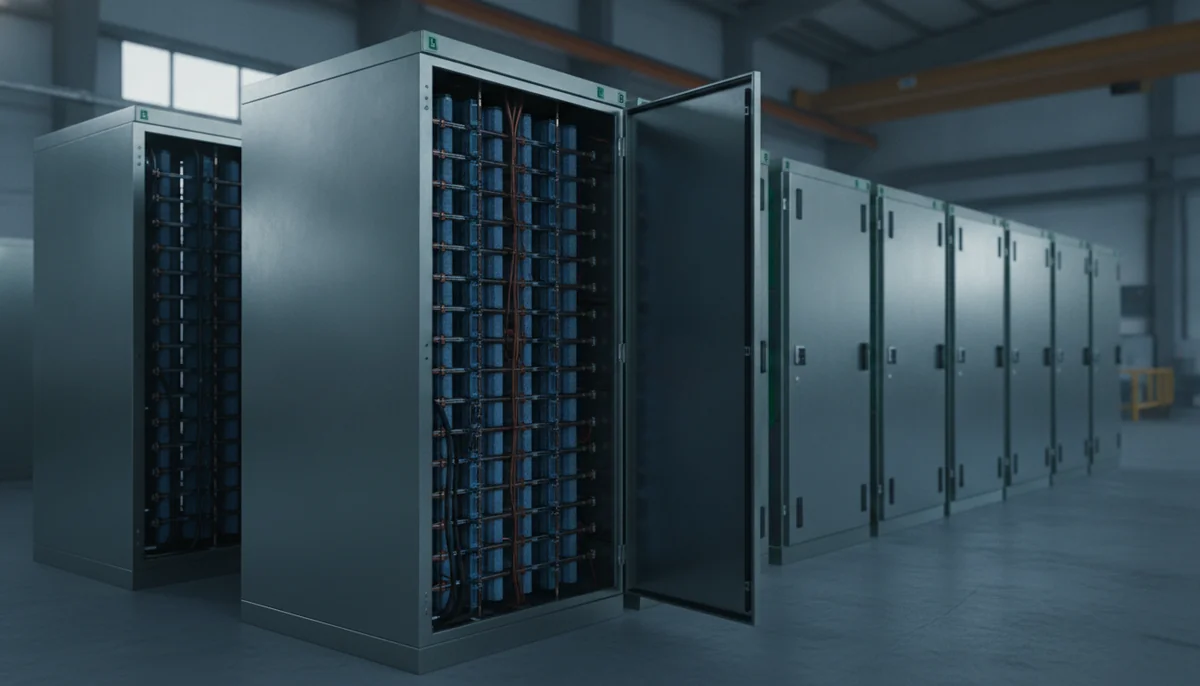
ESS Inc. has introduced Bridge, a modular sodium-ion battery energy storage system designed to address the escalating electricity demands of data centers and utilities while mitigating reliance on critical lithium-ion minerals. This strategic product launch positions ESS to capitalize on a growing market segment seeking safer, scalable, and domestically sourced alternatives for grid-scale energy storage. The Bridge system is engineered as a 1.2 MWh AC battery unit housed within a standard 10-foot container, offering significant flexibility. Multiple units can be stacked to achieve up to 4.8 MWh of storage within the footprint of a conventional 20-foot container, allowing for efficient capacity expansion without requiring additional real estate. This design integrates sodium-ion battery cells with essential components including power conversion, battery management software, and an energy management system for comprehensive plant-level control. This announcement follows an earlier disclosure from ESS, indicating over $1 billion in early-stage customer opportunities since its foray into the sodium-ion battery market. Such strong initial interest underscores the market's readiness for diverse battery chemistries, especially for large-scale energy storage applications where traditional lithium-ion solutions face supply chain constraints and safety concerns. The plug-and-play architecture of Bridge facilitates installation using standard heavy-duty forklifts and relies on simple air cooling, circumventing the complexities and maintenance associated with liquid cooling systems.
What It Means for the Energy Storage Market?
The introduction of ESS's Bridge system could significantly reshape the landscape for stationary energy storage, particularly in critical infrastructure and utility sectors. Sodium-ion technology offers distinct advantages over lithium-ion, primarily by eliminating the risk of thermal runaway, which reduces fire hazards and lowers operational maintenance requirements. This enhanced safety profile is particularly attractive for data centers, where uninterrupted power and asset protection are paramount, and for utilities deploying large-scale grid stabilization assets in populated areas. Furthermore, the system's ability to support charging and discharging durations from one hour to over 16 hours, depending on configuration, positions it as a versatile solution for various grid services, from peak shaving to long-duration energy arbitrage. The projected 20-year operating life, coupled with a wide operational temperature range of -40°F to 122°F, ensures resilience and reduced replacement cycles, translating into lower total cost of ownership for operators. This robust performance in diverse climates is crucial for widespread adoption across utility grids and distributed energy resources.
ESS reported over $1 billion in early-stage customer opportunities for its sodium-ion battery portfolio, highlighting significant market interest in alternative battery chemistries for large-scale energy storage.
What is the Context of Sodium-Ion Development?
The push for sodium-ion batteries stems from the inherent volatility and geopolitical risks associated with critical minerals like lithium, cobalt, and nickel, which are essential for conventional lithium-ion technologies. Sodium, in contrast, is an abundant and widely distributed element, making its supply chain far less susceptible to price fluctuations and supply disruptions. This reduces exposure to foreign entities of concern and fosters the development of a more secure and domestic supply chain for energy storage solutions, a key strategic objective for many nations. Global energy demand, particularly from advanced computing workloads driving artificial intelligence, is escalating rapidly, placing immense pressure on existing electrical grids. Data centers are increasingly seeking robust, reliable, and sustainable power solutions that can integrate renewable energy sources and provide resilience against grid instability. Sodium-ion technology, with its cost-effectiveness and material abundance, presents a compelling alternative for these high-growth segments, offering a path to greater energy independence and sustainability. This diversification in battery chemistry is a critical trend as the world transitions to a more electrified future.
Frequently asked questions
What is ESS Bridge and what problem does it solve?
ESS Bridge is a new modular sodium-ion battery energy storage system launched by US firm ESS. It offers a safer, scalable, and domestically sourced alternative to lithium-ion batteries, addressing the growing electricity demand from data centers and utilities while reducing reliance on critical minerals.
What are the key advantages of sodium-ion batteries over lithium-ion?
Sodium-ion batteries like Bridge eliminate the risk of thermal runaway, making them safer. They also use abundant, widely available materials, reducing dependence on critical minerals, and offer a longer operating life (20 years) with simpler air cooling.
Who are the primary target customers for ESS Bridge?
ESS Bridge is aimed at utilities, data centers, critical infrastructure operators, and commercial customers who need reliable, scalable, and safer energy storage solutions.
How scalable is the ESS Bridge battery system?
Bridge is built as a modular 1.2 MWh AC battery system in a 10-foot container. Multiple units can be stacked to deliver up to 4.8 MWh of storage in the footprint of a conventional 20-foot container, allowing for flexible capacity expansion.
What is the projected lifespan and operating temperature range of ESS Bridge?
The ESS Bridge battery system has a projected operating life of 20 years and is engineered to function in harsh conditions, with temperatures ranging from -40°F to 122°F.
How does ESS Bridge contribute to energy security and domestic supply chains?
By using abundant, widely available materials and being manufactured in the U.S., ESS Bridge helps reduce dependence on constrained critical minerals and supports the development of a domestic supply chain for energy storage, lessening exposure to foreign entities.