High-profile Nvidia chip rerouting case reveals critical need for robust, compliant AI supply chains in India and Southeast Asia.
Singapore Executive's Nvidia Chip Rerouting Case Spotlights India's Critical Need for Robust, Compliant AI Supply Chains
A Singapore executive's denial of fraud charges in an alleged Nvidia chip rerouting scheme highlights the intense global scrutiny on advanced technology exports to China.
The case underscores the escalating challenges for Southeast Asian hubs, including India, in navigating complex geopolitical tech tensions while securing vital AI infrastructure.
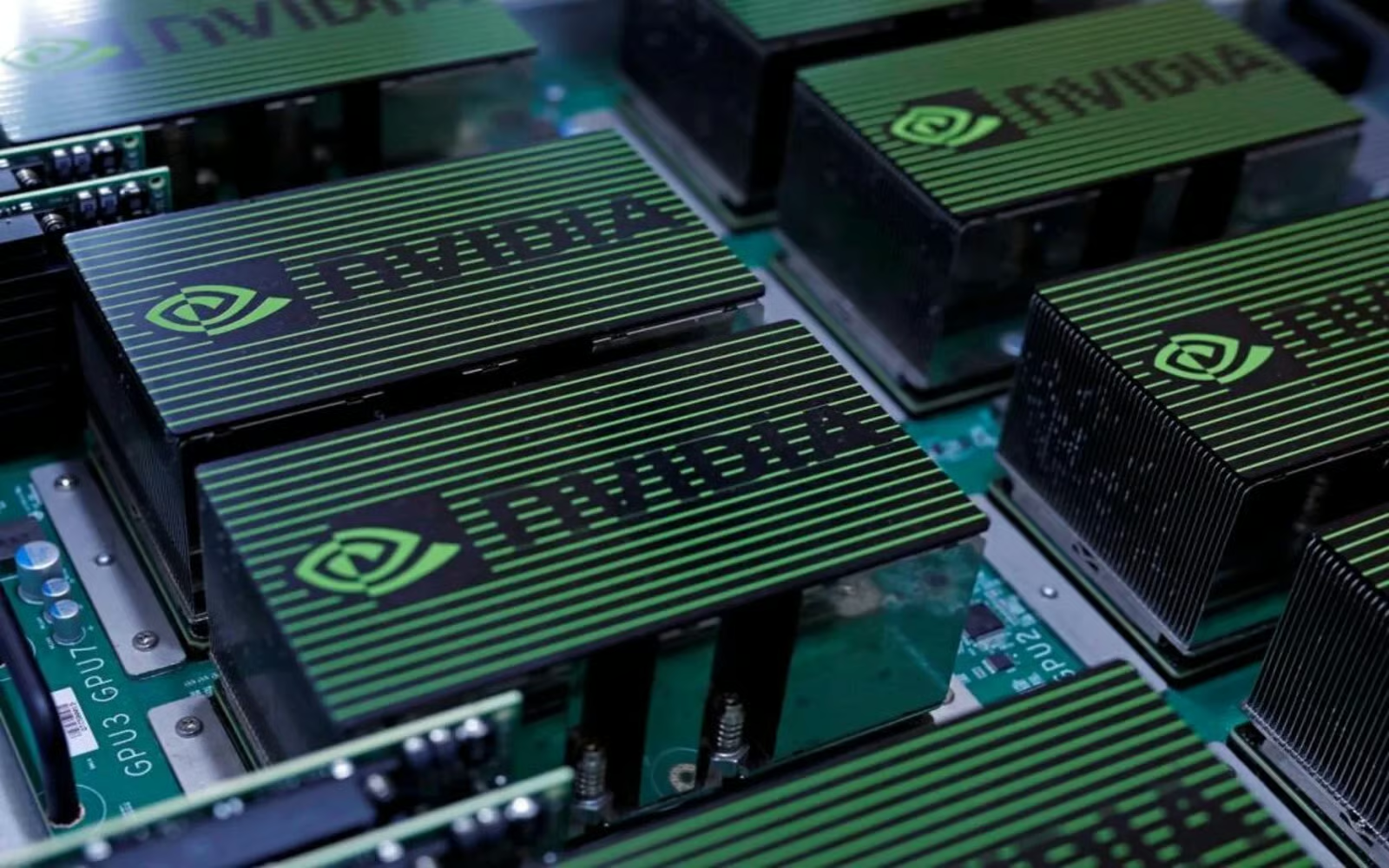
For Alan Wei Zhaolun, an executive with Aperia Group, the moment that led to a Singapore court arraignment on fraud charges was rooted in the intricate and often opaque world of high-value semiconductor trade. His recent plea of not guilty to allegations of illegally rerouting advanced Nvidia chips destined for China places him at the center of a high-profile case that resonates far beyond the courtroom. This situation dramatically underscores the growing pressures on individuals and companies operating within the global technology supply chain, especially as geopolitical tensions reshape the landscape of innovation and access. What started as an alleged scheme to circumvent international export restrictions has quickly become a pivotal test case for compliance in the region. Prosecutors allege that Zhaolun was involved in an alleged scheme to illegally export advanced Nvidia chips to China. These components are crucial for artificial intelligence development and high-performance computing, making them highly sought after and subject to stringent controls. The core of the accusation is that after obtaining the chips, they were allegedly diverted to China, thereby bypassing the export restrictions imposed by the United States and its allies. The alleged scheme involved securing access to the chips. Once in possession, the chips were reportedly rerouted, effectively creating an illicit pipeline for technology that Western governments aim to restrict from certain destinations. This alleged pattern of activity highlights the significant lengths to which some entities may go to acquire cutting-edge technology, demonstrating the challenges authorities face in monitoring and enforcing trade regulations across complex global networks. Currently, Alan Wei Zhaolun has formally denied any wrongdoing in a Singapore court, setting the stage for a potentially lengthy and complex legal battle. The case has cast a spotlight on Aperia Group and the broader operational environment for technology firms in Singapore. It is noted that the prosecution will need to meticulously prove the alleged activities and that Zhaolun was fully aware of and intended to breach existing export controls. This case unfolds against a backdrop of intensifying global semiconductor trade tensions, primarily driven by the strategic rivalry between the United States and China. Advanced chips, particularly those from companies like Nvidia, are considered critical dual-use technologies, essential for both commercial AI development and national security applications. The US has progressively tightened export controls to prevent China from accessing these cutting-edge components, citing concerns over their potential military applications and implications for technological dominance. Singapore, a vital regional trade hub and burgeoning technology center, finds itself at the nexus of these geopolitical shifts. Its robust logistics infrastructure and strategic location make it a natural conduit for global supply chains. However, this also means it becomes a focal point for the enforcement of export regulations, with authorities globally scrutinizing re-export routes that could enable restricted components to reach embargoed destinations. The integrity of Singapore's regulatory framework and its enforcement capabilities are now under a clear international lens. For India, a nation rapidly advancing its digital transformation and artificial intelligence capabilities, this Singapore case carries significant implications. India's ambitious vision for AI adoption across sectors like healthcare, finance, and defense heavily relies on access to advanced computing infrastructure, including high-performance chips. While India is making strides in its own semiconductor manufacturing journey, with initiatives like the India Semiconductor Mission attracting investments from global players, the immediate reliance on global supply chains for cutting-edge components remains substantial. The alleged rerouting of Nvidia chips underscores the vulnerabilities in the global tech supply chain that could impact India's AI aspirations. Indian companies and data centers seeking to acquire state-of-the-art AI hardware must navigate an increasingly complex web of international regulations and geopolitical sensitivities. This highlights an urgent need for robust due diligence, transparent procurement processes, and iron-clad compliance mechanisms to ensure that India’s technology ecosystem remains secure and operates within global legal frameworks. From an investor's perspective, such high-profile cases introduce an added layer of risk and scrutiny when funding AI startups or data infrastructure projects in South and Southeast Asia. The potential for disruptions due to export controls, the costs of compliance, and the reputational damage from association with non-compliant activities can influence investment decisions. This necessitates that companies demonstrate not just technological prowess but also impeccable governance and supply chain integrity to attract and retain capital. The long-term trend points towards an increasing fragmentation of technology supply chains and a push for greater regional self-sufficiency in semiconductor manufacturing. While this may eventually lead to more diversified and resilient supply networks, the immediate future will likely see heightened vigilance, stricter enforcement, and a more complex operating environment for companies engaged in high-tech trade. The Alan Wei Zhaolun case is a potent reminder of the personal and corporate stakes involved when navigating these intricate global currents. The unfolding legal drama involving Alan Wei Zhaolun serves as a stark reminder of the intricate balance between global technological ambition and the imperative of regulatory compliance. For India, a nation rapidly accelerating its AI journey, this case underscores the critical importance of building resilient, transparent, and ethically sound supply chains for advanced semiconductors. It's a call to action for the entire South and Southeast Asian tech ecosystem to reinforce robust governance, ensuring that the pursuit of innovation does not compromise the foundational principles of legitimate global trade, ultimately fostering a more secure and predictable environment for aspiring entrepreneurs and established tech giants alike.
Frequently asked questions
What is the Singapore executive charged with?
The Singapore executive is facing fraud charges related to an alleged scheme to reroute advanced Nvidia chips, specifically high-performance technology exports, to China despite global restrictions.
Why is the Nvidia chip rerouting case significant for India?
The case highlights India's critical need for robust and compliant AI supply chains, emphasizing the challenges Southeast Asian hubs face in navigating complex tech export regulations and maintaining integrity.
Who is the executive involved in the Nvidia chip case?
A Singapore executive, whose identity is central to the ongoing legal proceedings, is facing high-profile fraud charges in connection with the alleged Nvidia chip rerouting scheme.
What are the implications of this case for global tech exports?
The case underscores intense global scrutiny on advanced technology exports, particularly to China, and the escalating challenges faced by nations in enforcing trade restrictions and preventing illicit transfers.
What kind of chips were allegedly rerouted?
The alleged rerouting scheme involved advanced Nvidia chips, which are subject to stringent export controls due to their powerful capabilities critical for AI and high-performance computing.
How does this case affect AI supply chain security?
It raises significant concerns about AI supply chain security and the paramount importance of compliance for countries like India to prevent unauthorized technology transfers and ensure the integrity of their tech ecosystems.