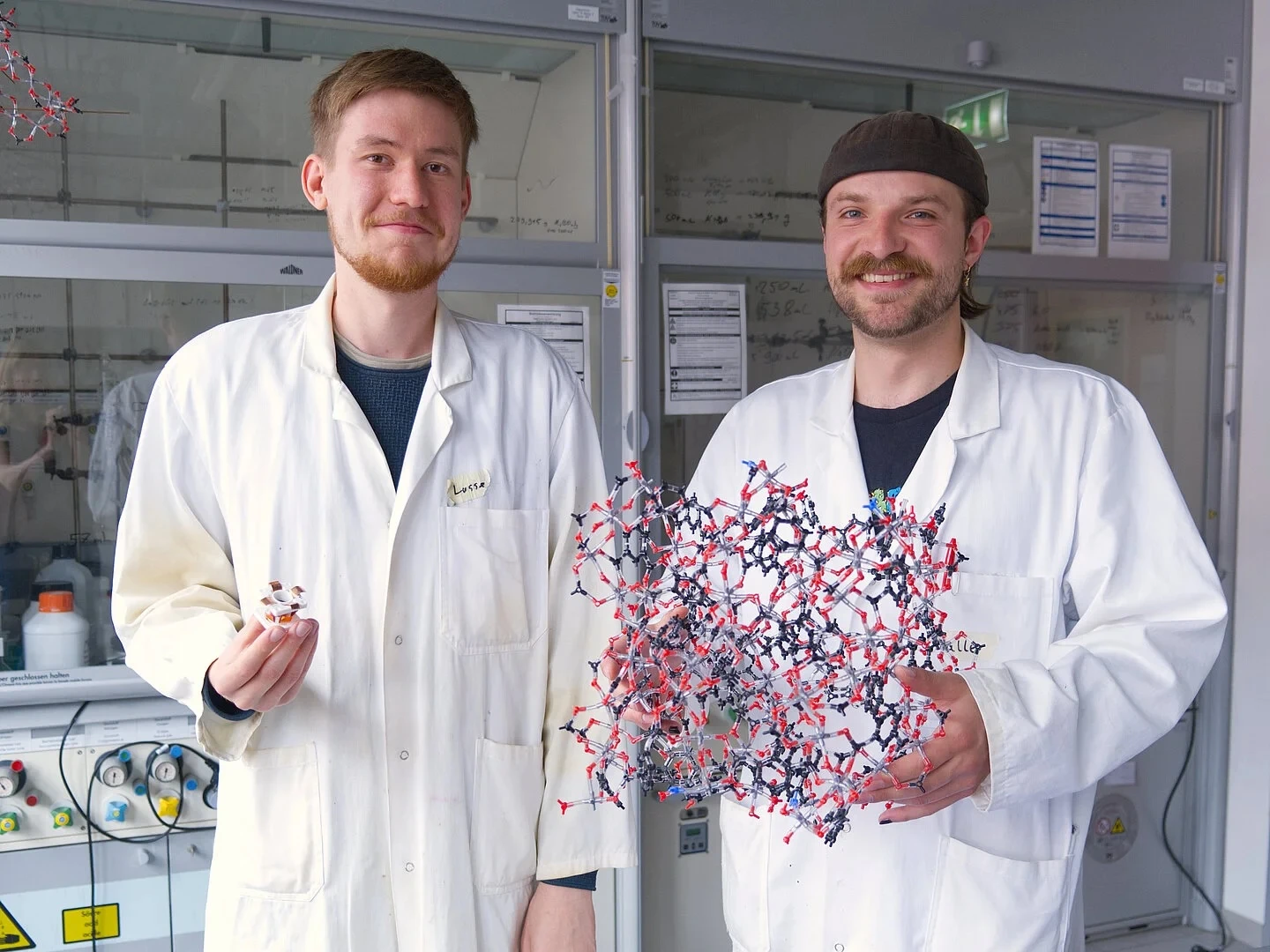
Kiel University's CAU-10-H innovation scales atmospheric water generation, creating new investment opportunities in sustainable tech.
Kiel University's Porous Compound Paves Path for Scalable Water Harvesting, Shifting Investment Focus A groundbreaking porous compound, CAU-10-H, developed by researchers at Kiel University, is set to redefine the landscape of atmospheric water generation, offering a highly scalable and efficient solution for extracting potable water from ambient air, even in arid conditions. This innovation promises to decentralize water production capabilities globally, potentially attracting significant capital into climate resilience infrastructure and prompting a re-evaluation of traditional utility investment models. The novel aluminum-based metal-organic framework (MOF) distinguishes itself through a unique combination of high moisture absorption capacity and an exceptionally rapid, low-energy regeneration cycle, facilitating continuous and efficient water extraction. This material’s design represents a significant departure from previous experimental MOFs, as it has been specifically engineered for compatibility with existing industrial manufacturing processes, streamlining its transition from laboratory discovery to mass production. The ability to leverage established factory equipment significantly reduces the initial capital outlay typically associated with scaling new material technologies, offering an expedited path to market. This technological leap provides a compelling pathway for widespread decentralized water solutions, a critical necessity for numerous regions confronting escalating drought conditions and inconsistent access to clean water resources. Traditional atmospheric water generation systems have frequently encountered hurdles relating to suboptimal energy efficiency, prohibitive operational costs, or inherent scalability limitations. CAU-10-H directly addresses these core challenges through its superior material science and inherent production readiness, positioning it as a potential catalyst for substantial shifts in investment strategies within the global utility and climate technology sectors. The compound's performance profile broadens the economic calculus for water provision. The potential for extensive adoption across diverse sectors including precision agriculture, industrial processes, and humanitarian aid operations could fundamentally reshape how investors perceive and engage with the water technology market. Venture capital funds and institutional investors focused on environmental, social, and governance (ESG) criteria are likely to view this development as a pivotal opportunity, seeking out companies that can effectively integrate and commercialize CAU-10-H into deployable, robust products. This could usher in a new wave of investment in localized water infrastructure, diverging from the traditional reliance on large-scale, centralized projects.
How Does This Innovation Impact the Global Water Market?
The emergence of a factory-ready material capable of highly efficient atmospheric water harvesting represents a transformative moment for the global water market, which is projected to reach substantial value as climate change exacerbates water scarcity. This technology fosters a paradigm shift away from capital-intensive, centralized water infrastructure, often burdened by extensive distribution networks and significant environmental footprints, toward more agile, localized, and resilient systems. Such decentralization empowers communities, particularly those in remote or arid zones, to achieve a higher degree of water self-sufficiency, thereby mitigating reliance on overstressed natural water bodies or energy-intensive desalination operations. The compound's documented efficacy at moderate humidity levels dramatically expands the addressable market for atmospheric water generation, encompassing vast arid and semi-arid regions previously deemed unsuitable for such technologies. This enhanced capability holds profound implications for agricultural practices in water-stressed areas, potentially revitalizing struggling farming economies and fostering new forms of sustainable food production. Consequently, analysts will closely monitor the investment landscape for early movers and strategic partnerships among material science firms, engineering companies, and water service providers looking to integrate CAU-10-H into market-ready solutions.
This material can reliably extract potable water from ambient air, even under moderate humidity conditions, significantly outperforming many existing atmospheric water generation prototypes.
What Is the Historical Context of Water-From-Air Technologies?
The quest to harness atmospheric moisture for potable water has been a persistent scientific and engineering challenge, amplified by the ever-increasing global demand for freshwater and the stark geographical disparities in water resource availability. Historically, efforts have ranged from rudimentary dew collection systems to more complex mechanical approaches involving refrigeration cycles or hygroscopic desiccants. While these methods have demonstrated varying degrees of success, they have consistently faced hurdles related to high energy consumption, substantial operational costs, and limited performance envelopes, particularly in regions with lower ambient humidity. Over the past few decades, advancements in materials science, particularly in the realm of porous materials, have opened new frontiers. Metal-organic frameworks (MOFs), characterized by their crystalline structures and exceptionally high internal surface areas, have emerged as highly promising candidates due to their tunable porosity and selective adsorption capabilities. Numerous MOF variants have exhibited impressive water vapor capture in laboratory settings. However, the critical bottleneck has always been translating these sophisticated chemical structures into compositions that are both cost-effective to produce at scale and robust enough for real-world, continuous operation, a challenge that the Kiel University team appears to have largely overcome.
What Are the Market Implications and Potential Obstacles?
The successful commercialization and deployment of CAU-10-H could fundamentally reshape investment profiles across the entire water infrastructure sector, accelerating a pivot towards advanced materials and decentralized solutions. Established water utilities, cutting-edge agricultural technology firms, and international humanitarian aid organizations stand as primary potential beneficiaries, leveraging this technology to fortify resilience against the escalating impacts of climate change and localized water crises. The "factory-ready" attribute of the material implies a compressed timeline for market penetration compared to prior scientific breakthroughs, potentially expediting the global adoption of atmospheric water generation systems across diverse applications. However, a comprehensive market analysis must also address potential obstacles and the overall economic viability of systems integrating CAU-10-H. While the university emphasizes low-energy regeneration, the total lifecycle cost will encompass not only the material itself but also the energy source, maintenance, and system durability in varied operational environments. Energy requirements, even if comparatively low, could still present a significant hurdle for deployment in truly remote, off-grid locations without readily available renewable power sources. Furthermore, the development of robust regulatory frameworks for novel water sources and cultivating widespread public acceptance of atmospherically generated water remain crucial sociological and political factors influencing broad adoption. The landscape of water solutions is dynamic, with competing technologies such as advanced membrane filtration for wastewater recycling and increasingly efficient desalination plants continually evolving and improving. These alternatives offer established pathways to water security which must be rigorously considered in any comprehensive market evaluation. Despite these challenges, the global market for atmospheric water generators is projected for substantial expansion over the next decade, fueled by persistent global population growth and the intensifying effects of climate change. Companies demonstrating agility in integrating this novel material into durable, energy-efficient, and user-friendly devices are poised to capture significant market share. Investors should closely monitor upcoming pilot programs and strategic manufacturing partnerships initiated by Kiel University, as these will provide critical performance benchmarks and insight into the material’s true commercial scalability and trajectory in addressing acute global water stress.
Frequently asked questions
What is CAU-10-H and how does it work?
CAU-10-H is a groundbreaking porous compound developed at Kiel University designed for atmospheric water generation. It efficiently extracts potable water from ambient air, even in arid conditions, by adsorbing water vapor and then releasing it for collection. Its unique structure allows for highly scalable and energy-efficient water harvesting.
How much water can CAU-10-H extract from the air?
The compound has demonstrated the ability to pull 2 liters of water from the air.
Is this technology ready for commercial use?
Yes, the article highlights that the porous compound is "factory-ready," indicating its readiness for scalable production and commercial application.
What are the primary benefits of this new water harvesting technology?
Key benefits include high scalability, efficiency in various climates (including arid), and the potential to provide potable water, addressing global water scarcity.
What is the investment potential for atmospheric water generation technologies like CAU-10-H?
The innovation is described as "shifting investment focus," suggesting significant opportunities for investors in sustainable technology and environmental solutions.
Where was CAU-10-H developed?
CAU-10-H was developed by researchers at Kiel University.