Delingha CSP plant’s molten salt storage breakthrough enables 24/7 power, boosting grid stability and challenging battery reliance.
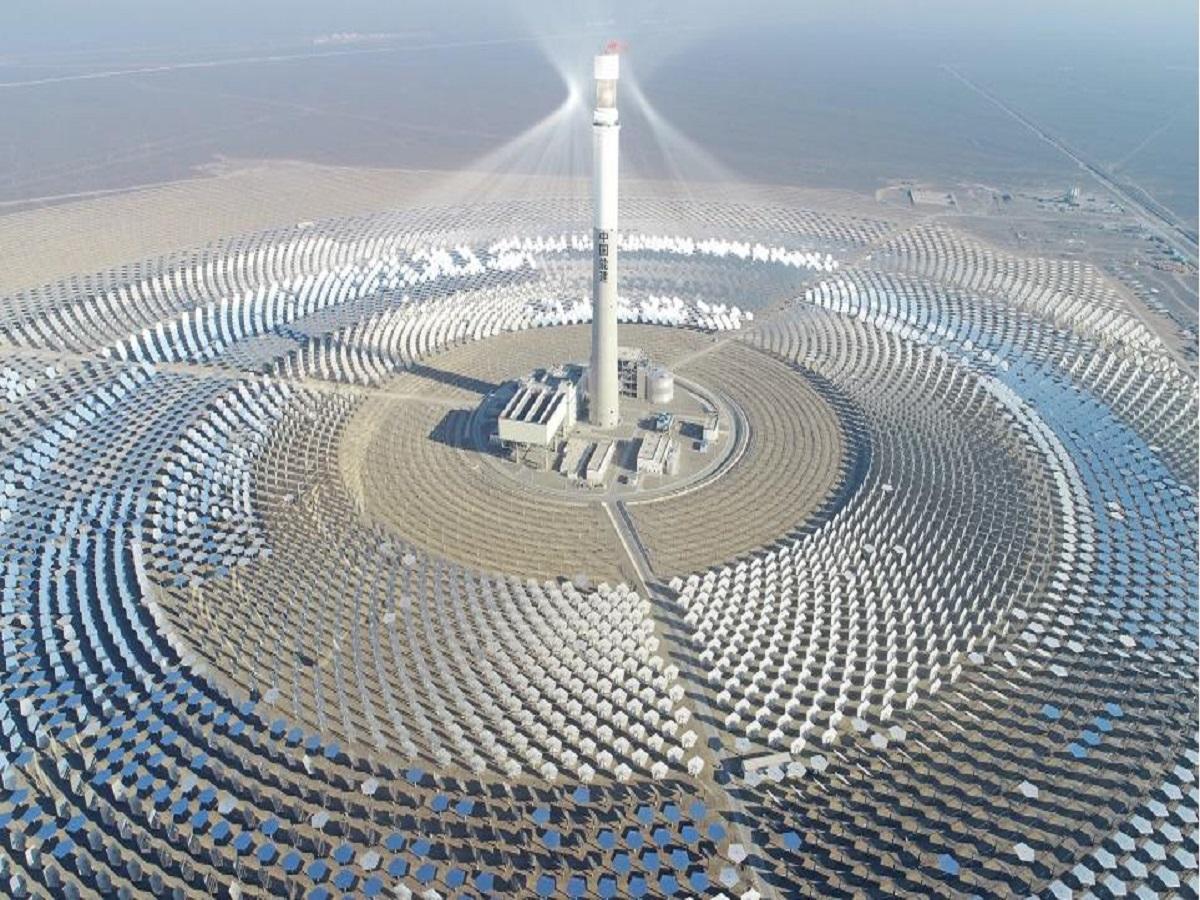
China's colossal Delingha Concentrated Solar Power (CSP) plant in the Gobi Desert has commenced full-scale nocturnal operations, utilizing molten salt for energy storage rather than conventional batteries, marking a pivotal advancement for grid stability and the economics of dispatchable renewable power. This breakthrough challenges the prevailing reliance on lithium-ion solutions for long-duration storage, potentially reorienting investment flows towards thermal storage technologies capable of providing baseload renewable electricity. The operational success signifies China's escalating commitment to energy independence and its strategic embrace of diverse clean energy infrastructure.
The large-capacity plant, situated in Qinghai Province, integrates a long-duration molten salt thermal energy storage system, allowing it to supply power consistently, even after sunset or during cloudy periods. This continuous generation capacity, achieved by heating eutectic molten salt to temperatures exceeding very high temperatures to drive a steam turbine, differentiates it significantly from intermittent photovoltaic (PV) solar farms. Developers involved in the project emphasize the system’s ability to provide stable power output, crucial for grid synchronization and frequency regulation, a service often lacking in traditional intermittent renewable deployments.
While the capital expenditure for CSP projects like Delingha can exceed that of equivalent PV installations, particularly in the initial build-out phase, the long-term operational advantages are considerable. The plant's ability to dispatch power on demand, mimicking fossil fuel plants, enhances grid reliability and reduces the need for expensive spinning reserves or backup generation. This inherent dispatchability also positions CSP as a potential candidate for industrial process heat applications, offering a decarbonization pathway for heavy industries that require continuous, high-temperature thermal energy.
What It Means for Global Energy Transition
The successful operation of the Delingha plant underscores a strategic divergence in the global energy transition, particularly regarding long-duration energy storage. While lithium-ion batteries dominate short-to-medium duration storage discussions, CSP with molten salt offers a compelling alternative for applications requiring many hours or even days of stored energy, directly addressing the intermittency challenge of renewables at scale. This capability could fundamentally alter load-following strategies for national grids and influence future utility procurement decisions.
Investors and policy makers are increasingly scrutinizing the "firmness" of renewable energy sources, moving beyond simple generation capacity to assess actual grid contributions. The Gobi plant's model offers a blueprint for achieving high-capacity factors from solar resources, reducing the reliance on fossil fuel peaking plants and diminishing the overall carbon intensity of electricity grids. Furthermore, the technology's scalability and its reliance on abundant, inexpensive materials like sand and salt, as opposed to rarer battery minerals, present distinct supply chain advantages and geopolitical resilience. The long operational lifespan of CSP plants, often exceeding several decades, also provides a stable asset base for long-term infrastructure investment funds.
The project aligns with China's broader ambition to become a global leader in clean energy technology and its massive investment in renewable energy infrastructure across its vast western regions. These large-scale deployments are not merely about emissions reduction but also about establishing energy security, driving economic growth in less developed provinces, and creating exportable technological expertise. The implications extend beyond electricity generation, potentially influencing the development of green hydrogen production, which benefits from consistent, high-capacity renewable power inputs.
China's Delingha Concentrated Solar Power plant utilizes a long-duration molten salt thermal energy storage system, allowing it to generate power continuously, including overnight, without reliance on conventional battery technology.
The Context of CSP Development
Concentrated Solar Power technology has a long and complex history, marked by periods of intense optimism and subsequent challenges in cost competitiveness against rapidly falling photovoltaic prices. Early CSP projects, predominantly in the United States and Spain, demonstrated the technical viability of thermal storage, but often struggled with high upfront capital costs and complex operational profiles. The Delingha plant represents a new generation of CSP, benefiting from years of research and development, supply chain maturation, and economies of scale driven by Chinese industrial policy.
China has been a significant player in recent CSP development, with several projects commissioned or under construction as part of its ambitious renewable energy targets. The Gobi Desert, with its high direct normal irradiance (DNI) and expansive open land, provides an ideal environment for these utility-scale installations. This strategic focus on CSP complements China's overwhelming leadership in PV manufacturing and deployment, creating a diversified renewable energy portfolio designed to tackle different grid challenges. The experience gained from projects like Delingha is expected to feed into further technological refinements and cost reductions, making CSP more competitive globally.
What Analysts Say About CSP's Future
Market analysts offer a nuanced view on the long-term trajectory of CSP, acknowledging its unique advantages while also pointing to persistent hurdles. The primary challenge remains the levelized cost of electricity (LCOE), which for CSP, particularly with storage, has historically been higher than that of unsubsidized PV or wind. While molten salt storage offers superior duration and dispatchability, the capital intensity of the heliostat fields, tower, and steam turbine components can still deter some private investors in markets without robust policy support or premium pricing for grid services.
Skepticism also arises around the environmental footprint of large CSP plants, particularly concerning water usage in arid regions like the Gobi Desert for cooling and mirror cleaning, although dry-cooling technologies are continually improving. Land footprint can also be substantial. Nevertheless, many observers believe that as grid penetration of intermittent renewables increases globally, the value of dispatchable, non-battery storage solutions like CSP will appreciate significantly, leading to a re-evaluation of its economic viability. The ability of CSP to provide inertia and ancillary services, like voltage and frequency support, is a crucial differentiator that traditional PV lacks without significant additional investment in power electronics.
The success of the Gobi plant will be closely watched for its long-term operational stability and its actual cost of generation compared to other dispatchable energy sources. Future policy decisions in China and other nations regarding capacity payments for firm power, carbon pricing, and long-duration storage mandates will be critical triggers for broader CSP adoption. Expect to see further details on the operational efficiencies and cost reductions from Delingha influencing investment decisions in similar projects globally, particularly in sun-rich regions of the Middle East, North Africa, and the Americas.
Frequently asked questions
How does China's Gobi solar plant generate power after dark?
China's Delingha Concentrated Solar Power (CSP) plant in the Gobi Desert generates power after dark by storing solar energy as heat in molten salt during the day. This stored thermal energy is then used to generate electricity through steam turbines, bypassing the need for traditional batteries.
What is the Delingha CSP plant?
The Delingha CSP plant is a large-scale concentrated solar power facility in China's Gobi Desert known for its innovative molten salt energy storage system.
Why is molten salt used instead of batteries?
Molten salt offers a cost-effective and long-duration energy storage solution for CSP plants, providing heat for continuous power generation, unlike batteries which are typically more suited for shorter-duration electrical storage.
What is the significance of this breakthrough?
This breakthrough is significant for grid stability, demonstrating that renewable energy can be dispatchable 24/7 without reliance on intermittent solar or expensive battery solutions.
How does this impact renewable energy?
It advances renewable energy by offering a scalable model for continuous solar power generation, potentially reducing the intermittency challenge often associated with solar farms.
Where is the Gobi solar plant located?
The Gobi solar plant, specifically the Delingha CSP facility, is located in the Gobi Desert in China.