Silicon Valley's $1.5 trillion AI infrastructure spend by 2026 demands $3 trillion in revenue, sparking fears of an economic crunch if profits don't materialize.
Silicon Valley's massive capital expenditure in AI infrastructure, projected to reach $1.5 trillion by 2026, now requires an estimated $3 trillion in cumulative revenue to justify the investment, creating a critical juncture for technology markets and the global economy. This substantial financial hurdle places immense pressure on both frontier AI labs and the hyperscale cloud providers betting on future AI-driven free cash flow, according to recent analysis.
Sequoia partner David Cahn, who first quantified the AI infrastructure challenge in 2023, updated his calculations this month, noting the escalating costs of memory and specialized inference chips. His initial assessment, based on Nvidia's $50 billion annual GPU revenue, suggested $200 billion was needed to cover upfront costs; that number has ballooned over three years of aggressive hyperscaling. The disconnect between infrastructure spend and application revenue poses a significant risk to market valuations and future growth projections.
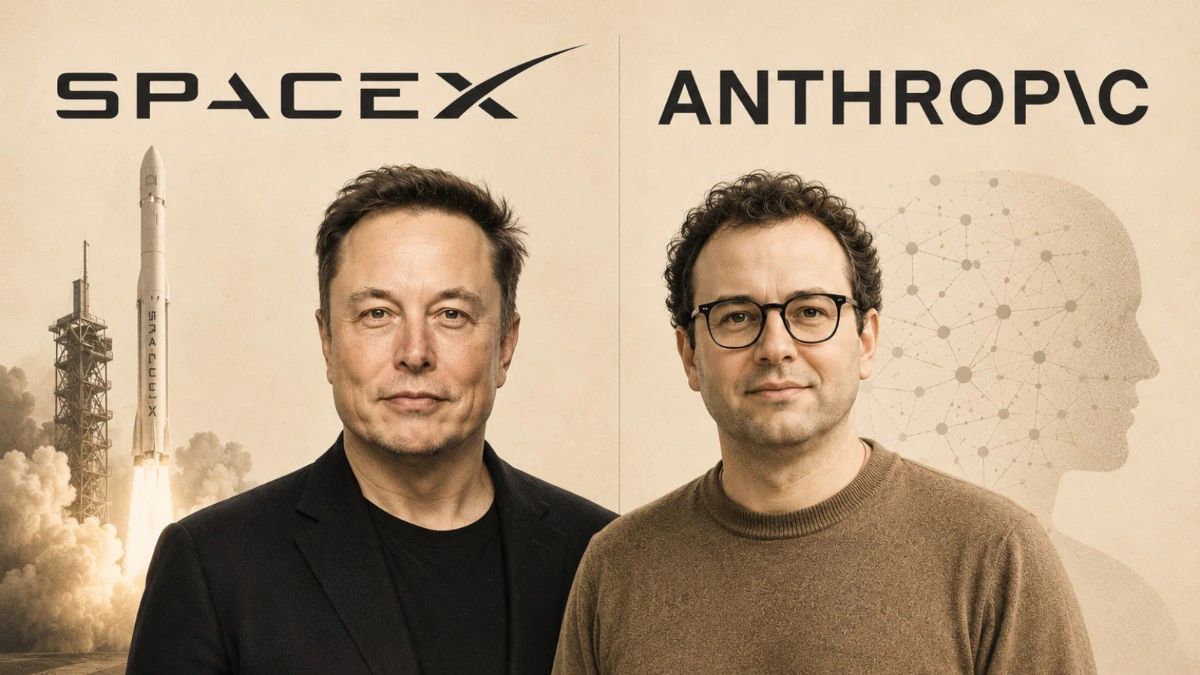
While companies like Anthropic are reportedly hitting $60 billion in annual recurring revenue (ARR) and OpenAI reached an estimated $13 billion in 2025 (with projections up to $20 billion ARR in November 2025), a substantial gap remains. This revenue generation must not only cover operating expenses but also provide a return on the colossal upfront investments made by the likes of Google, Microsoft, Amazon, and Meta.
What Does This Mean for the Startup Ecosystem?
My read is that this $3 trillion figure forces a reckoning for the entire AI ecosystem, especially for venture-backed startups. The era of simply "building AI" is over; the new mandate is "building with AI for profit." Founders are now under immense pressure to demonstrate clear, scalable monetization models that can tap into real enterprise and consumer demand, moving beyond aspirational metrics to tangible revenue generation that can contribute to this payback.
The market's patience for infrastructure-first bets or speculative AI applications without a strong revenue thesis is rapidly dwindling. Venture capital will increasingly flow towards companies that can leverage the existing computational horsepower to solve high-value problems and capture significant market share with demonstrable ROI. This shifts the focus from raw model capability to product-market fit and efficient customer acquisition.
$3 Trillion Revenue Target
The cumulative revenue estimated by Sequoia partner David Cahn that the AI industry must generate by 2026 to justify the $1.5 trillion investment in chips and data center infrastructure.
The Hyperscalers' Big Bet
The core of this financial dilemma rests with the hyperscalers—Google, Meta, Microsoft, and Amazon—who have poured vast sums into building the underlying AI compute fabric. Torsten Slok, chief economist at Apollo, recently highlighted that these tech giants are forecasting massive accelerations in their free cash flow by 2028. This hinges directly on the assumption that their substantial AI investments will begin to yield significant returns within the next two years.
The risk lies in the emergence of more cost-effective solutions, such as open-weight models, many of which originate from China, and the continued decline in overall token prices. OpenAI's latest model, for instance, demonstrates 54% greater token efficiency for coding tasks, as noted by CEO Sam Altman. While this is beneficial for users seeking lower costs for their AI agents, it directly erodes the potential revenue streams for companies whose business models depend on high token usage and pricing.
The Bear Case and Market Fragility
Slok warns that if these hyperscalers fail to meet their ambitious free cash flow targets, the market reaction could be severe. With so much of the S&P 500's valuation and broader economic sentiment tied to the performance of these few dominant technology companies, a slower-than-anticipated payback from AI investments could trigger a significant market correction or even tip the economy into recession. My perspective is that this scenario isn't just a sector-specific problem; it represents a systemic risk to the stability of public markets.
The increasing commoditization of AI inference, driven by efficient models and open-source alternatives, creates a downward pressure on pricing that could make it difficult for even the largest players to recoup their capital expenditures on schedule. This dynamic fundamentally challenges the economic models underpinning the current AI boom, forcing a re-evaluation of how value is created and captured in the AI stack.
What to Watch
Investors and founders alike should closely monitor the 2028 free cash flow projections from the major hyperscalers, as these will serve as critical benchmarks for AI investment viability. The ongoing token price wars and the adoption rate of increasingly efficient or open-source AI models will be key indicators of revenue potential for the entire ecosystem. Startup funding rounds that demonstrate clear paths to profitability and strong unit economics will also offer insights into the market's evolving expectations for AI-driven growth.
Frequently asked questions
What is the $3 trillion question in AI?
The $3 trillion question refers to the estimated cumulative revenue the AI industry needs to generate to justify the massive $1.5 trillion in infrastructure spending projected by 2026. Experts like David Cahn pose this challenge to entrepreneurs.
How much is being spent on AI infrastructure by 2026?
By 2026, AI infrastructure spending is projected to reach $1.5 trillion, according to calculations by Sequoia partner David Cahn. This figure accounts for GPU revenue, data center operations, and operator margins.
Who are the key players in the AI investment debate?
Key players include David Cahn (Sequoia), who quantified the investment, and Torsten Slok (Apollo), who warns of economic risks. Major AI companies like Anthropic and OpenAI, as well as hyperscalers (Google, Meta, Microsoft, Amazon), are also central.
What are the risks of AI investments not paying off?
If AI investments don't generate sufficient returns, particularly for hyperscalers, Torsten Slok warns of severe market reactions. This could include an economic recession and an S&P 500 correction due to so much riding on a few names.
Why are token prices and open-weight models a concern for AI revenue?
The increasing use of cheaper open-weight AI models and falling token prices can reduce revenue for companies building proprietary AI models and "token factories." While good for users, this dynamic challenges the profitability of large AI investments.
What revenue figures have top AI companies achieved recently?
Anthropic is thought to have hit $60 billion in annual recurring revenue (ARR). OpenAI reportedly earned $13 billion in 2025, claiming $20 billion ARR by November 2025.