Breakthrough perovskite-organic tandem solar cells maintain high performance under shade, promising to boost India's green energy transition.
India's Green Future Shines Brighter: New Solar Cells Retain High Efficiency Under Shade, Powering Innovation Across the Subcontinent
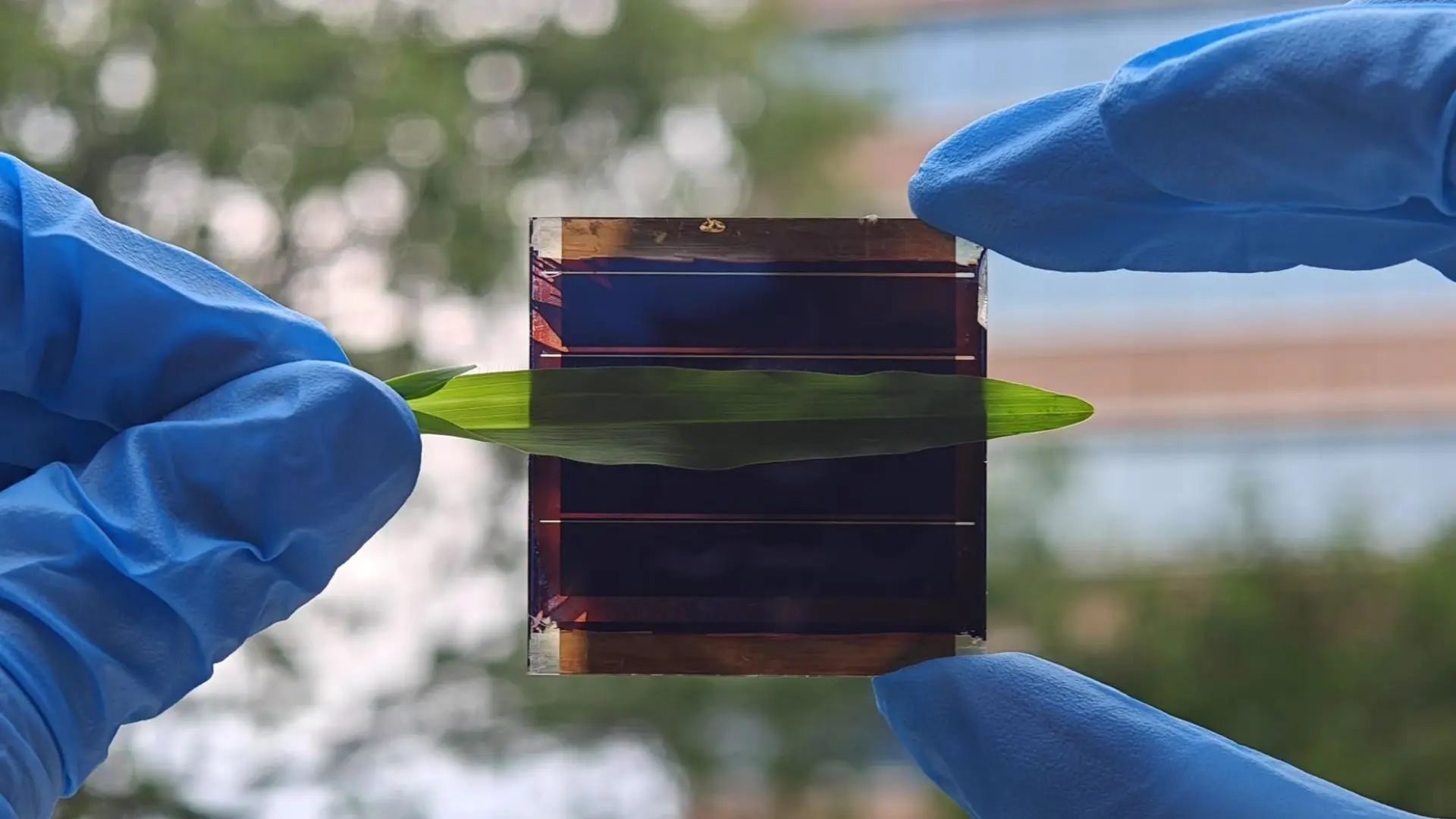
Pioneering perovskite-organic tandem solar cells are reported to maintain high efficiency even with significant shading, addressing a major real-world limitation of solar power.
This breakthrough promises to accelerate solar adoption in India, offering more reliable and efficient energy solutions for its diverse urban and rural landscapes.
The global race towards sustainable energy is critically dependent on continuous innovation, pushing the boundaries of what renewable technologies can achieve. For countless researchers and entrepreneurs in India and across the world, a core mission involves overcoming the practical limitations that hinder widespread clean energy adoption. A significant step forward has been made with the development of new solar cells that directly confront a persistent challenge: the substantial loss of power output caused by partial shading, a ubiquitous issue in varied and densely populated environments.
Historically, even a small amount of shade on a single solar cell within a panel can dramatically cripple the entire system's performance, sometimes reducing its total energy generation significantly. This vulnerability has posed a considerable hurdle for solar deployment in a country like India, which features a vast spectrum of geographical conditions, from sprawling urban centers with complex skylines to diverse agricultural lands and remote villages. The motivation behind this latest scientific endeavour was to build a solar solution robust enough to perform reliably under real-world conditions, far from ideal laboratory settings. This sustained effort has culminated in the creation of a perovskite-organic tandem solar cell, a device engineered to retain high efficiency, even after enduring demanding stress tests under conditions simulating partial shading. This capability marks a crucial departure from the performance of conventional silicon panels, which are far more prone to such performance degradation.
This technological leap carries profound implications for India’s ambitious journey towards energy independence and sustainability. The nation has set ambitious targets for achieving renewable energy capacity, with solar power expected to contribute a lion's share. However, the practical realities of deploying solar panels across India's varied terrain often conflict with ideal installation requirements. In bustling metropolitan areas, for instance, rooftop solar installations frequently face partial shading from adjacent high-rises, overhanging trees, or even essential building infrastructure like air conditioning units and water tanks. Similarly, in the burgeoning sector of agrivoltaics, where solar panels are integrated into farmlands, the shade cast by growing crops or agricultural machinery can significantly impede energy output. These innovative shade-resistant cells possess the potential to unlock vast, previously uneconomical areas for solar energy generation, making rooftop solar a more viable and attractive option in congested urban environments and substantially improving the commercial viability of agrivoltaic projects, thereby bolstering both national energy security and rural economic development.
The technical brilliance of this new cell lies in its sophisticated architecture, which harnesses the exceptional properties of perovskite — a material lauded for its superior power conversion efficiency and tunable characteristics — in combination with advanced organic semiconductors. This tandem configuration is designed to absorb a broader spectrum of sunlight, effectively converting more light into electricity and ensuring a more stable performance across a wider range of lighting conditions. The remarkable resilience these cells demonstrated during extensive shading stress tests is a testament to their potential, signalling a critical transition from promising laboratory results to tangible, practical applicability in the field. For solar installations across India, from residential rooftops to large-scale utility projects in various states, this translates into a more consistent and predictable energy output, even in the face of intermittent cloud cover or unavoidable structural shading. Such enhanced reliability is pivotal, promising improved returns on investment for both consumers and developers, and thus fostering greater confidence in solar as a primary, stable energy source for the nation.
This development is also perfectly aligned with the evolving paradigm within the Indian solar ecosystem, often dubbed "Solar 2.0," which emphasizes not merely increasing raw generation capacity but also fostering smart, integrated, and highly efficient energy solutions. We can observe this transformative trend across several related domains. For example, numerous Indian startups are actively developing sophisticated artificial intelligence-powered monitoring systems that can predict and dynamically mitigate the effects of shading, or designing innovative bifacial solar panels that capture sunlight from both the front and rear surfaces, maximizing energy harvest even from diffuse light. Furthermore, the rising prominence of floating solar farms on India's vast network of reservoirs and lakes, as exemplified by large-scale projects in various states, addresses critical challenges such as land scarcity while benefiting from the water's cooling effect to enhance panel efficiency. These newly developed shade-resistant cells could seamlessly integrate with and significantly enhance such existing and emerging initiatives, fortifying the entire solar value chain and rendering it far more robust and adaptable to India's unique environmental and infrastructural demands.
My interpretation is that this specific innovation directly addresses some of India's most pressing energy challenges. The country's dynamic climate, immense population density, and ongoing rapid infrastructure expansion necessitate solar solutions that are inherently flexible, durable, and highly efficient. For India, these shade-resistant solar cells represent a potential game-changer, holding the promise of democratizing access to reliable green energy even in locations where conventional solar technology has previously proven suboptimal. It not only reduces wasted potential but also makes solar power generation more predictable and therefore more valuable in grid management. This breakthrough underscores a crucial synergy: how cutting-edge scientific advancement, when strategically aligned with pressing national imperatives and real-world deployment challenges, can truly galvanize a sustainable and energy-independent future for millions across the subcontinent and beyond.
The journey from research to widespread commercialisation will undoubtedly involve further rigorous validation, meticulous cost optimisation, and the scaling of manufacturing capabilities to meet India's vast energy demands. Nevertheless, this foundational breakthrough sends a powerful and encouraging signal to Indian entrepreneurs, clean energy startups, and strategic investors alike, confirming that the next significant wave of innovation in sustainable energy is already here. It serves as a strong impetus for bolstering indigenous research and development within India, potentially catalyzing the establishment of specialized domestic manufacturing facilities and creating a new wave of skilled employment opportunities across the renewable energy sector. By significantly reducing the 'opportunity cost' of deploying solar in less-than-ideal locations, the inherent ability of these advanced cells to maintain nearly full efficiency under challenging conditions effectively expands the addressable market for solar energy solutions across the entire subcontinent, paving the way for a more resilient and sustainable energy future for all.
Frequently asked questions
What is the breakthrough with these new solar cells?
These new perovskite-organic tandem solar cells uniquely retain 97% efficiency even after 2,000 hours of shading, overcoming a significant real-world challenge for solar power generation.
How do these new solar cells benefit India?
By maintaining high efficiency under shade, these cells can significantly accelerate solar adoption across India, making solar power more reliable and accessible in diverse conditions.
What is a perovskite-organic tandem solar cell?
It is an advanced type of solar cell that combines perovskite and organic materials, aiming to achieve higher efficiency and better performance than traditional single-junction cells.
Why is shade a problem for solar cells?
Shading on traditional solar panels can drastically reduce their power output, sometimes even impacting the performance of unshaded cells in the same array.
What was the duration of the shading stress test?
The new solar cells underwent a rigorous 2,000-hour shading stress test to evaluate their long-term efficiency retention.
How will this innovation impact renewable energy?
This breakthrough promises to enhance the reliability and efficiency of solar energy systems, making renewable power more competitive and widespread globally, especially in regions like India.