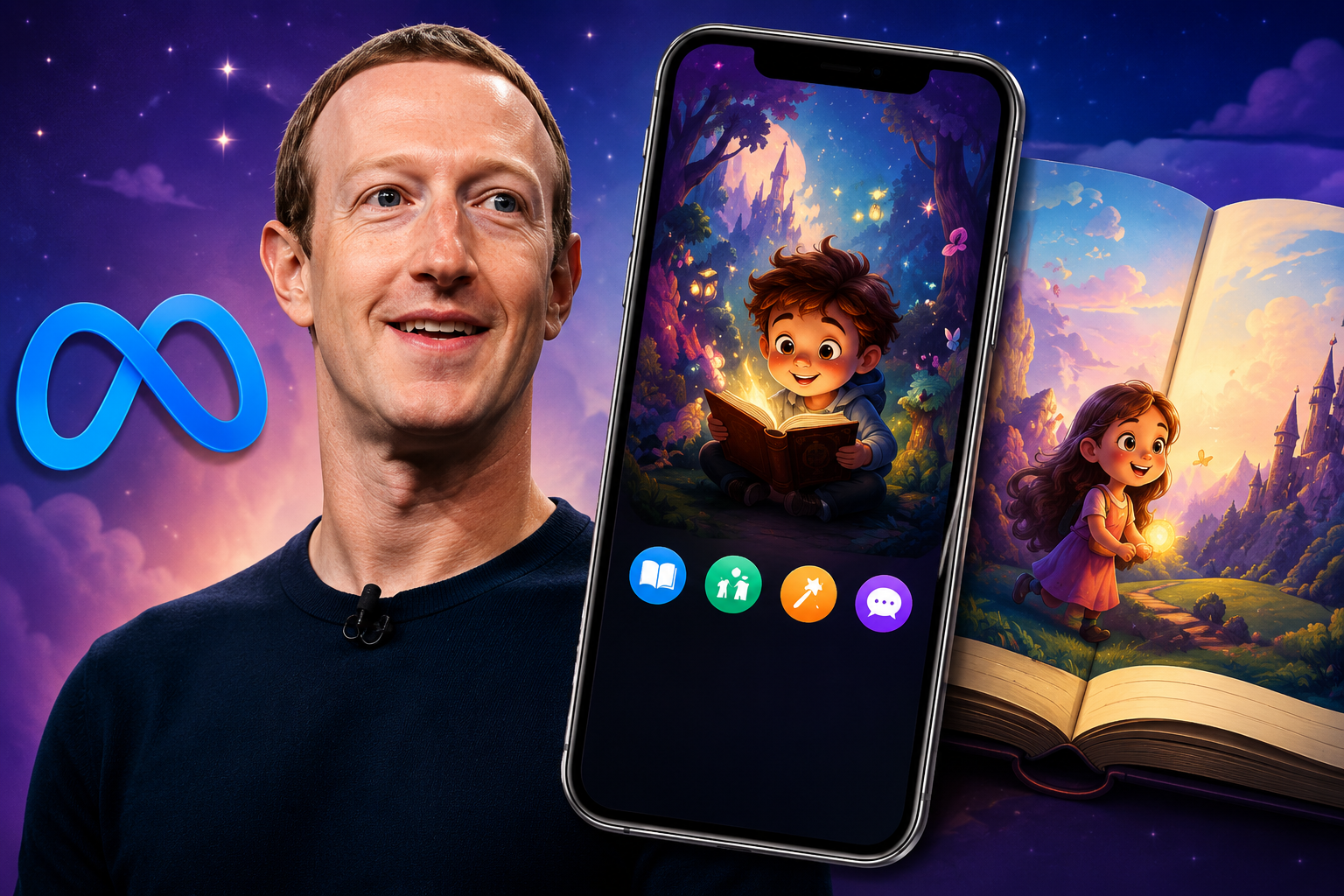
Meta is piloting an AI-powered app generating personalized children's stories, pushing the boundaries of automated creative processes.
Meta’s AI Bedtime Story App: A Glimpse into the Future of Automated Imagination
Meta is currently testing an artificial intelligence-powered application designed to generate personalized children’s stories, signaling a significant move towards automating creative processes. This development matters because it offers a stark reflection of how technology is increasingly encroaching upon, and in some cases, replacing, deeply human, imaginative endeavors, impacting parents and the broader creative landscape. Here's what happened: Meta has confirmed its testing of an AI bedtime story application, positioning it as a tool for "creative storytelling" for families. This isn’t just another app; it's a venture into the commodification of a fundamental human experience – storytelling. For those of us tracking the startup ecosystem, it’s a clear indicator of how even the most intimate aspects of human interaction are becoming targets for AI-driven solutions, presenting both novel opportunities and complex questions about the nature of creativity itself. It forces us to consider the line between convenience and the inherent value of human input.
Why Meta is Betting on AI Storytelling (and What It Means for Innovation)
Meta's foray into AI-generated bedtime stories, while seemingly niche, is consistent with their broader, aggressive pivot into artificial intelligence, especially after the significant investments and mixed results from their metaverse ambitions. The company has poured billions into AI research and development, viewing it as the next foundational computing platform. The app can be seen as a consumer-facing experiment, a relatively low-stakes way to deploy their advanced large language models (LLMs) and generative AI capabilities directly into users' daily lives, gathering crucial real-world feedback on adoption and interaction patterns. It’s part of a wider strategy to embed AI deeply across their product portfolio, from social media algorithms to content creation tools. My read on this is that Meta is hedging its bets, exploring every conceivable application for generative AI to secure its place in the next computational paradigm. The company has experimented with everything from Instagram deepfake generators, which garnered significant backlash, to their much-hyped, and now largely scaled back, virtual reality work meetings. This app, for all its potential to automate imagination, is a relatively benign offering in comparison. It suggests Meta is trying to find the 'sticky' consumer applications for AI, those that can seamlessly integrate into existing routines and provide genuine utility, even if that utility comes at the cost of traditional human effort. The broader market implication is that no sector, however analog or 'human-centric,' is immune to AI disruption. This move also speaks volumes about the current climate for venture capital in the creative AI space. While many startups are focusing on enterprise tools or highly specialized content generation, Meta is tackling a mass-market consumer need (or perceived need). This could signal to VCs that the "imagination-as-a-service" market, even for children's content, is ripe for investment, especially when backed by robust AI infrastructure. It also raises questions about the defensibility of human-powered creative ventures when an AI can churn out endless, personalized stories on demand.
What This Means for the Creator Economy and Beyond
The introduction of this AI bedtime story app carries significant implications for the creator economy, particularly for authors, illustrators, and educators specializing in children's content. While AI tools can augment human creativity, an app designed to bypass human input entirely could fundamentally alter market dynamics. For parents leading demanding lives, the convenience of an AI-generated story might be appealing, but it opens a discussion about the value placed on original, human-crafted narratives and the potential long-term impact on children's imaginative development. Are we conditioning future generations to prefer algorithmically optimized stories over the unpredictable, sometimes flawed, but deeply human creations? This trend extends beyond bedtime stories. We are witnessing an acceleration in AI's ability to generate everything from marketing copy and code to music and visual art. For startups, this means two things: embrace AI as a co-creator and differentiator, or find ways to emphasize the irreplaceable human touch. The unique advantage for human creators will increasingly lie in their ability to inject genuine emotion, cultural nuance, and truly novel concepts that current generative AI models, still largely pattern-matching, struggle to replicate. The market will bifurcate: hyper-efficient, personalized AI content for utility, and premium, human-led content for unique, artistic depth. Looking forward, the success or failure of this app will offer valuable insights into consumer appetite for AI-driven creative tools and the delicate balance between technological convenience and the preservation of human faculties. As an entrepreneur in the tech space, I believe the real innovation will come from companies that use AI not to replace imagination, but to supercharge it, empowering human creators to reach new heights. This means AI that acts as a sophisticated co-pilot, not merely an autonomous storyteller. The ecosystem needs to foster solutions that enhance our capabilities, rather than merely automate our pastimes. The ongoing conversation around Meta's AI bedtime story app highlights a crucial juncture in the evolution of AI and its integration into daily life. It forces us to confront not just what AI *can* do, but what it *should* do, and what aspects of human experience we deem too sacred or too vital to outsource to an algorithm. The next wave of innovation, and indeed funding, will likely flow towards those who strike this balance effectively, demonstrating a clear understanding of human needs beyond mere efficiency.
Frequently asked questions
What is Meta's new AI bedtime story app?
Meta is testing an AI-powered application designed to generate personalized children's stories. This app aims to automate creative processes and explore the potential of artificial intelligence in storytelling.
How does Meta's AI app create stories?
The app uses artificial intelligence algorithms to generate unique and personalized children's stories based on inputs or preferences provided by the user.
Why is Meta developing an AI bedtime story app?
Meta is exploring the capabilities of AI in creative fields, aiming to automate imaginative processes and potentially offer new forms of entertainment and education for children.
What are the implications of AI generating creative content?
It raises questions about the future of human creativity, the role of technology in imagination, and potential new ways to consume and create content, especially for children.
Is the AI bedtime story app available to the public?
The article states Meta is currently testing the application internally, implying it is not yet widely available to the public for download or use.
How might this app change children's storytelling?
It could lead to highly personalized and interactive storytelling experiences, potentially reducing reliance on pre-written books and introducing dynamic, on-demand narratives tailored to individual preferences.