Nvidia's pivot to physical AI & robotics in Japan offers a vital blueprint for India's sovereign AI infrastructure & tech growth.
What to Watch For After Jensen Huang’s Japan Visit: A Blueprint for India's AI-Powered Future
Jensen Huang's strategic visit to Japan signals Nvidia's aggressive pivot towards physical AI and robotics, establishing a national "AI factory" and forging key industrial alliances.
This move offers a compelling blueprint for India, highlighting the critical need for sovereign AI infrastructure and robust industrial partnerships to secure its technological future.
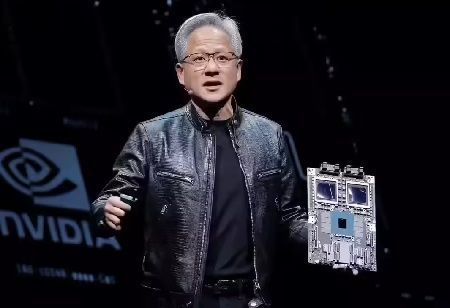
What implications does Jensen Huang's recent high-profile visit to Tokyo hold for the global technology landscape, particularly for a rapidly advancing nation like India? For Jensen Huang, the visionary leader of Nvidia, his two-day strategic engagement in Japan was far more than a routine business trip; it was a powerful declaration of intent, signaling a profound shift in the very fabric of artificial intelligence, moving decisively from abstract data centers to the tangible realm of physical AI and robotics on the factory floor. This aggressive push, backed by substantial Japanese government and industry investment, now stands as a clear roadmap for nations across South and Southeast Asia, including India, as they strive to define their own destiny in the burgeoning AI era, keenly focused on technological sovereignty. Huang's journey to Japan, following closely on the heels of keynotes in Taiwan and South Korea, underscored a relentless drive to embed Nvidia's technology into the core of industrial innovation. He departed Tokyo with a formidable array of agreements spanning Japan's entire tech ecosystem: the ambitious establishment of a national AI factory, critical partnerships with the nation's foremost robotics companies, and pivotal agreements with the essential chip-material suppliers fueling Nvidia’s next generation of AI chips. His core message resonated loudly: Nvidia is actively targeting Japan's vast factory floors, and the country's largest manufacturers are not just listening, but enthusiastically joining the charge. For Huang, the next transformative chapter of AI belongs firmly to factory floors, to the intricate dance of robots, and to the intelligent operations of machines, and he sees Japan as a crucial architect in building this future. It is a striking full circle moment for Nvidia, recalling how a $5 million investment from Sega three decades ago provided a lifeline to a then near-bankrupt company; today, Nvidia and Japan’s industrial titans are again interdependent, this time united by the shared ambition to construct the physical-AI era. Central to this new era is Noetra, Japan's bold sovereign AI initiative, a testament to the nation's desire to own its technological destiny. Japan is acutely aware of the strategic imperative to avoid running its advanced factories and complex robots entirely on AI solutions originating from American or Chinese developers. In response, the Japanese government has catalyzed a powerful coalition of approximately 44 domestic firms, with industry titans like SoftBank, Sony, NEC, and Honda forming the bedrock of this ambitious venture. Their collective goal is to meticulously build their own dedicated AI, specifically engineered to power robots, autonomous vehicles, and sophisticated factory floor operations. Tokyo has committed an extraordinary investment, pledging up to 1 trillion yen, equivalent to approximately $6.2 billion, over a five-year period. This significant financial backing is a strategic bet on homegrown "physical AI"—foundation models meticulously designed and optimized to operate physical machines with unparalleled precision and intelligence. Japan’s aspiration is clear: to cultivate and own the very software brain that drives its industrial future, even as the cutting-edge hardware required to construct this sophisticated intelligence continues to be supplied by Nvidia. Nvidia’s role in this sovereign dream is monumental. The U.S. chip giant is currently engaged in the construction of what it terms a "Vera Rubin AI factory," an colossal data center engineered to be packed with its next-generation chips. This facility, anticipated to become operational in 2028, is projected to house an astounding 13,750 Vera CPUs and 27,500 Rubin GPUs, delivering a staggering 140 megawatts of power. Noetra will oversee this monumental endeavor, guiding the establishment of this critical data center infrastructure. The strategic blueprint for Noetra unfolds in three distinct stages: commencing in fiscal year 2026, the focus will be on developing a reasoning model with advanced Japanese-language capabilities. By 2028, this will evolve into an omni-modal version, adept at processing and understanding text, images, video, and audio. The ultimate objective, slated for 2030, is the creation of "Real-world Native AI," specifically architected to command and operate robots, with phased releases to external Noetra developers. This push towards physical AI is not just about chips and data centers; it's about a grand coalition of industrial might. Japan’s leading robotics and manufacturing players are unequivocally aligning themselves behind Nvidia’s Cosmos initiative. Industry stalwarts such as Fanuc, Yaskawa, Kawasaki Heavy, Fujitsu, Hitachi, NEC, Sony, SoftBank, Kubota, and the robotics consortium AIRoA have all declared their intent to build upon Nvidia’s Cosmos models. This open-model effort, which Nvidia initially launched in May with a select group of global AI labs, found fertile ground in Tokyo. During the visit, Nvidia provided a compelling reason for these industrial giants to commit: the unveiling of Cosmos 3 Edge. This specialized version of the model is designed to operate seamlessly on Nvidia’s Jetson Thor chips, embedded directly within the machines themselves, bringing AI capabilities right to the point of action. Already, some partners are actively testing a unified control system, while others, including Honda R&D and Omron, are rapidly integrating these advanced tools into their development pipelines. Huang’s pronouncement captures the essence of this moment: "The next frontier of AI is in the physical world, and this is a once-in-a-generation opportunity for Japan." This "once-in-a-generation opportunity" extends far beyond Japan's shores, offering a profound lesson and a potential blueprint for emerging economies, particularly India. For a nation like India, with its ambitious "Make in India" initiatives, burgeoning digital public infrastructure, and a vast talent pool in engineering and software development, the Japanese model of sovereign AI and physical AI integration presents a compelling vision. India, too, grapples with the imperative of technological self-reliance, seeking to build indigenous capabilities that can power its diverse industrial landscape—from manufacturing hubs to agricultural innovations. The concept of a national "AI factory" and the development of localized, domain-specific AI models, much like Noetra’s focus on Japanese-language skills, resonates deeply with India's need for AI that understands and interacts with its unique linguistic diversity and cultural contexts. The deployment of edge AI, through solutions like Cosmos 3 Edge, becomes particularly vital for India's distributed industrial base, ensuring that advanced AI processing can occur locally, enhancing efficiency and reducing reliance on centralized cloud infrastructure. India's journey towards becoming a global manufacturing powerhouse and an AI leader can draw significant parallels from Japan's strategic moves. The emphasis on fostering a domestic coalition of firms, as seen with Noetra, is a model India could emulate to cultivate its own robust AI ecosystem. This would involve bringing together leading Indian conglomerates, technology startups, and research institutions to collaboratively develop AI foundation models tailored for Indian languages, data sets, and industrial requirements. Furthermore, the focus on robotics and automation, accelerated by edge AI, could revolutionize Indian manufacturing, boosting productivity and enabling sophisticated operations across sectors. With initiatives like the Production Linked Incentive (PLI) schemes driving local manufacturing, integrating advanced AI and robotics becomes the next logical step to elevate India’s industrial competitiveness on a global scale. The demand for advanced chips, both for data centers and edge devices, will only intensify, creating opportunities for India’s semiconductor design prowess and potentially fostering a local semiconductor manufacturing ecosystem. The broader market implications for South and Southeast Asia are also substantial. As nations like India, Indonesia, and Vietnam rapidly digitize and industrialize, the demand for AI infrastructure and integrated physical AI solutions will skyrocket. Japan's proactive strategy, in partnership with Nvidia, sets a precedent for how countries can leverage strategic alliances to accelerate their AI capabilities while simultaneously safeguarding national interests through sovereign AI initiatives. This signals a clear trend line: national economic and security interests are increasingly intertwined with indigenous AI development. For India, this means not just adopting, but actively shaping, the future of physical AI. It demands investments in research and development, skill enhancement for a new generation of AI and robotics engineers, and policy frameworks that encourage collaboration between academia, industry, and government. This concerted effort by Japan, spearheaded by Jensen Huang’s vision, illuminates a path for India and its neighbours to navigate the complex waters of global technological competition. It underscores that true AI leadership in the coming decades will not just be about abstract algorithms in the cloud, but about the tangible intelligence embedded in the machines that build our world. For aspiring entrepreneurs in India, this moment signifies immense opportunities in developing specialized AI for manufacturing, logistics, and automation, contributing to a future where India's factory floors are as intelligent and efficient as any globally. The push for physical AI is not merely an upgrade; it is a fundamental re-imagination of how nations will build, produce, and innovate, with India uniquely positioned to seize this monumental shift.
Frequently asked questions
What was the main purpose of Jensen Huang's recent visit to Japan?
Jensen Huang's visit to Japan aimed to strengthen Nvidia's presence in the region, focusing on establishing a national "AI factory" and forging strategic industrial alliances. This move signals Nvidia's aggressive pivot towards physical AI and robotics development.
How does Nvidia's Japan strategy relate to India's AI ambitions?
Nvidia's moves in Japan offer a compelling blueprint for India, highlighting the critical need for sovereign AI infrastructure, local manufacturing capabilities, and strategic partnerships to accelerate its own AI-powered future.
What is an "AI factory" in the context of Nvidia's strategy?
An "AI factory" refers to a comprehensive national infrastructure designed to accelerate AI development, including high-performance computing centers, data processing capabilities, and advanced robotics integration for industrial applications.
What kind of industrial alliances did Jensen Huang pursue in Japan?
While specific partners aren't detailed in the preview, Nvidia typically forms alliances with major manufacturing firms, automotive companies, and research institutions to integrate AI and robotics into various industrial sectors.
Why is "sovereign AI infrastructure" important for countries like India?
Sovereign AI infrastructure ensures that a nation has control over its AI development, data, and technological capabilities, reducing reliance on external powers and protecting national security and economic interests.
What are the key takeaways for India from Nvidia's Japan strategy?
Key takeaways for India include prioritizing national AI infrastructure, fostering local innovation in physical AI and robotics, and actively pursuing international collaborations while maintaining digital sovereignty.