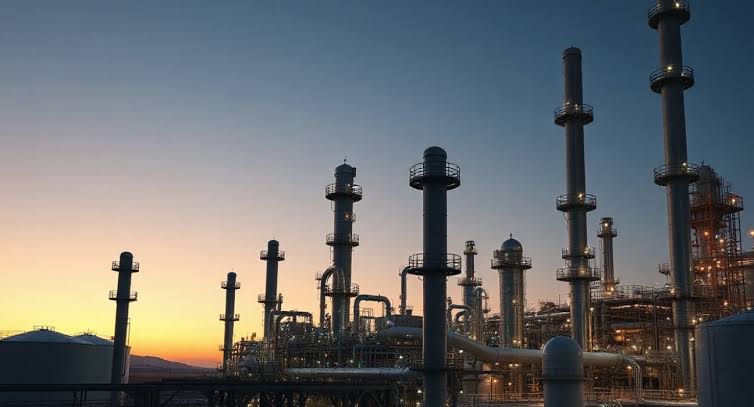
With a $20M Series A, Applied Computing aims to transform oil, gas, and petrochemical operations with a comprehensive plant-wide AI model, promising enhanced efficiency and decision-making.
Applied Computing has secured a $20 million Series A funding round, signaling a significant investment in specialized artificial intelligence for the oil, gas, and petrochemical sectors. This capital infusion underscores the growing market appetite for tailored AI solutions that promise to unlock operational efficiencies and improve decision-making in complex industrial environments, potentially shifting how energy operators manage critical infrastructure.
The company is developing a proprietary foundation AI model designed to optimize plant operations by synthesizing vast amounts of disparate data. This includes real-time sensor readings, comprehensive engineering documentation, and fundamental physics and chemistry principles, addressing a long-standing challenge of data fragmentation within the energy industry.
The core innovation lies in the company's ability to integrate diverse data streams in real time, a critical capability for accurate analysis and predictive modeling that traditional systems struggle to achieve.
The model differentiates itself from conventional large language models through its approach, enabling it to predict the precise state of a facility, accounting for equipment constraints, operator actions, and the underlying physical processes.
What It Means for Industrial Operations and the Startup Ecosystem
This funding round is more than just a capital raise; it represents a deepening conviction in the power of vertical-specific foundation models, especially for sectors characterized by vast operational complexity and high stakes like oil and gas. For too long, the energy industry has grappled with siloed data and reactive decision-making, a scenario ripe for disruption by sophisticated AI.
My read is that Applied Computing's success highlights a critical pivot in the broader AI landscape. We are moving beyond generalized AI solutions towards highly specialized models that deeply understand the nuances of a particular industry's physics, processes, and operational constraints. This isn't just about applying a large language model to a new dataset; it's about building intelligence that intrinsically understands, for example, fluid dynamics or thermodynamic principles, alongside human operational context.
The involvement of other entities in this funding round is particularly telling. It signals a strategic imperative from established industrial players to embed cutting-edge AI directly into their core offerings. This move is not merely about gaining a financial return but about future-proofing their service lines and enhancing their competitive edge through digital transformation. The participation of partners validates the underlying data infrastructure and AI capabilities, recognizing the strategic importance of robust platforms for such complex applications.
Applied Computing has demonstrated market validation for its specialized AI solution in a traditionally slow-moving industry.
Background: Addressing Decades of Data Debt
The genesis of Applied Computing stems from a recognition of the immense data challenge inherent in the oil, gas, and petrochemical industries. A single processing plant can house thousands of sensors, constantly generating data on parameters such as temperature, pressure, flow rates, and viscosity. Despite this abundance, the inability to effectively integrate and interpret these diverse data streams has long hampered operational efficiency and predictive maintenance.
Operators have historically relied on fragmented software systems and manual processes to piece together insights, a laborious endeavor that often means critical decisions are made with incomplete information. The difficulty in making sensor readings, engineering schematics, and scientific models communicate in real time has been identified as a core impediment to advanced analytics.
The company's model aims to swiftly flag anomalies, diagnose root causes, and simulate the ripple effects of potential fixes. This speed is crucial for reducing energy consumption, optimizing output, and enhancing safety protocols in facilities where every minute of downtime or suboptimal operation carries significant financial and environmental costs.
Challenges Ahead: Navigating an Entrenched Market
While Applied Computing's development is significant, the road ahead involves navigating a market dominated by entrenched industrial software suppliers. Displacing or integrating with these incumbents requires more than just superior technology; it demands robust interoperability, regulatory compliance, and a deep understanding of the lengthy sales cycles characteristic of large energy enterprises.
Another challenge lies in the inherent conservatism of the oil and gas sector. Despite the clear benefits of AI, adoption can be slow due to concerns over data security, system reliability, and the sheer cost and complexity of integrating new technologies into legacy infrastructure. Applied Computing must demonstrate not only technological superiority but also a clear, quantifiable return on investment that resonates with risk-averse operators.
The company's strategy of partnering with industry players is important. These collaborations provide crucial market access and validation, but scaling these partnerships across a global, diverse energy landscape will be a continuous effort. Furthermore, while the current focus is on oil and gas, the potential to expand into other heavy industries with similar data integration challenges could be a long-term play, but also a distraction if not executed carefully.
What to watch in the coming months will be the specifics of Applied Computing's announced partnerships, which could provide further validation and unlock significant expansion opportunities. Investors will also monitor how quickly the company can broaden its customer base and whether it can maintain its growth trajectory in the face of increasing competition. The long-term success of this venture will hinge on its ability to evolve its foundation model, proving its adaptability across diverse operational contexts and its capacity to continuously deliver tangible economic and environmental benefits to a demanding industrial clientele.
Frequently asked questions
What is Applied Computing's new initiative?
Applied Computing is developing an AI model designed to optimize entire plant operations for the oil, gas, and petrochemical sectors. This aims to enhance efficiency and improve decision-making in complex industrial environments.
How much funding did Applied Computing receive?
Applied Computing secured a $20 million Series A funding round to support its specialized artificial intelligence development for industrial applications.
What industry is Applied Computing targeting with its AI?
The company is specifically targeting the oil, gas, and petrochemical sectors with its tailored AI solutions for plant-wide optimization.
What problem does Applied Computing's AI aim to solve?
The AI model seeks to unlock operational efficiencies and improve decision-making in the complex and demanding environments of industrial plants.
What kind of AI is Applied Computing developing?
Applied Computing is developing a specialized artificial intelligence model intended for plant-wide application, rather than just specific processes, covering the entire operational scope.
Why is there significant investment in this type of AI?
The significant investment underscores a growing market appetite for tailored AI solutions that promise substantial operational improvements and better decision-making in industrial settings, indicating high demand.