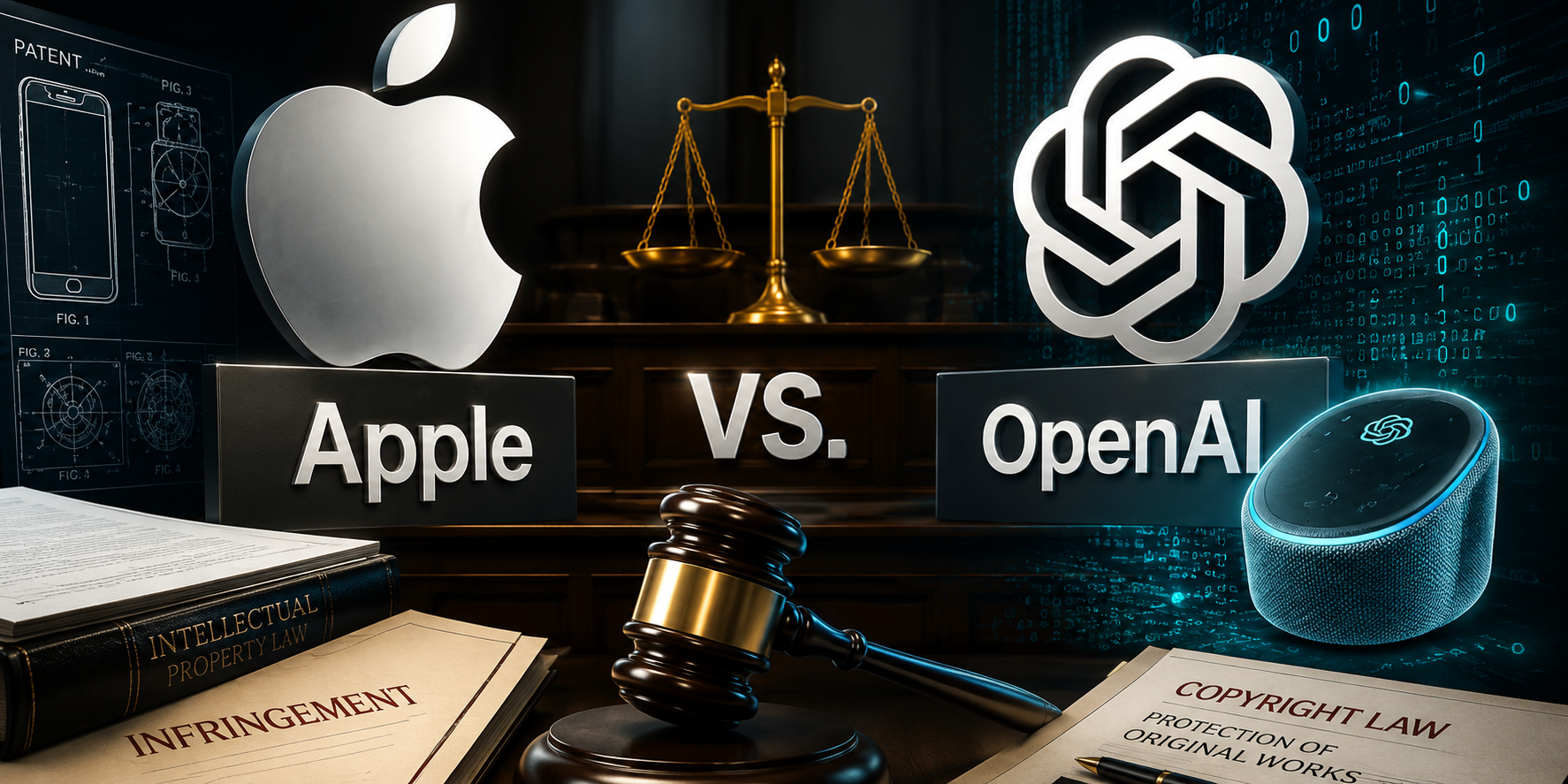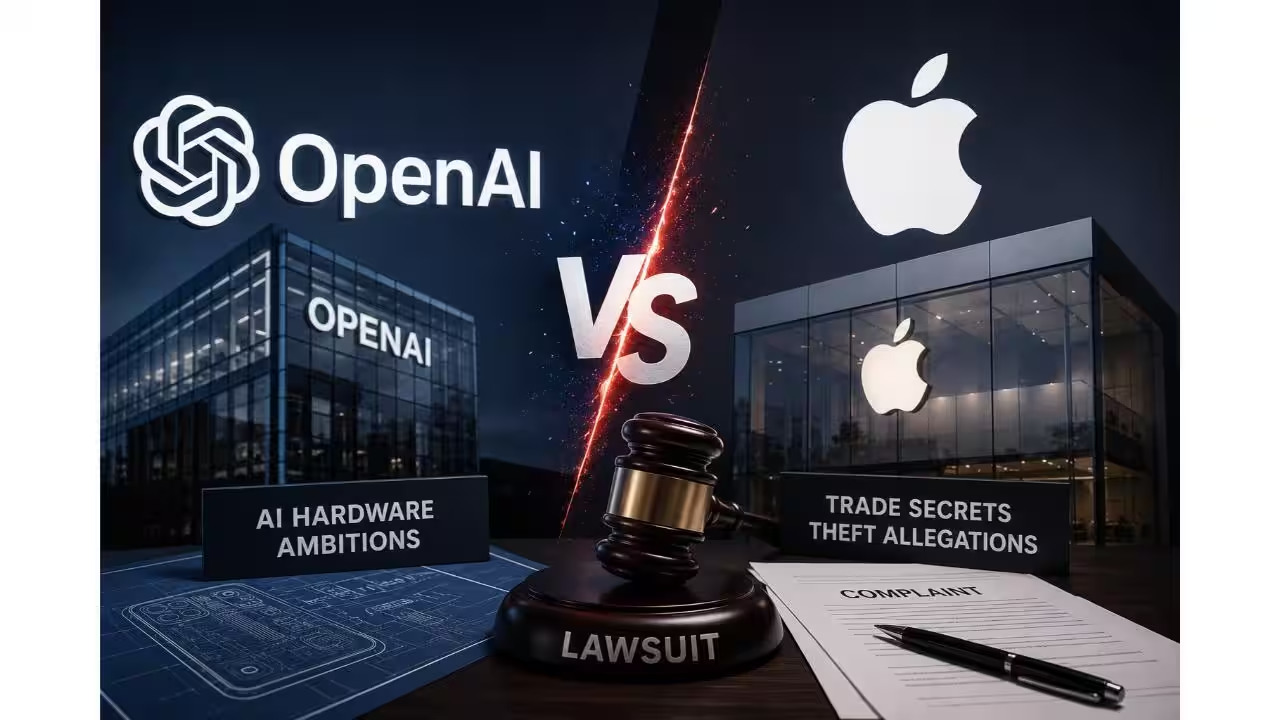
OpenAI vehemently rejects Apple's trade secret lawsuit, intensifying the tech giants' escalating battle for AI supremacy and top talent.
OpenAI has vehemently rejected Apple Inc.'s trade secret lawsuit, asserting it is "not aware of any evidence" substantiating claims that the artificial intelligence firm illicitly acquired proprietary technology. This legal skirmish intensifies the escalating battle for AI supremacy and top-tier talent, potentially introducing new uncertainties for venture capital flows into the burgeoning AI startup ecosystem.
The core of Apple's complaint, filed recently, alleges OpenAI misappropriated its proprietary technology to advance its own nascent AI-powered device initiatives. OpenAI's latest statement expands on an earlier, more succinct denial, underscoring a deepening corporate rift that analysts and investors will watch closely for its implications on industry talent mobility and intellectual property norms.
Apple's filing specifically accused OpenAI's chief hardware officer, a former prominent figure in iPhone design, of actively encouraging Apple employees to bring sensitive components to job interviews. Furthermore, the iPhone maker claimed OpenAI developed methods to circumvent Apple's internal security protocols, facilitating the transfer of confidential information. These allegations paint a picture of deliberate and systematic intellectual property infringement.
Among the more direct accusations, Apple cited a former iPhone engineer who reportedly migrated to OpenAI earlier this year, allegedly hacking into Apple's systems to extract critical engineering presentations and other proprietary data. The lawsuit contends that OpenAI's hardware division, still in its formative stages, is fundamentally compromised, describing it as "rotten to its core."
What It Means for AI's Talent Crucible
This escalating legal battle between two of tech's titans is more than a mere corporate dispute; it’s a critical flashpoint in the hyper-competitive market for AI talent. My read is that this lawsuit could fundamentally redefine the boundaries of employee mobility and intellectual property in an industry where human capital is the most coveted asset. The aggressive pursuit of engineers with specialized AI knowledge has pushed valuations to unprecedented levels, creating a fertile ground for such disputes.
For founders and investors, the stakes are exceptionally high. A precedent-setting judgment could either reinforce the sanctity of trade secrets, potentially chilling talent movement, or, conversely, underscore the right of individuals to pursue new opportunities, even if it means carrying their accumulated expertise to a competitor. This tension between corporate protection and individual freedom is a perennial challenge in Silicon Valley, now amplified by the strategic importance of AI.
The Context: Apple's AI Gambit and Industry Dynamics
Apple, historically cautious and methodical in its market entries, has been playing catch-up in the generative AI space compared to rivals like Microsoft-backed OpenAI and Google. The company's recent announcements, particularly at its annual Worldwide Developers Conference (WWDC), showcased a significant acceleration in its AI strategy, including partnerships and internal development. This lawsuit, therefore, arrives at a moment of strategic imperative for Apple to assert its dominance and protect its intellectual foundations.
The broader context includes a well-documented talent war that has seen engineers and researchers move between top-tier tech companies and well-funded startups, often commanding astronomical compensation packages. Google, Meta, Amazon, and Microsoft have all engaged in aggressive recruitment, sometimes leading to internal talent drain or contentious departures. This fluidity, while fostering innovation, inherently increases the risk of trade secret disputes.
From my ecosystem-insider perspective, the "rot at the core" allegation is a stark departure from the typical collegial, albeit competitive, atmosphere often touted in the tech world. It suggests a level of corporate espionage that, if proven, could significantly damage OpenAI's reputation and potentially impact its future collaborations and talent acquisition efforts. For the venture community, this raises questions about due diligence and governance structures within high-growth AI startups.
What Happens Next: Legal Precedent and Market Shifts
The legal proceedings will likely involve extensive discovery, forcing both companies to disclose internal communications and practices related to hiring and intellectual property. The outcome could set significant precedents for how trade secret laws are applied to rapidly evolving technologies like AI and how companies manage talent mobility in an interconnected global market.
Beyond the courtroom, this dispute will undoubtedly influence future partnerships and competitive strategies. It reinforces the notion that proprietary technology and specialized talent are the new battlegrounds in the AI era. Investors, founders, and executives across the tech landscape will be closely watching for any signals regarding the enforceability of non-compete clauses, the definition of trade secrets in a knowledge-intensive field, and the ethical lines in talent acquisition.
Key dates to watch include initial court filings, discovery schedules, and any preliminary injunction requests. The eventual resolution, whether through settlement or trial, will have enduring implications for how innovation is fostered, protected, and monetized in the fiercely competitive world of artificial intelligence.
Frequently asked questions
What is OpenAI's stance on Apple's trade secret lawsuit?
OpenAI vehemently denies Apple Inc.'s trade secret lawsuit, asserting it is "not aware of any evidence" substantiating claims that the artificial intelligence firm illicitly acquired proprietary technology. They have rejected the allegations completely.
Why is Apple suing OpenAI?
Apple is suing OpenAI over allegations of trade secret theft, claiming the AI firm illicitly acquired proprietary technology, although the specific details of the alleged theft are not fully disclosed in the preview.
How does this lawsuit impact the AI industry?
The lawsuit intensifies the escalating battle for AI supremacy and top-tier talent, potentially introducing new uncertainties for venture capital flows into emerging AI companies and highlighting intellectual property concerns.
Who are the main parties involved in this legal dispute?
The primary parties involved in this high-profile legal dispute are OpenAI, the artificial intelligence firm, and Apple Inc., the technology giant.
Has OpenAI offered any evidence to counter Apple's claims?
OpenAI has stated it is "not aware of any evidence" substantiating Apple's claims of illicitly acquired proprietary technology, implying they have found no basis for the allegations.
What is the broader significance of this legal battle?
This legal battle is significant as it highlights the intense competition for dominance in the rapidly growing artificial intelligence sector and the critical importance of intellectual property in technological innovation.