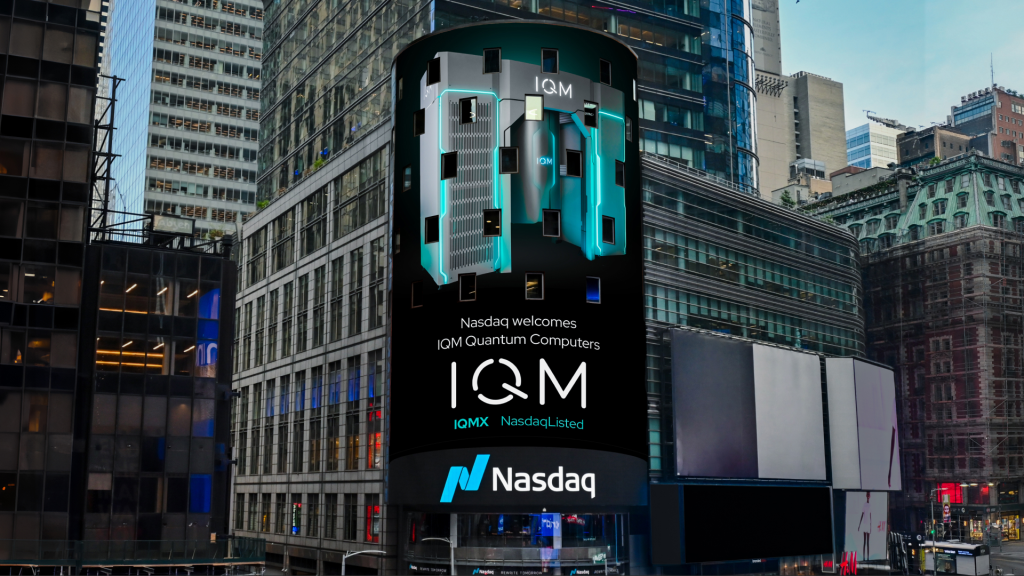
Finnish quantum firm IQM went public on Nasdaq with a $1.9B valuation, but its shares dipped amid skepticism over quantum's future.
Finnish quantum computing firm IQM made its Nasdaq debut via a SPAC merger, achieving a valuation of approximately $1.9 billion.
Despite the high valuation, IQM's shares traded below their IPO price on the first day, reflecting a lukewarm reception from retail investors amidst broader skepticism towards SPACs and long-term deep tech plays.
The company acknowledged in its prospectus that "large-scale commercial traction of quantum computing technology may never occur," highlighting the inherent risks and long development cycles in the nascent quantum sector.
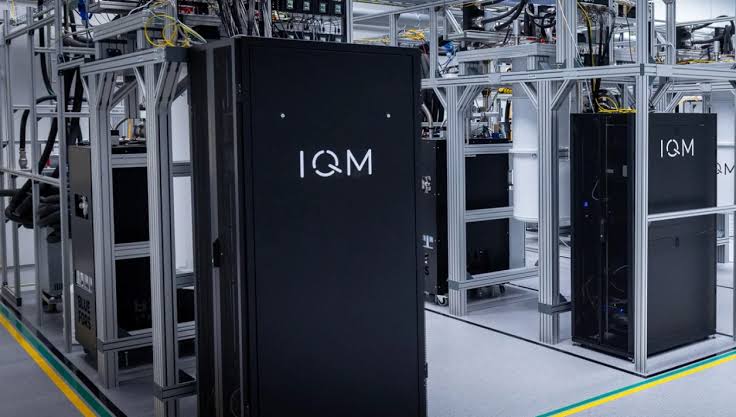
IQM, a full-stack quantum company, currently sells physical quantum computers and cloud services to institutional clients, demonstrating early commercial viability despite the distant "quantum advantage."
The company's dual listing strategy in the US and Finland, alongside significant European sovereign support, positions it uniquely in the global race for quantum supremacy.
IQM, a full-stack quantum company based out of Finland and founded in 2018 as a spinout from Aalto University, recently made its public market debut on the Nasdaq via a Special Purpose Acquisition Company (SPAC) merger, valuing the pioneering firm at approximately $1.9 billion. However, its shares largely traded below the initial IPO price on its first day, signaling a cautious welcome from the market for a deep tech venture operating at the cutting edge of an unproven technology. This muted reception underscores the complex interplay between speculative investor enthusiasm for groundbreaking innovation and the harsh realities of commercial viability for technologies with long-term horizons. The decision to go public via a SPAC merger, a route that has seen declining popularity and increased scrutiny in recent years, particularly in the US market, added another layer of complexity to IQM's debut. Further compounding the market's apprehension was the company's own candid admission in its prospectus, stating that "large-scale commercial traction of quantum computing technology may never occur." This stark disclosure, while an honest assessment of the nascent stage of quantum computing, likely contributed to the lukewarm investor sentiment, highlighting the significant leap of faith required for investing in a technology still years away from widespread commercial application. Despite these caveats, IQM has demonstrated remarkable progress in a field still largely dominated by research and development. The company actively sells physical quantum computers and offers quantum computing time through cloud services to a growing list of customers, including the VTT Technical Research Centre of Finland and the Leibniz Supercomputing Centre in Germany. Jan Goetz, IQM’s CEO and co-founder, told TechCrunch that the company directly sells computers into advanced supercomputing centres and data centres, alongside offering computing time via its cloud platform. This practical approach has seen IQM expand its customer base from eight clients in 2024 to 22 in 2025, with a notable recent expansion into the private sector, indicating a burgeoning, albeit niche, demand for its current capabilities.
IQM went public at a valuation of approximately $1.9 billion. The operation generated new liquidity of approximately €198 million ($226 million) for the company, adding to the $300 million it had previously raised.
The Quantum Computing Race & Global Ambitions
The cautious market reception for IQM contrasts sharply with the accelerating global race among nations and major corporations to achieve "quantum advantage" – the point at which quantum computers demonstrably outperform classical supercomputers for a broad range of complex, real-world problems. This elusive milestone is expected to unlock transformative applications across biotech, fintech, materials science, and even potentially disrupt current encryption standards, driving a strategic imperative for governments worldwide. The US Department of Energy (DOE) has committed to deploying "the world’s first fault-tolerant, scientifically relevant quantum computer" by 2028, following similar ambitious announcements from France, Germany, and the UK. These governmental pledges serve as significant demand drivers for companies like IQM. President Trump’s recent executive orders aimed at fast-tracking quantum development carry particular weight for IQM, given its recent establishment of a quantum tech center in Maryland and the deployment of one of its computers at the Oak Ridge National Laboratory, a key part of the DOE network. Goetz noted that IQM stands to "benefit directly" from such governmental impetus, positioning itself strategically within critical national quantum infrastructure projects.
IQM has received over €200 million in public support from European sovereign states and companies, with Tesi, Finland's sovereign wealth fund, being a key supporter.
Navigating Market Realities and Deep Tech Investment
IQM's public listing also highlights the ongoing debate surrounding SPACs as a vehicle for deep tech companies. While SPACs offered a faster route to public markets during their peak, the subsequent market correction and increased regulatory scrutiny have dampened their appeal. For deep tech, which often requires significant capital for prolonged R&D cycles before revenue generation, traditional IPOs can be challenging. SPACs, despite their current headwinds, sometimes present an an alternative for companies seeking large capital infusions to fund their long-term vision, even if it means a less enthusiastic initial market response. IQM's successful capital raise of approximately €198 million (or $226 million) after costs from the SPAC merger, shortly after a $300 million Series B round, underscores the strategic intent to position itself prominently in a capital-intensive race. What distinguishes IQM further is its strategic decision to pursue a dual listing: the Nasdaq in the US, where most of its quantum peers are listed, and Nasdaq Helsinki in Finland. This approach allows IQM to tap into the vast capital markets and visibility of the US while retaining strong ties and continued support from its European base, including Finland’s sovereign wealth fund, Tesi. This contrasts with many other European unicorns that often shift their center of gravity entirely to the US to access larger investor pools and talent. RAAQ, the blank check company that facilitated IQM's SPAC merger, explicitly recognized this duality, noting IQM's over €200 million in public European support and its demonstrated ability to operate effectively outside Europe. While French competitor Pasqal also announced plans for a SPAC listing, IQM proudly became the first European quantum company to list in the US. Goetz acknowledged the satisfaction of being a pioneer but emphasized the long-term objective: "It always feels good to be first and to be a pioneer, but ultimately it’s about long-term success." This perspective is critical for the quantum computing sector, where the journey from foundational science to widespread commercialization is expected to span decades. The market's initial subdued reaction to IQM is not a definitive judgment on quantum's future but rather a stark reminder of the inherent volatility and speculative nature of investing in the next generation of computing.
Frequently asked questions
What is IQM and its recent market debut?
IQM is a full-stack quantum computing company based in Finland. It recently went public on the Nasdaq via a SPAC merger, achieving a valuation of approximately $1.9 billion, making it a significant player in the deep tech sector.
Why did IQM's shares not perform well on its IPO day?
IQM's shares traded below their IPO price on the first day, reflecting a lukewarm reception. This was likely due to general investor skepticism towards SPAC mergers and IQM's own prospectus warning about the uncertain timeline for "large-scale commercial traction of quantum computing technology."
What is "quantum advantage" and why is it significant for IQM?
Quantum advantage refers to the point where quantum chips outperform classical computers for a wider range of complex tasks. This is crucial for IQM because it will unlock broader commercial use cases in industries like biotech and fintech, driving scaled demand for their quantum computers and services.
Who are IQM's main customers?
IQM sells physical quantum computers and cloud services primarily to advanced supercomputing and data centers. Notable customers include VTT Technical Research Centre of Finland and Leibniz Supercomputing Centre in Germany, with recent growth in private sector clients.
How is IQM's global strategy unfolding?
While deeply rooted in Finland, IQM is expanding globally, evidenced by its new quantum tech center in Maryland and deployment at Oak Ridge National Laboratory in the U.S. It plans a dual listing on Nasdaq Helsinki alongside its U.S. presence, maintaining its European identity.
What is the US government's role in accelerating quantum computing?
President Trump's executive orders have encouraged investment in quantum, with the U.S. Department of Energy committing to deploy a "fault-tolerant, scientifically relevant quantum computer" by 2028. This directly benefits companies like IQM, which has operations and partnerships within the U.S.