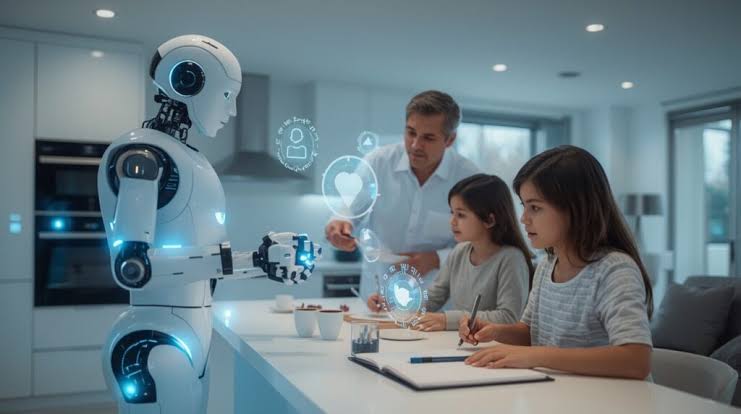
Meet AVU, the Finnish-inspired autonomous mobile robot designed to genuinely assist humans with home tasks, pet monitoring, and safety.
A new robotics project dubbed AVU, short for the Finnish word "avustaja" meaning helper or assistant, aims to redefine domestic robotics by developing an open-source, general-purpose autonomous mobile robot capable of genuinely assisting humans. Conceived by developer Michael, AVU envisions a versatile platform that can patrol homes, monitor pets, check appliance safety, and autonomously manage its own operations.
For years, the conventional wisdom surrounding consumer robotics has been one of cautious optimism, tempered by the reality of limited functionality. While robotic vacuum cleaners and smart speakers have found their way into millions of homes, they typically represent highly specialized, single-purpose devices. The dream of a truly versatile, intelligent household robot, capable of adapting to diverse tasks and interacting meaningfully with its environment, has largely remained the domain of science fiction or prohibitively expensive industrial applications.
Skeptics often point to the immense engineering challenges: the complexity of real-world navigation, the nuances of human-robot interaction, the cost of advanced sensors and manipulators, and the ever-present concerns around safety and privacy. These factors have historically confined domestic robots to narrow applications, suggesting that a truly "general-purpose" assistant robot for the average American home is still decades away, requiring breakthroughs in artificial intelligence, battery technology, and mechanical design that have yet to materialize at scale.
AVU's Ambitious Vision for General Utility
Challenging this conventional view is the AVU project, spearheaded by a developer known as Michael on the Hackster.io platform. AVU is conceived as an "Autonomous Versatile Utility Robot" and is explicitly designed to transcend the limitations of current single-purpose gadgets. Rather than building a robot for one specific chore, Michael's vision is to create a foundational, open-source platform that can evolve and expand its capabilities over time.
The core proposition of AVU is its adaptability. It is intended to be a robust mobile robot that can serve various functions, from a household assistant to a security patrol unit, a research platform, or even a foundation for other makers to build upon. This modular approach suggests a future where a single robotic chassis could be customized with different hardware modules, software packages, and AI models to perform an ever-growing array of tasks as the technology and community contributions advance.
The specific applications outlined for AVU paint a picture of comprehensive domestic assistance. Imagine a robot that, upon your return from work, has already patrolled your house for security breaches, verified that windows and doors are securely closed, and confirmed that the stove was not accidentally left on. Beyond safety, AVU is envisioned to monitor and entertain pets, reporting any unusual activity with photos and video, all while autonomously recharging itself and providing daily status reports to its owner. This goes far beyond the current capabilities of most consumer-grade smart home systems.
The Paradox of Open-Source and Private Development
One intriguing aspect of the AVU project, which presents both a challenge and a unique angle, is the stated dual nature of its development. While described as an "open-source autonomous mobile robot," the project page explicitly notes, "THIS PROJECT IS BEING DEVELOPED PRIVATELY." This creates an interesting paradox that warrants closer examination for any project aspiring to widespread adoption and community-driven evolution.
Open-source projects thrive on transparency, collaborative development, and the free exchange of code and design specifications. This model allows for rapid iteration, bug fixing, and the integration of diverse perspectives and skills from a global community of developers and makers. For a project as ambitious as a general-purpose household robot, an open-source approach could accelerate progress significantly, leveraging collective intelligence to solve complex problems in navigation, object recognition, and human interaction.
However, private development, particularly in its initial stages, often offers a more controlled environment for rapid prototyping and establishing core functionalities without the complexities of managing a large, distributed contributor base. It allows the core developer to set the foundational architecture and design principles without immediate external pressure or divergent interests. The challenge for AVU will be in transitioning from this private development phase to a truly open and collaborative ecosystem, ensuring that the initial private work is structured in a way that facilitates external contributions rather than creating barriers to entry for potential collaborators. The success of AVU as a community-driven platform will hinge on how effectively Michael can bridge this gap, transparently sharing progress and clearly defining pathways for external involvement once a stable core is established.
Bridging the Gap: AVU in the Broader Robotics Landscape
AVU's aspiration to be a general-purpose robotic platform places it at a fascinating intersection within the broader robotics landscape, which has historically struggled with the concept of true versatility. The market for consumer robotics in the United States, for instance, is currently dominated by specialized devices that excel at one or two specific tasks. Robotic vacuums like those from iRobot, smart home security cameras from companies like Ring or Arlo, and smart display devices from Google or Amazon provide discrete functionalities that enhance daily life. Yet, these systems typically operate in silos, requiring users to manage multiple apps and interfaces.
The trend towards modularity and open-source hardware, however, offers a potential pathway for projects like AVU to gain traction. Companies such as Boston Dynamics have showcased incredibly agile and capable robots, but these remains largely inaccessible to the general consumer due to cost and complexity. AVU's emphasis on being a "maker-friendly robotics ecosystem" suggests a different approach: democratizing access to advanced robotics by providing a flexible framework that hobbyists, researchers, and small businesses can adapt and build upon. This aligns with a growing movement in technology to empower users to customize and extend the capabilities of their devices, rather than being confined to factory-set functions.
The implications for the smart home market are significant. If AVU can successfully develop a robust, general-purpose platform, it could serve as a central, mobile intelligence for the interconnected home, integrating functionalities currently spread across numerous devices. Instead of separate security cameras, pet monitors, and environmental sensors, a single AVU unit could theoretically perform all these tasks, autonomously navigating the home to gather data and execute actions. This would represent a paradigm shift from static, location-bound smart home devices to a dynamic, mobile intelligent agent within the living space.
The Future of Domestic Robotics: An Evolving Ecosystem
The AVU project, even in its "work-in-progress" state, represents a vital, analytical touchstone for the future of domestic robotics. It asks a fundamental question: can a single, adaptable robot truly assist humans in a general sense, or will the future remain fragmented with specialized tools? My read is that projects like AVU are crucial for pushing the boundaries of what's considered feasible for consumer-grade automation.
The biggest hurdles remain substantial. Achieving truly autonomous navigation, particularly in dynamic and unpredictable home environments, requires sophisticated sensor fusion and real-time mapping capabilities. Developing artificial intelligence models that can understand context, interact naturally with humans and pets, and perform a diverse range of physical tasks with dexterity and precision is a monumental undertaking. Furthermore, ensuring the safety and security of such a robot, particularly one capable of patrolling a home and reporting on its activities, is paramount for user adoption.
However, the open-source ethos, if fully embraced, offers a compelling counter-argument to these challenges. By inviting a global community to contribute to its development, AVU could potentially crowdsource solutions to problems that would overwhelm any single development team. The long-term vision of a continuously evolving robotic assistant, one that anyone can improve, suggests a future where robots are not static products but dynamic platforms that grow in utility over their lifespan. If AVU, or similar initiatives, can overcome the inherent complexities and successfully foster a vibrant developer community, it could indeed pave the way for a new generation of truly helpful, general-purpose domestic robots, fundamentally redefining our interaction with technology within our homes.
Frequently asked questions
What is AVU and what does it do?
AVU is a new open-source robotics project creating a general-purpose autonomous mobile robot. Its primary goal is to genuinely assist humans with various domestic tasks, including patrolling homes, monitoring pets, and checking appliance safety.
Who is developing the AVU robot?
The AVU robotics project was conceived and is being developed by Michael.
What does "AVU" stand for?
AVU is short for "avustaja," a Finnish word meaning "helper" or "assistant."
Is AVU an open-source project?
Yes, AVU is being developed as an open-source platform, encouraging collaboration and broader adoption.
How can AVU assist with home safety?
AVU is envisioned to monitor homes, check for appliance safety, and potentially alert users to issues, enhancing overall home security.
What makes AVU different from other domestic robots?
AVU aims to be a general-purpose autonomous mobile robot, emphasizing genuine assistance and versatility through its open-source, multi-tasking platform, unlike many single-purpose robots.