Japan reveals new Noetra plan to deploy 10 million robots by 2040, transforming healthcare, hospitality, and everyday life across the nation.
Japan is making a bold move, signaling a future where robots are not just factory curiosities but integral parts of everyday life, from elder care to your local restaurant. This isn't just a sci-fi fantasy anymore; it's a strategic national initiative that could redefine how work gets done and impact how we all think about automation, particularly in critical service sectors.
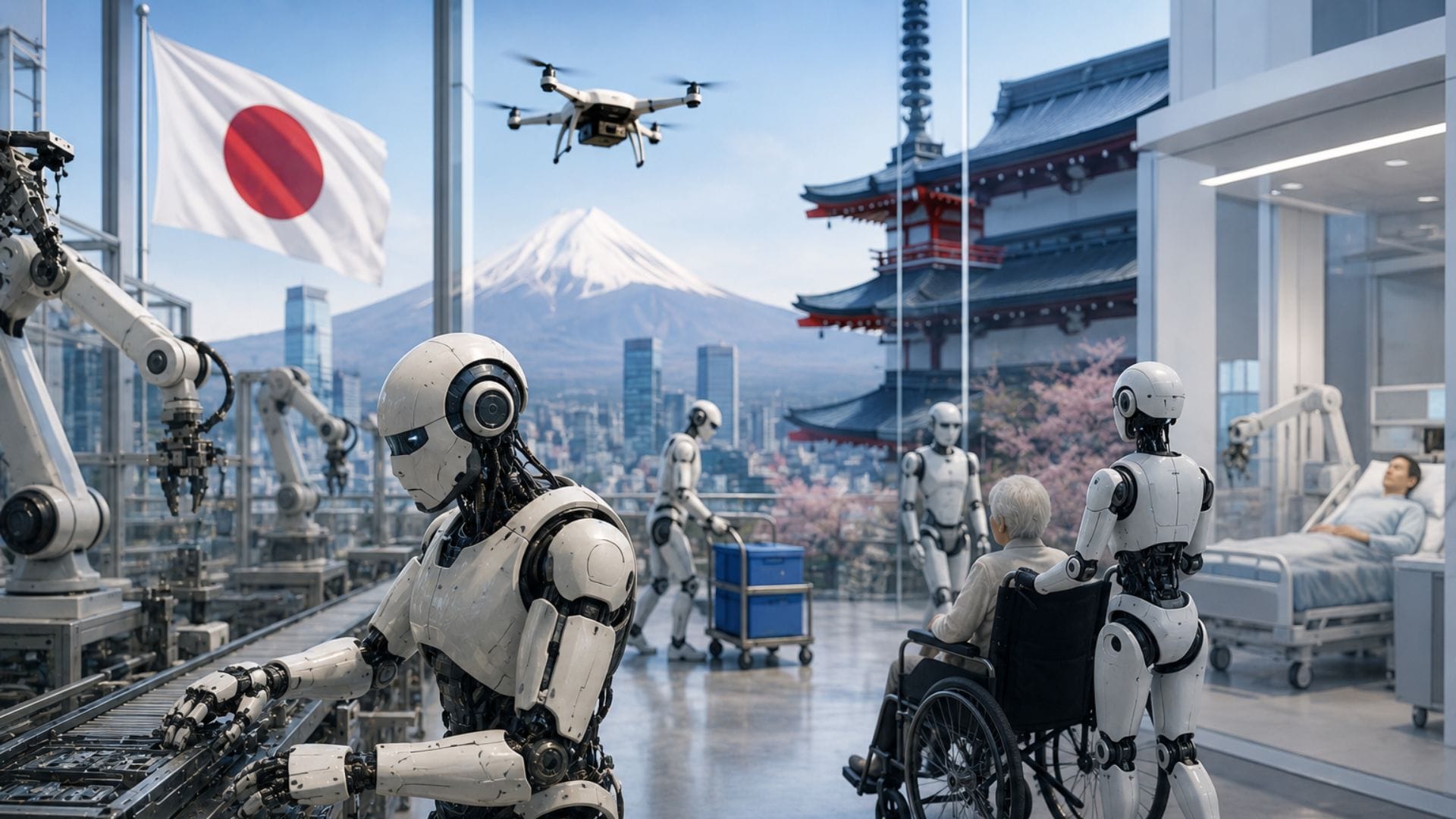
Here's what happened: Japan reveals new Noetra plan to flood the country with an ambitious 10 million robots by 2040, specifically targeting essential sectors like nursing, food and drink, and other vital services. This aggressive deployment aims to tackle the nation's pressing demographic challenges head-on.
This isn't a minor policy tweak; it’s a full-scale national pivot, positioning Japan at the forefront of the global robotics revolution. The government’s commitment underscores a recognition that human labor shortages, particularly in demanding fields like elder care and hospitality, require innovative, scalable solutions. It's a pragmatic response to an aging population and a shrinking workforce.
The sheer scale of 10 million robots within two decades is staggering, representing an unprecedented integration of automation into the fabric of society. To put that in perspective, this isn't just about industrial automation; it's about service robots, collaborative robots, and AI-powered machines working alongside humans in environments we typically associate with human interaction.
For the startup ecosystem, particularly in robotics and AI, this signals a massive opportunity. Japan is essentially creating a vast testbed and market for next-generation robotic solutions, which could catalyze innovation not just within its borders but globally. It’s a clear call to action for founders and investors looking to build the future of work.
What Does This Mean for the Future of Work?
The implications of Japan's Noetra plan extend far beyond its shores. For anyone in North America watching the accelerating pace of automation, this serves as a powerful case study in how nations are proactively addressing demographic shifts and labor market needs. It’s a clear signal that the future of work will involve a much closer collaboration between humans and machines, even in high-touch service industries.
Consider the nursing sector, which faces critical shortages worldwide. Robots assisting with patient lifting, medication delivery, or even basic companionship could alleviate immense pressure on human caregivers, allowing them to focus on more complex, empathetic tasks. Similarly, in food and drink, automated kitchens, robotic baristas, and delivery drones could help maintain service levels despite fewer available workers.
This isn't about replacing humans entirely, at least not initially. It's about augmentation. The narrative around robots often defaults to job displacement, but the Japanese approach appears to be driven by necessity and a focus on filling gaps that humans either can't or won't fill in sufficient numbers. It’s about ensuring essential services remain functional and society can continue to thrive.
How Does This Impact Global Innovation and Markets?
From a venture capital perspective, the Noetra plan is effectively a massive government-backed market signal. It validates the long-term investment thesis in robotics, AI, and automation technologies. Startups developing everything from advanced manipulators to sophisticated AI for human-robot interaction will find a receptive, demand-driven market in Japan. This could accelerate R&D and bring down costs globally, benefiting the entire industry.
This initiative also underscores a global trend: countries are increasingly leveraging technology to maintain economic competitiveness and societal stability in the face of demographic headwinds. Japan, being one of the oldest nations by average age, is simply ahead of the curve in terms of urgency. Other developed economies, including those in North America, are grappling with similar challenges, albeit perhaps a decade or two behind.
The competitive landscape for robotics innovation is heating up. While the US excels in AI and software, and China in manufacturing scale, Japan has historically been a leader in industrial robotics. The Noetra plan could consolidate their leadership in service robotics, creating specialized expertise and potentially new export opportunities for Japanese tech firms around the world.
My read on this is that Japan is not just reacting; it's actively shaping its economic destiny through technological prowess. This isn't just about buying existing robots; it implies a significant investment in domestic R&D, manufacturing capabilities, and the necessary infrastructure to support such a vast robotic workforce. This translates into a long-term strategic advantage that other nations will be hard-pressed to match.
The challenges, of course, are immense. Integrating 10 million robots into society requires addressing complex issues around ethics, data privacy, cybersecurity, and public acceptance. There will be a significant need for new regulatory frameworks, workforce retraining programs, and educational initiatives to prepare citizens for a robot-augmented future, and North American companies should watch how these are tackled.
Moreover, the cost of such an endeavor, both in terms of initial investment and ongoing maintenance, will be substantial. However, the alternative — a declining workforce unable to support an aging population — presents an even greater economic and societal cost in the long run. The Noetra plan is a calculated gamble on technology as a national solution, and it’s one many countries will be studying closely.
For North American businesses and policymakers, Japan's move should be a wake-up call. While our demographic challenges might not be as acute yet, the trends are undeniable. Investing in automation, fostering a vibrant robotics startup ecosystem, and preparing our workforce for these shifts are not optional luxuries but strategic imperatives for long-term prosperity and global competitiveness.
We've seen how quickly technology can disrupt and transform industries. The scale and intentionality of Japan's Noetra plan suggest that the next wave of automation will not be confined to factories but will permeate our daily lives in ways we are only just beginning to imagine. It's a future that demands proactive engagement, not just passive observation, from every major economy.
Japan’s newly revised AI Robot Strategy—aiming to deploy 10 million AI-powered robots by 2040—is a watershed moment for global deep tech. At StartupNews.fyi, we view the government-backed Noetra consortium (uniting heavyweights like SoftBank, Sony, and Honda) not just as a policy shift, but as a monumental market signal for the global startup ecosystem. By expanding focus across 18 critical fields—ranging from elder care to food production—Japan is effectively building the world’s largest, data-rich testbed for "Physical AI." While the West dominates conversational software, Japan is leaning into its legacy hardware strengths to pioneer multimodal systems that see, think, and act in unstructured environments. For founders and venture capitalists, this blueprint turns acute demographic headwinds into a commercial goldmine. The capital will flow toward startups solving the complex layers of this rollout: edge computing, advanced manipulators, and secure human-robot interaction frameworks. Japan is aggressively engineering the future of work, and global innovators must look closely—this is where the next decade of automation will be defined.
This plan offers a unique blueprint, a real-world experiment that the entire globe will be watching. The success or struggles of Japan's robotic integration will offer invaluable lessons for every nation grappling with similar issues of labor shortages, productivity, and the evolving role of technology in society. It underscores the urgency for every founder and investor to deeply understand the seismic shifts automation is bringing.
The implications for innovation are profound. We're talking about a potential explosion in demand for robust, adaptable AI that can navigate unstructured environments, for new human-robot interface designs that foster trust and efficiency, and for specialized robotics that can perform delicate tasks in sensitive environments like elder care. This push will undoubtedly accelerate the entire field.
What strikes me here is the sheer audacity and foresight. Instead of lamenting demographic decline, Japan is leveraging its technological leadership to engineer a new societal model. This isn't just about economic efficiency; it's about societal resilience and maintaining a high quality of life for its citizens. It’s a testament to a national commitment to innovation that sets a powerful example.
The flow of capital will undoubtedly follow this strategic direction. Expect to see increased venture activity in Japanese robotics startups, and also cross-border partnerships as North American and European firms look to participate in this burgeoning market. Founders building in automation, particularly in service industries, should pay very close attention to the specifications and challenges that will emerge from this rollout. This is where the next big opportunities will be found.
Frequently asked questions
What is Japan's Noetra plan?
Japan's Noetra plan is a strategic national initiative to integrate 10 million robots across the country by 2040. This ambitious project aims to revolutionize various sectors, including nursing, food, and drink, to address demographic challenges and boost productivity. It represents a significant commitment to automation as a core part of Japan's future economy and daily life.
Which sectors will benefit most from Japan's robot plan?
The nursing, food, and drink sectors are specifically highlighted to benefit from the large-scale deployment of robots, transforming these critical service areas.
How many robots does Japan plan to deploy by 2040?
Japan plans to deploy an ambitious 10 million robots across the country by the year 2040 as part of its Noetra plan.
Why is Japan investing heavily in robotics?
Japan is investing heavily in robotics to address critical workforce shortages, particularly in elder care, and to enhance productivity across various key service sectors nationwide.
Will robots replace human jobs in Japan?
The Noetra plan aims to integrate robots to augment and support human work, especially in labor-intensive sectors, rather than solely replacing jobs. The focus is on redefining how work gets done and improving efficiency.
What impact will the Noetra plan have on daily life in Japan?
The Noetra plan is set to make robots an integral part of everyday life in Japan, from assisting in elder care facilities and hospitals to serving customers in restaurants and improving daily conveniences.