Nvidia partners with Kawasaki Heavy Industries to create advanced AI robots, signaling a major shift into heavy industry automation and potentially reshaping global manufacturing valuations.
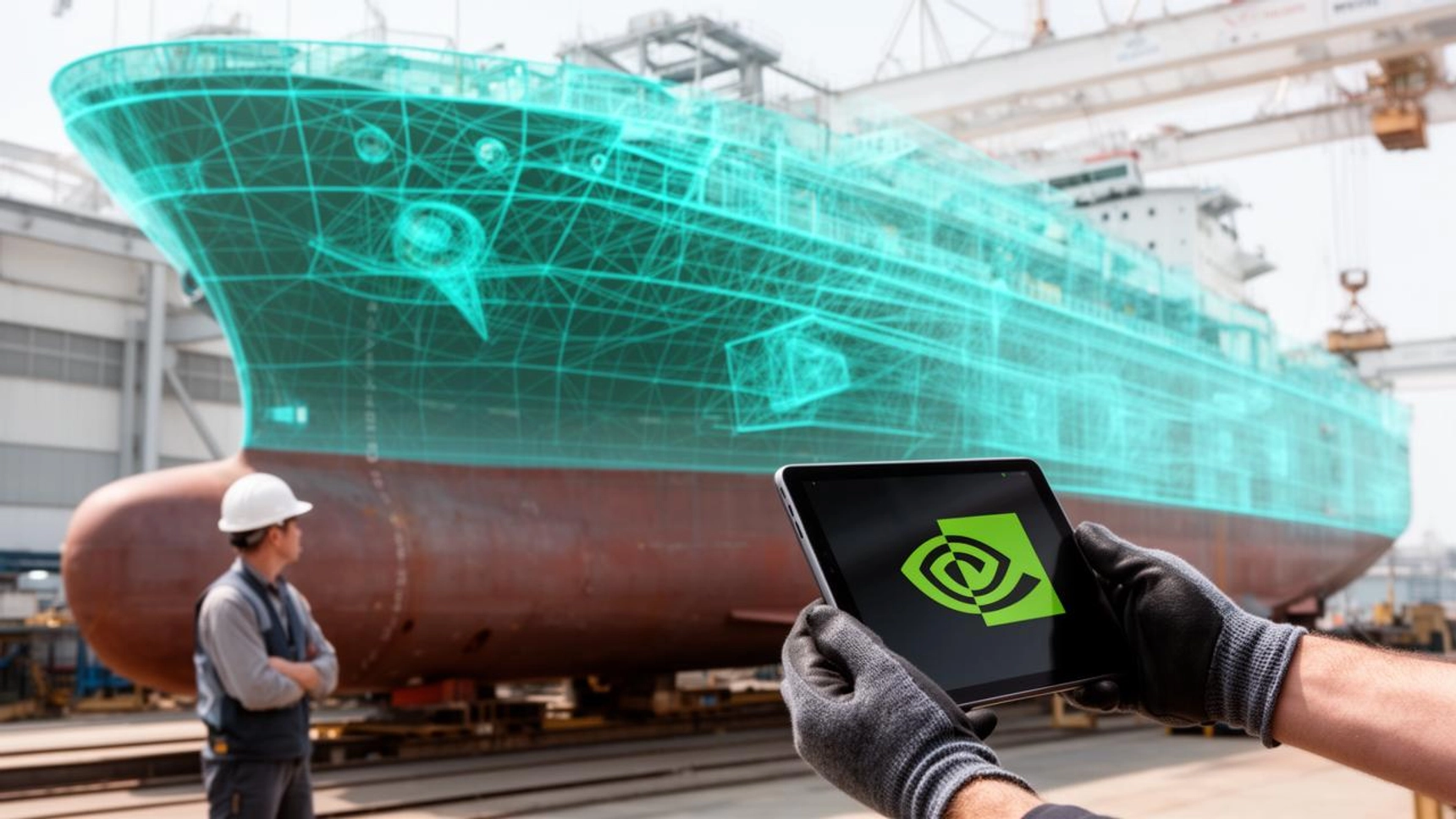
Nvidia and Kawasaki Heavy Industries announced a groundbreaking partnership to co-develop AI-powered robots for shipbuilding, a strategic move that signals Nvidia's aggressive expansion beyond traditional data centers and into heavy industry, potentially redefining automation sector valuations. This collaboration underscores a critical global shift towards leveraging advanced artificial intelligence to tackle persistent labor shortages and boost productivity across established manufacturing sectors. The joint venture will focus on deploying these sophisticated robots for critical tasks including welding, painting, inspection, and material handling within Kawasaki's shipyards. Kawasaki Heavy Industries emphasized that the initiative aims to establish a "next-generation digital shipyard" by integrating physical AI with digital twin technology. This move is a direct response to acute challenges facing Japan's shipbuilding industry, notably a declining pool of skilled workers and broader labor shortages exacerbated by the nation's aging demographic and falling birthrate. Kawasaki further noted that global efforts to reduce environmental impact are concurrently driving increased demand for low- and zero-carbon vessels. This dual pressure makes expanding construction capacity and significantly improving productivity an urgent priority for the entire shipbuilding industry. Nvidia CEO Jensen Huang’s visit to Tokyo, which included thanking Sega for a pivotal 1990s investment that saved Nvidia, served as a potent symbol of the chipmaker’s journey from near collapse to its current global dominance, now extending its reach into foundational industrial sectors.
How This Partnership Reimagines Industrial Automation
My read on this partnership is that it transcends a simple hardware deal; it represents Nvidia's calculated play to embed intelligence deeply into physical assets, effectively laying the groundwork for the industrial metaverse. This positions Nvidia not merely as a chip supplier but as an essential infrastructure provider for the next wave of industrial transformation, pushing the boundaries of AI from cloud-based processing to sophisticated edge deployments within tangible production environments. The financial implication here is significant, opening up a substantial new revenue stream and diversifying Nvidia's market exposure beyond hyperscalers and consumer GPUs. What strikes me is the profound strategic intent. Nvidia is moving to become the de facto operating system for the physical world, extending its CUDA platform's dominance from pure computation into physical manipulation through advanced robotics and digital twin simulations. This is a blueprint for how complex, capital-intensive industries can leverage AI to achieve step-change productivity gains, which, for investors, signals potential multiple expansion for companies capable of delivering such transformative solutions. This market could unlock a substantial opportunity for Nvidia's platforms, potentially exceeding its current total addressable market. The ecosystem-level impact is immense; it sets a precedent for how venture capital might increasingly flow into startups innovating at the intersection of AI, robotics, and heavy industry.
Sega's $5 million investment in Nvidia during the 1990s was a pivotal moment, helping the chipmaker avert bankruptcy and setting the stage for its eventual ascent to become the world's most valuable semiconductor company.
Nvidia's Strategic Pivot and Japan's Industrial Imperative
Nvidia's journey from a graphics card pioneer to an AI powerhouse is well-documented, with its CUDA parallel computing platform being central to its current dominance in AI training and inference. This collaboration with Kawasaki Heavy Industries marks a decisive expansion into the operational technology (OT) domain, applying its deep learning and simulation expertise to solve real-world industrial challenges. For Kawasaki, a highly diversified heavy industry player, this partnership is a critical strategic pivot to maintain global competitiveness in a shipbuilding market increasingly dominated by rivals in China and South Korea, which benefit from massive scale and often lower labor costs. Japan's industrial landscape, characterized by high levels of existing automation, is simultaneously grappling with profound demographic shifts. The nation's falling birthrate and aging population create an urgent imperative to innovate and automate extensively, making it a fertile ground for advanced robotics and AI deployments. Government initiatives actively promote digitalization and robotics across manufacturing sectors, aligning perfectly with this partnership's objectives. This environment offers a unique testbed for solutions that could later be scaled globally to other mature economies facing similar structural labor market pressures.
Navigating the Path to a Smarter Shipyard
While the pervasive hype around artificial intelligence is undeniable, the successful real-world deployment of AI in complex operational environments like shipyards presents significant integration and scalability challenges. The "bear case" here isn't a questioning of the underlying technology's capability, but rather a realistic assessment of the adoption pace within heavy industry. This sector is often characterized by lengthy investment cycles, stringent safety regulations, and a natural resistance to radical operational changes, which could mean a slower ramp-up of revenue recognition than some tech investors might anticipate. However, the long-term strategic value and the foundational shift this represents for industrial productivity remain undeniable. The immediate watchpoints for this partnership include the initial pilot project milestones and the tangible improvements in productivity and efficiency reported by Kawasaki. Success here could trigger broader adoption across other Kawasaki divisions, potentially extending to other Japanese heavy industries like construction or aerospace. Furthermore, any new regulatory incentives or government-backed funding for industrial automation in Japan or similar aging economies will provide a tailwind. Investors will also be scrutinizing Nvidia's upcoming earnings calls for management commentary specifically on its industrial AI pipeline and early indicators of market penetration beyond its established data center and gaming segments.
Frequently asked questions
What is Nvidia's new partnership in Japan?
Nvidia is collaborating with Kawasaki Heavy Industries to develop AI-powered robots specifically for the shipbuilding industry in Japan. This partnership marks Nvidia's aggressive expansion into heavy industrial automation.
Which companies are involved in the AI shipbuilding robot project?
Nvidia and Kawasaki Heavy Industries are the primary partners in this groundbreaking initiative to co-develop AI-powered robots for shipbuilding.
What industry is Nvidia expanding into with this collaboration?
Nvidia is strategically expanding into the heavy industry sector, particularly shipbuilding and industrial automation, moving beyond its traditional data center focus.
What is the significance of this Nvidia-Kawasaki partnership?
The partnership is significant as it leverages advanced AI for heavy industrial tasks, potentially redefining automation sector valuations and global manufacturing processes.
Where will these AI shipbuilding robots be developed?
These AI shipbuilding robots are being co-developed in Japan as part of the collaboration between Nvidia and Kawasaki Heavy Industries.
How does this impact the automation sector?
This collaboration is expected to set new benchmarks for automation, driving innovation in AI-powered robotics for industrial applications and potentially reshaping market valuations within the sector.