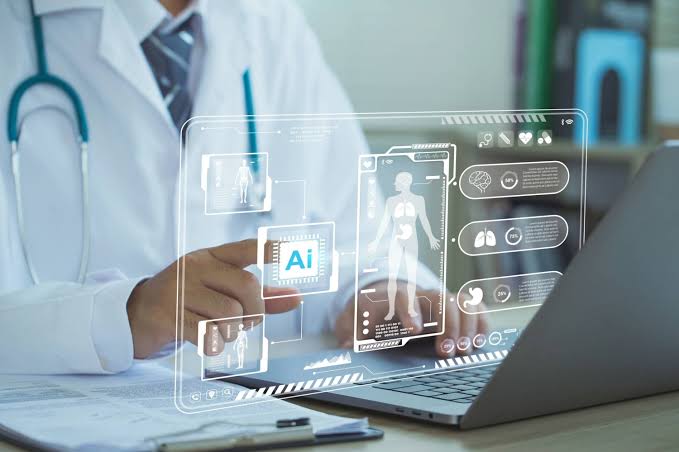
OpenAI's new Health platform allows ChatGPT to connect with personal health records like Apple Health, offering hyper-personalized medical guidance. This augments, not replaces, human medical professionals.
OpenAI's new Health platform in ChatGPT, integrating personal health records, promises a future of hyper-personalized medical guidance for users.
This AI evolution is set to augment, not replace, the irreplaceable human touch in healthcare delivery across South and Southeast Asia, fostering a hybrid model.
The ambition to democratize health information and personalize medical insights has long been a driving force for innovators globally. For the visionaries behind platforms like ChatGPT, the moment arrived with the recent launch of its Health platform for US users, marking a significant leap toward integrating individual health data directly into consumer AI. This pivotal development moves beyond general medical queries, enabling a deeply contextualized understanding of a patient's unique health journey.
OpenAI's new Health platform allows for the secure connection of supported health records, including repositories like Apple Health, enabling ChatGPT to understand a patient's specific context, medical history, and details regarding test results and other healthcare data. This progression moves beyond general symptom checking to offering nuanced insights tailored to an individual's unique biological and historical data. For the teams at OpenAI, the goal was always to push the boundaries of AI's utility, and healthcare represents one of its most profound applications.
The scale of existing demand for health information through AI is already staggering. Close to 300 million users globally turn to ChatGPT weekly with health-related questions, highlighting a massive pre-existing appetite for accessible medical insights. The new feature elevates this utility, empowering users with more detailed answers derived directly from their personal lab results and diagnostic tests, ushering in an era of unprecedented health literacy at the individual level.
This development sparks a crucial conversation, particularly within dynamic and evolving healthcare landscapes like those in South and Southeast Asia. The conventional wisdom often suggests that advanced AI, capable of processing vast amounts of medical data, will inevitably render medical professionals obsolete. In regions grappling with persistent doctor shortages, infrastructure deficits, and accessibility gaps, the allure of AI providing instant, data-driven diagnoses seems to promise a transformative, rapid solution to decades-old challenges in healthcare delivery.
However, the nuanced reality of healthcare delivery extends far beyond purely algorithmic processes. A physician's role involves not just applying rules to symptoms but also integrating social, psychological, and cultural factors into treatment plans. This humanistic approach, encompassing empathy, intuition, and contextual understanding—often referred to as the "art" of medicine—is precisely what AI, in its current or near-future form, cannot replicate. It is this wisdom, rather than just knowledge, that informs sustainable and practical treatment modalities.
The potential for hyper-personalization in health literacy is immense for the diverse populations across South and Southeast Asia. With varying levels of healthcare access, digital health initiatives like those proposed by OpenAI could bridge significant information gaps, empowering individuals to better understand their conditions, treatment options, and preventive measures. This is particularly relevant in rural and underserved areas where specialist access is limited, or where basic health education needs a significant boost to combat prevalent diseases and improve public health outcomes.
The global move by OpenAI will undoubtedly spur local innovators across India, Indonesia, Vietnam, and other regional hubs to develop similar, region-specific solutions. Startups and established tech firms in these countries could focus on integrating with a multitude of local electronic health records (EHR) systems, addressing the vast linguistic diversity, and tailoring advice to common regional health issues like endemic tropical diseases, nutritional deficiencies, or specific non-communicable diseases prevalent in the area. Such localized adaptations are crucial for mass adoption and efficacy.
However, the path is not without its significant challenges. Issues surrounding data privacy and security, especially with sensitive health information, will require robust regulatory frameworks and public trust. The interoperability of disparate health systems across various states and nations, along with ensuring equitable access to such technologies amidst varying levels of digital literacy and internet penetration, are critical hurdles to overcome. Regulatory bodies in these nations will face the complex task of establishing stringent yet agile guidelines for AI in health, balancing rapid innovation with paramount patient safety and ethical considerations.
This development is part of a broader, clear trend of AI being seamlessly woven into daily services across sectors. From drafting emails and handling complex correspondence to sophisticated data analysis, AI's capabilities are expanding rapidly. The integration of AI with personal health-tracking software, as demonstrated by connecting with platforms like Apple Health, creates direct inroads for deeper, more tailored health advice, mirroring global movements towards digital transformation in every aspect of life. India, with its rapidly digitizing economy, vast tech talent pool, and significant digital public infrastructure, is uniquely positioned to both adopt and adapt these global advancements, potentially even leading in some localized applications.
Imagine a future where doctors in bustling urban clinics in Mumbai or remote health centers in the Philippine archipelago utilize AI co-pilots. These intelligent assistants could rapidly synthesize complex patient data, flag potential drug interactions from extensive databases, or suggest evidence-based treatment guidelines tailored to local conditions and available resources. This empowers healthcare professionals by freeing up precious time, allowing them to focus on the human interaction, the empathetic counselling, and the critical diagnostic and decision-making processes that only a human can provide, ultimately enhancing, not diminishing, the clinician's vital role.
This step by OpenAI signifies not an end to traditional healthcare, but a powerful beginning for a new era where AI acts as an intelligent co-pilot, enhancing access to knowledge and personalizing care journeys. For India and the broader South and Southeast Asian region, this foreshadows a future where technology can significantly uplift health literacy and support medical professionals, inspiring a new generation of entrepreneurs to innovate within this crucial intersection of AI and human well-being, paving the way for more accessible, equitable, and effective healthcare for millions.
Frequently asked questions
What new feature did OpenAI launch in ChatGPT?
OpenAI launched the Health platform in ChatGPT, allowing users to securely connect personal health records and external repositories like Apple Health to get personalized medical insights.
How does the new ChatGPT Health platform differ from previous uses?
While users could previously inquire about general medical information, the new platform allows for detailed, contextualized answers based on an individual's specific medical history, lab results, and healthcare data.
Can ChatGPT Health replace medical professionals?
No, ChatGPT Health cannot replace the judgment of medical professionals. It is designed to augment services and abilities, providing health literacy and general knowledge, but lacks the humanistic approach required for complete patient care.
What external data can ChatGPT Health securely connect to?
ChatGPT Health can securely connect to supported health records and other external repositories, such as Apple Health, to understand a patient’s specific context and medical history and provide better answers.
What is the primary benefit of AI's hyper-personalization in healthcare?
The hyper-personalization of AI in healthcare offers users deeper, more tailored advice for their needs. This helps millions gain better access to health literacy and general knowledge about their specific conditions.
Why is healthcare often considered an art, not purely a science?
Healthcare is considered an art because physicians incorporate humanistic approaches, taking into account social and psychological aspects of patients beyond just applying rules. This establishes sustainable and practical treatment modalities that purely algorithmic solutions cannot achieve.