Indian biotech firm StrainX Bioworks emerges from stealth with $13M funding to accelerate global alternative protein production for food and cosmetics.
An Indian biotech firm, StrainX Bioworks, just emerged from stealth mode with a hefty $13 million (roughly ₹124 crore) in fresh funding, signaling a serious new player in the global race to create alternative proteins. The capital injection positions StrainX to significantly ramp up its bio-manufacturing capabilities, aiming to churn out proteins for everything from food to cosmetics without relying on traditional animal agriculture.
This funding round isn't just a win for StrainX; it highlights a growing global appetite, particularly among investors, for sustainable protein solutions. As populations grow and environmental concerns mount, the search for scalable, ethical, and efficient ways to feed the world — and supply other industries — has become a top priority for innovators and venture capitalists alike.
The funding round was led by Prime Venture Partners and Leo Capital, with notable participation from Singapore-based Good Startup — marking its first investment in India. Other investors included Sparrow Capital, Sun Icon Ventures, Dholakia Ventures, and WindT Angels. The money is earmarked primarily for expanding StrainX’s bio-manufacturing fermentation facility in Bhopal, allowing it to move into commercial-scale production. A portion will also bolster its R&D lab in Bengaluru, bringing in more scientists and upgrading its tech stack.
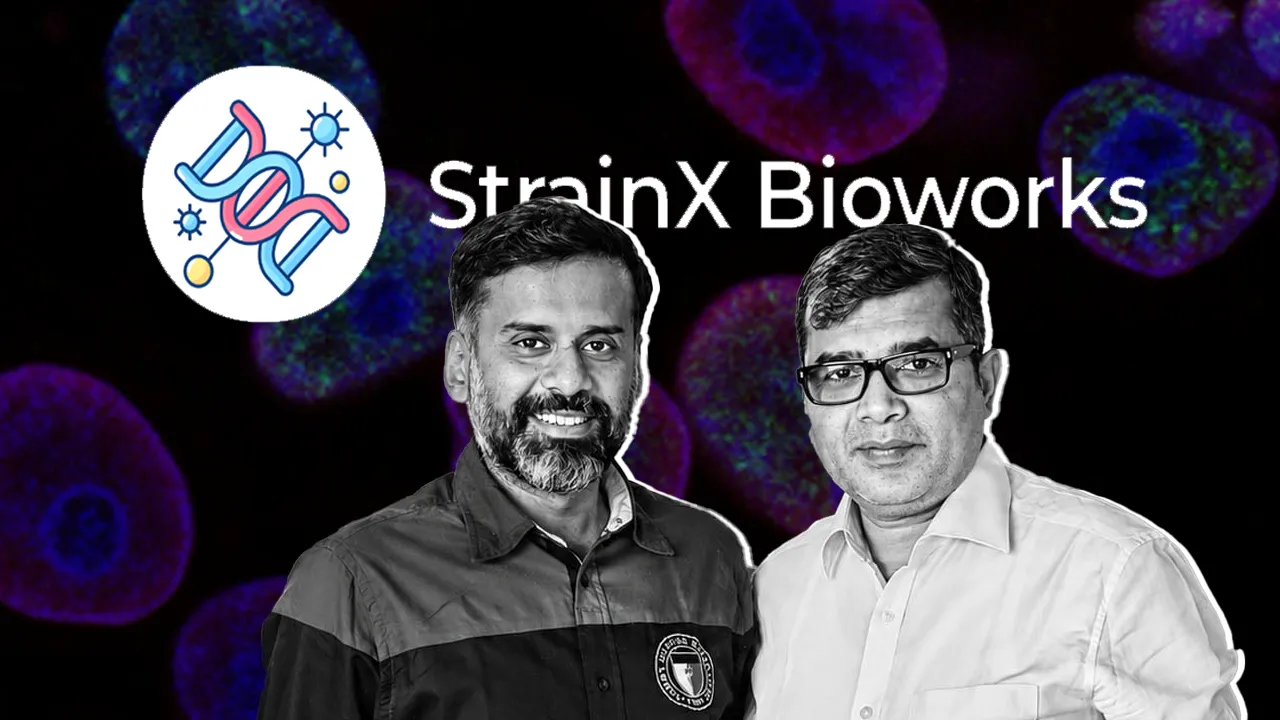
Founded in 2023 by IIT Delhi alumni Akshay Mittal and Alok Malaviya, StrainX tackles the challenge of manufacturing alternative proteins by leveraging synthetic biology and precision fermentation. In simpler terms, they’re engineering microscopic organisms to produce specific proteins in a lab, bypassing the need for vast tracts of land, feed, or livestock.
Brewing the Future: How StrainX is Making Proteins Without Animals
StrainX's core innovation lies in its dual approach. Synthetic biology involves meticulously engineering microbes, such as bacteria, yeast, and fungal cells, to act as tiny protein factories, coaxing them to produce desired outputs. Precision fermentation then scales this process in controlled bioreactor environments, ensuring consistent quality and volume. It’s a bit like brewing beer, but instead of alcohol, you’re creating complex proteins.
The startup's facility in Bhopal currently boasts a 10,000-liter fermentation capacity, which StrainX confidently states can be scaled tenfold over the next two years. This aggressive expansion plan underscores the company's belief in its ability to meet growing demand. Already, StrainX has secured approval in the US to commercialize its product, with Indian regulatory green lights expected "soon."
Akshay Mittal, co-founder of StrainX, emphasizes the paradigm shift this technology represents. "Bio-manufacturing is going to define the next decade of manufacturing," Mittal shared. "The last hundred years were defined by chemical manufacturing. Technology has now advanced to the point where fermentation engineering and bio-manufacturing can produce things cheaper and at better quality and price points than older methods." StrainX’s India-based manufacturing and full-stack model gives it a significant pricing edge, with products ranging from a few hundred to a few thousand dollars per kilogram, depending on application and purity.
Despite the promise, Mittal acknowledges the current gaps in India's infrastructure, particularly for high-quality precision fermentation in non-pharma applications. Existing facilities often aren't suited to the specific downstream requirements for food proteins and ingredients, which, he notes, creates a substantial market opportunity for StrainX to fill.
India's Biotech Boom: A $300 Billion Opportunity
StrainX’s emergence is not an isolated event but rather a symptom of a larger trend in India. The nation's bioeconomy is projected to become a colossal $300 billion market opportunity by 2030, currently home to more than 11,000 biotech startups. This growth is fueled by a confluence of factors, including abundant scientific talent and a rapidly increasing demand for localized biotech solutions across various sectors.
Government support is also playing a crucial role. This year, Finance Minister Nirmala Sitharaman announced the new ‘Biopharma SHAKTI’ scheme with an outlay of ₹10,000 crore, designed to boost the sector. The Centre also offers funding and incubation support to biotech startups through programs like the BIRAC SEED scheme and is working towards a single-window clearance portal for biological research, streamlining a historically complex regulatory landscape.
Investors are clearly taking notice beyond StrainX. Earlier this month, Cellogen Therapeutics bagged around $2 million in funding, and in March, probiotics manufacturer ELMED Life Sciences secured $2.7 million in a Series A round. These investments paint a picture of a burgeoning ecosystem where innovation in life sciences is finally attracting serious capital.
StrainX currently employs around 100 people, with a third at its R&D lab and the rest handling manufacturing, engineering, and operations. The startup plans to double its headcount to 200 by the end of the current financial year and expand into new science verticals, hinting at an ambitious roadmap beyond its initial protein offerings.
As global consumers increasingly seek sustainable food choices and advanced materials, StrainX's quiet emergence from Bhopal could well be a taste of the future, cooked up in a bioreactor rather than a farm, and a significant step for India on the global biotech stage.
Frequently asked questions
What is StrainX Bioworks' recent funding achievement and its goal?
StrainX Bioworks, an Indian biotech firm, recently secured $13 million in funding. Its primary goal is to significantly ramp up bio-manufacturing capabilities to produce alternative proteins for various applications, including food and cosmetics.
What are alternative proteins?
Alternative proteins are proteins derived from non-traditional sources, such as plants, fungi, algae, or cultivated cells, designed to replace conventional animal-derived proteins.
What products will StrainX manufacture with its new funding?
StrainX will focus on manufacturing proteins for a wide range of applications, specifically mentioning food and cosmetics, utilizing its enhanced bio-manufacturing processes.
Where is StrainX Bioworks based?
StrainX Bioworks is an Indian biotech firm, indicating its primary base of operations is in India.
What is bio-manufacturing in the context of StrainX?
In StrainX's context, bio-manufacturing refers to using biological systems, such as microorganisms or cell cultures, to produce proteins and other biomolecules on an industrial scale.
Why is there a global race to create alternative proteins?
The global race for alternative proteins is driven by increasing demand for sustainable, ethical, and efficient protein sources to address environmental concerns, food security, and animal welfare issues.