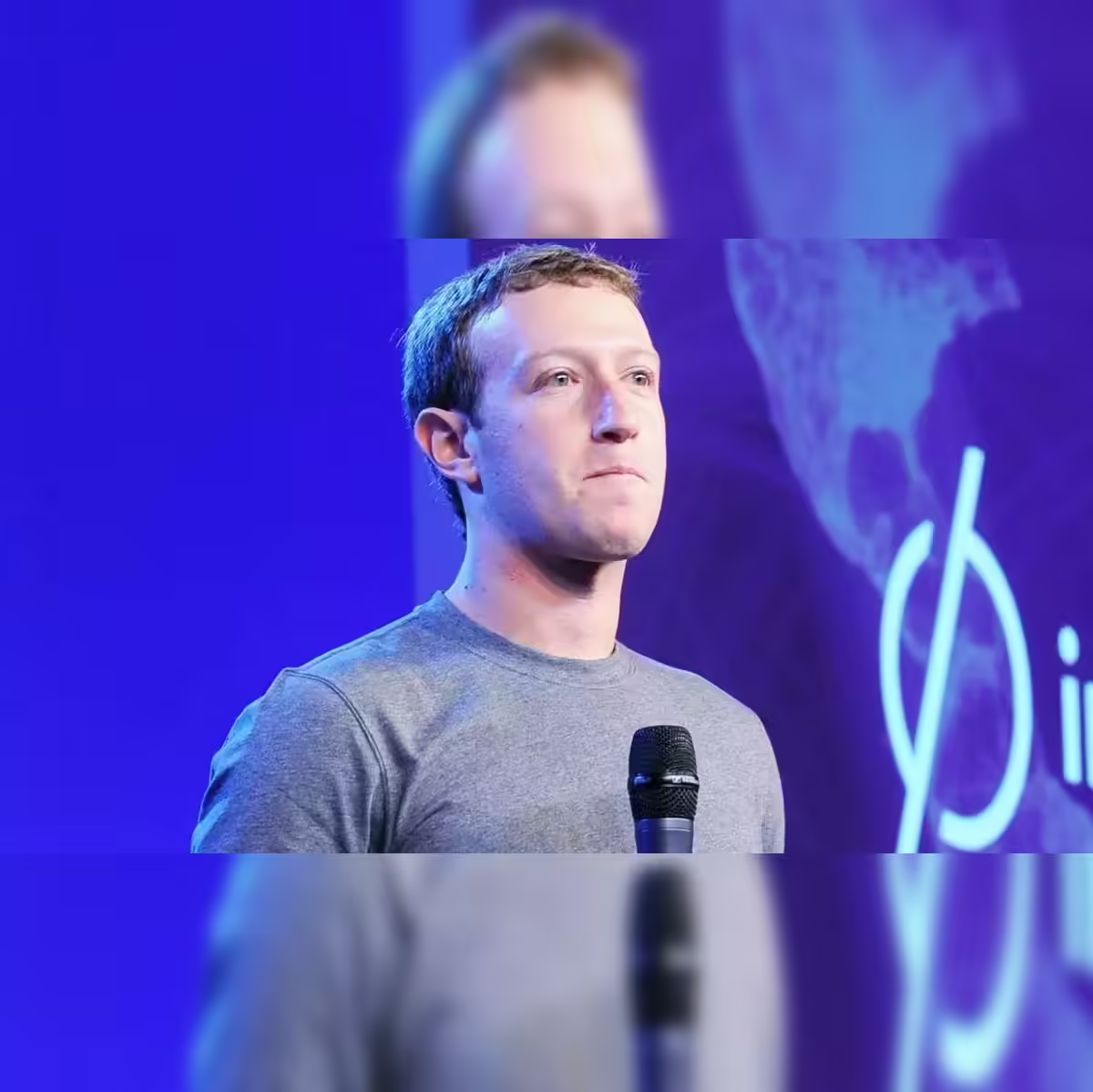
Meta CEO Mark Zuckerberg confesses AI agent development 'hasn't accelerated as expected' following 8,000 layoffs and a $145B AI bet.
Meta CEO Mark Zuckerberg has admitted the company's ambitious AI strategy, particularly regarding its agentic development, has not progressed as quickly as leadership anticipated, following a sweeping internal restructuring and thousands of layoffs.
This candid confession arrives nearly two months after Meta cut approximately 8,000 jobs, representing about 10% of its global workforce, while reassigning another 7,000 employees to focus on AI initiatives. The moves underscored the company's aggressive pivot towards an AI-first future, demanding rapid results.
During a recent internal town hall, a recording of which was heard by Reuters, Zuckerberg explicitly stated, "the trajectory of the agentic development over at least the last four months hasn't really accelerated in the way that we expected." He added that the company's restructuring bets "haven't come to fruition yet."
He further acknowledged that the internal reorganization wasn't as "clean" as it should have been, indicating a miscalculation in the timing of these profound strategic shifts within the organization. This admission creates a significant tension between the company's declared intent and its execution.
The broader tech landscape is in a frenzied AI arms race, with giants like Google, Microsoft, and OpenAI making rapid advancements. Meta's projected spending of up to $145 billion on AI infrastructure this year alone highlights the immense pressure to deliver tangible, competitive results and justify its investments.
My read is that this isn't solely a matter of timing; it suggests a deeper chasm between executive-level optimism and the intricate, often unpredictable, realities of cutting-edge AI product development. Zuckerberg noted executives were "super optimistic" earlier this year about tools like Anthropic's Claude Code, driving planning discussions fueled by a fear of falling behind competitors.
This situation reflects a pervasive industry trend: the significant gap between breakthroughs in foundational AI models and the complex, frequently chaotic, process of integrating them into stable, scalable, and user-facing products. Agentic AI, designed to perform tasks autonomously, demands robust infrastructure, extensive training, and careful ethical considerations, often taking longer than initially projected.
The internal disarray likely exacerbates existing morale issues within Meta. CTO Andrew Bosworth previously described the rollout of the 6,500-person Applied AI division, formed in March, as "atrocious" in an internal memo, with one employee reportedly calling the work environment "a gulag."
Editorial Desk Input: Mark Zuckerberg’s stunning town hall admission that Meta’s agentic AI trajectory has stalled is a devastating reality check for Silicon Valley’s "growth at all costs" AI playbook. By conceding that an aggressive restructuring—which axed 8,000 employees and forcefully "drafted" 7,000 more into data-labeling—failed to accelerate product timelines, Meta has exposed the massive chasm between executive FOMO and the brutal reality of building autonomous software. Zuckerberg’s reliance on external hype, like Anthropic's Claude Code, to justify a messy, internal reorg has severely damaged workforce morale, leaving its newly minted Applied AI division in near-revolt. Spending $145 billion on compute infrastructure means nothing if your human capital is treated like a resource in a "soul-crushing gulag." As Meta approaches its next earnings call, the market will demand a hard answer to a terrifying question: Is this unprecedented capital destruction, or just an expensive miscalculation? After 8,000 Layoffs, Zuckerberg Admits Meta's Restructuring Mistakes provides an in-depth breakdown of the leaked internal audio, detailing employee pushback and the specific timeline of Meta’s structural missteps.
Bosworth has since pledged to cap managers at 20 direct reports and invest in career development and office perks, clear efforts to rebuild trust and address the fallout from the rapid, and by his own admission, poorly executed reorientation. Such measures are not minor; they signal profound internal challenges that need addressing beyond just technical hurdles.
This internal turmoil unfolds against the backdrop of Meta's ongoing dual investment strategy in both the metaverse through Reality Labs and its burgeoning AI initiatives. The company's much-touted "year of efficiency" was intended to streamline operations, but these recent admissions suggest it may have inadvertently introduced new layers of complexity and employee frustration.
Adding to the internal friction, a controversy surrounding Meta's paused mouse-tracking software emerged when US employees were initially told there was no way to opt out. While Bosworth now states any restart would be opt-in, the initial approach highlights a tension between aggressive data collection for AI training and safeguarding employee privacy and autonomy.
For investors, Zuckerberg's transparency might offer a moment of clarity, but it also casts a critical light on the efficacy of Meta's strategic foresight and execution at a pivotal moment. The market rewards demonstrable progress and consistent delivery, not just ambitious vision statements.
Despite the current setbacks, the $145 billion AI investment projection underscores an unwavering commitment from Meta's leadership. Its open-source approach, exemplified by models like Llama, has successfully garnered significant developer community traction. However, translating this broad adoption into tangible, revenue-generating "agentic" products remains a distinctly different, and far more challenging, endeavor.
The current generation of AI agents frequently grapples with issues of reliability, instances of hallucination, and the capacity for complex, sustained reasoning. Developing truly robust, context-aware agents that can consistently deliver valuable outcomes is an monumental undertaking, even for a corporation with Meta's vast resources and technical prowess.
I think this public admission marks a crucial point of recalibration for Meta. The initial widespread enthusiasm for AI, likely intensified by competitive pressures, may have led to an internal reorganization that outpaced the practical realities of product development, talent integration, and the cultivation of a supportive organizational culture.
The next three to six months will be exceptionally critical for Meta. If Zuckerberg's projected timeline for realizing "meaningful benefits" from these AI investments comes to fruition, it could significantly restore internal and external confidence. Conversely, failure to deliver could further erode trust and potentially necessitate another, more drastic, strategic overhaul.
Meta remains a formidable force in the tech world, but its aggressive journey into the AI-first era is proving to be a complex, often messy, endeavor that rigorously tests the limits of rapid innovation against deeply entrenched organizational realities and the inherent complexities of cutting-edge technology.
Frequently asked questions
What did Mark Zuckerberg admit about Meta's AI strategy?
Mark Zuckerberg admitted that Meta's AI agent development has not progressed as quickly as leadership expected. He acknowledged a miscalculation in the timing of the company's recent restructuring bets.
How many employees did Meta lay off?
Meta cut approximately 8,000 jobs, which is about 10% of its global workforce, and reassigned another 7,000 employees to AI-focused teams.
How much is Meta investing in AI?
Meta is projected to spend as much as $145 billion on AI infrastructure this year, reflecting its ambitious but currently miscalculated AI strategy.
Why did Meta restructure its AI teams?
The restructuring was driven by an initial 'super optimistic' view on AI tools like Anthropic's Claude Code and a fear that Meta wasn't moving fast enough to keep pace with the industry.
Who is Andrew Bosworth at Meta?
Andrew Bosworth is Meta's CTO. He addressed concerns about employee data and described the rollout of Meta's Applied AI division as 'atrocious', pledging improvements.
When does Zuckerberg expect benefits from AI investments?
Zuckerberg told staff he expects meaningful benefits from Meta's AI investments within three to six months, despite the current setbacks and miscalculations.