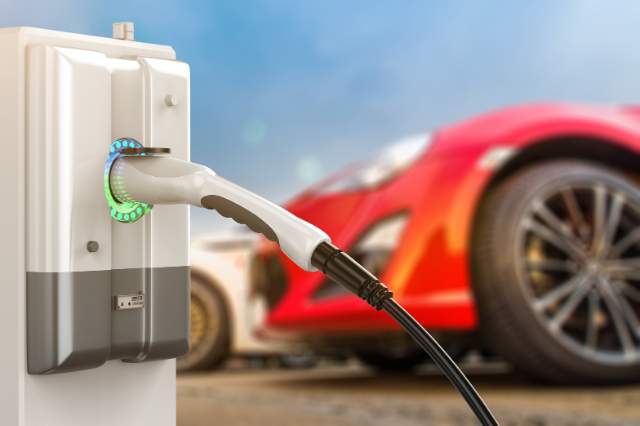
Critics feared electric vehicles would overload power grids during intense heat, but V2G technology in school buses proved them wrong, supplying crucial energy.
As summer heat waves grip North America, our aging power grids often buckle under the strain, leading many to wonder if the growing number of electric vehicles on the road will be the straw that breaks the camel's back. It's a valid concern, particularly as the demand for air conditioning skyrockets. Yet, a surprising trend is emerging: instead of pushing the grid to its limits, EVs are stepping up to help keep the lights on and the AC running.
Here’s the key detail: fleets of electric vehicles, particularly school buses, are now actively feeding electricity stored in their batteries back into the grid. This capability, known as Vehicle-to-Grid or V2G, acts as a crucial buffer during peak demand, demonstrating a powerful new role for EVs beyond just transportation.
Last week’s relentless heat dome, which threatened to push power infrastructure to its breaking point, saw these pioneering V2G projects prove their worth. According to the World Resources Institute’s Electric School Bus Initiative, some 230 electric school buses are currently able to supply a collective 8 MWh of power back to the grid at any given moment. To put that into perspective, that’s enough electricity to power roughly 1,600 typical US homes for up to four hours, significantly reducing peak load demand for the utilities they serve.
While still in its nascent stages, the potential is clear. Steve Letendre, a senior advisor to the Vehicle Grid Integration Council, points out that while it’s "very early days," school buses are poised to become "a critically important backbone of V2G capacity." This isn't just about managing emergencies; it's about fundamentally rethinking how we generate, store, and distribute energy.
California, a perennial leader in clean energy initiatives, is at the forefront of this movement. The Oakland Unified School District, for instance, operates a substantial fleet of 74 V2G-enabled buses, contributing an estimated 2.1 GWh of clean energy back into the state’s grid annually. This serves as a tangible model for how electric fleets can evolve into vital grid assets rather than just energy consumers.
The Mechanics of V2G: Beyond a Simple Plug
Understanding V2G goes beyond just imagining a car plugged in and magically sending power backward. It involves sophisticated bidirectional charging technology, smart energy management software, and seamless coordination with utility grid operators. When an EV is connected to a V2G-enabled charger, it can not only draw power from the grid but also export excess energy back when needed, or even just pause charging during peak hours to reduce strain. This dynamic interaction transforms what was once a passive load into an active, flexible resource.
The core technology relies on smart inverters that can convert the direct current (DC) stored in the vehicle's battery into alternating current (AC) suitable for the grid, and vice versa. This is managed by intelligent software that communicates with the grid, responding to signals about demand, pricing, and grid stability. For a utility, this is invaluable, offering a distributed network of mobile energy storage that can be called upon in minutes, far more agile than firing up a traditional fossil-fuel peaker plant.
My read is that the true innovation here isn't just the hardware, but the software layer that orchestrates these interactions. The ability to aggregate thousands of individual vehicle batteries into a virtual power plant presents a compelling investment thesis for startups developing AI-driven energy management platforms and specialized V2G charging infrastructure. This is where market opportunity meets critical infrastructure need, drawing significant attention from venture capital funds focused on energy tech and smart grid solutions.
The successful deployment of V2G-enabled school buses during this summer’s brutal heat dome flips the script on the most persistent anti-EV narrative. For years, critics claimed mass electrification would inevitably crush a fragile, aging power grid; instead, fleets in districts like Oakland proved that parked EVs are actually modular, distributed lifelines. The true innovation here isn't the battery hardware, but the algorithmic orchestration layer turning idle yellow buses into an agile Virtual Power Plant (VPP). While an 8 MWh capacity is a drop in the bucket for massive transmission networks like PJM, it establishes an unassailable proof of concept. For climate-tech VCs, the investment thesis is shifting from raw vehicle production to the specialized software, smart inverters, and AI-driven aggregation platforms managing this high-stakes interplay. True grid resilience will be defined by software that transforms passive loads into active, monetization-ready energy assets.
Beyond school buses, this V2G paradigm has significant implications for other fleet operators—delivery vans, municipal vehicles, corporate fleets, and even rental cars. These vehicles are often parked for extended periods, making their batteries prime candidates for grid services. Integrating them effectively requires standardized protocols, robust cybersecurity, and incentive structures that benefit both vehicle owners and utilities.
The Economic and Resilience Upside for All
The benefits of V2G extend far beyond simply keeping the lights on during a heatwave; they touch upon economics, environmental sustainability, and community resilience. For utilities, accessing power from V2G-enabled fleets during peak demand periods means they don't have to buy expensive electricity on the wholesale energy market. This reduction in costly emergency power purchases can translate into lower transmission and delivery costs, savings that can ultimately be passed on to ratepayers, leading to lower energy bills for consumers.
From an environmental perspective, V2G helps integrate more renewable energy sources into the grid. Solar and wind power are intermittent, meaning their output fluctuates. V2G-enabled EVs can store excess renewable energy during times of high generation and low demand, then release it when renewables are not producing, effectively smoothing out the supply curve and reducing reliance on fossil fuel "peaker" plants that are often inefficient and highly polluting. This represents a significant step towards a cleaner, more stable energy ecosystem across North America.
The resilience aspect of V2G cannot be overstated. In areas prone to natural disasters, such as hurricanes or wildfires, power outages can be devastating. Electric school buses, with their large battery capacities, can act as mobile emergency power sources. Angie White-Banda, Transportation supervisor for Florida's Glades County School District, highlights this practical benefit: "If we have a hurricane, and God forbid we do, but if we do and there’s no power in the community, we can bring our buses to specified locations and the community can charge their phones. They can charge their devices. They can come in with, and sit down for a little while and cool off with cold AC." This offers a tangible, immediate lifeline during critical times.
The expansion of these projects is accelerating. San Francisco’s Unified School District is launching a new electric school bus project next month that is expected to surpass Oakland’s in scale. This new fleet of 104 buses is projected to return approximately 3 GWh of energy annually during peak hours, with plans to double to more than 238 electric buses by 2028. This rapid deployment illustrates a growing conviction in the utility of V2G technology.
What strikes me here is the profound shift in perspective. For decades, vehicles were solely consumers of energy. Now, with electrification and V2G capabilities, they are evolving into active participants in the energy grid, contributing to its stability and resilience. This paradigm shift creates new business models for fleet operators, new revenue streams for school districts, and fundamentally changes the equation for grid modernization. It’s no longer just about building more power plants or transmission lines, but about intelligently leveraging distributed assets already in our communities.
The path forward involves continued technological refinement, supportive policy frameworks, and investment in the necessary charging infrastructure and grid integration platforms. As more electric vehicles hit the road, the aggregate capacity for V2G services will grow exponentially, offering a powerful, flexible, and sustainable solution to the energy challenges of the 21st century. The early successes with electric school buses during a scorching heatwave are a clear indication that the future of energy is not just centralized, but intelligently distributed and profoundly collaborative.
Frequently asked questions
How did electric vehicles help the power grid during the recent heatwave?
Electric vehicles, particularly electric school buses equipped with vehicle-to-grid (V2G) technology, fed stored electricity from their batteries back into the grid. This action helped utilities manage peak demand, kept the lights on, and ensured air conditioning remained operational during periods of extreme strain.
What is Vehicle-to-Grid (V2G) technology?
V2G allows electric vehicles to send electricity stored in their batteries back to the power grid, providing a flexible energy resource.
Which types of EVs are currently being used for V2G projects?
Electric school buses are prominent in current V2G deployments, with projects involving hundreds of buses supplying significant power.
What are the benefits of V2G technology for consumers?
V2G can help lower consumer electricity costs by reducing utilities' need to buy expensive peak power and can provide emergency power during outages.
Which US state is leading in V2G school bus technology?
California leads the US in developing and adopting V2G school bus technology, with large projects in districts like Oakland.
How much power can electric school buses supply to the grid?
Currently, about 230 electric school buses in V2G projects can supply 8 MWh of power, enough for about 1,600 US homes for four hours.