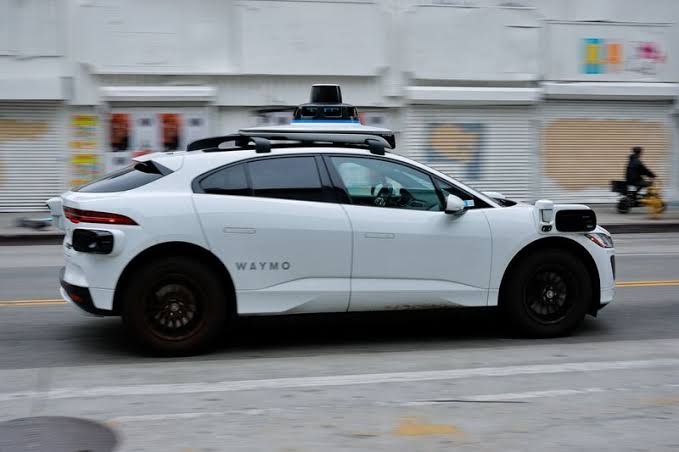
Waymo ends Uber robotaxi partnership, pivoting to fully integrate its services. This intensifies autonomous ride-hailing rivalry.
Waymo, Alphabet Inc.'s self-driving unit, is set to terminate its partnership with Uber Technologies Inc., a move that intensifies the fierce competition within the autonomous ride-hailing sector and could significantly reshape market dynamics for investors. The decision signals Waymo's pivot toward fully integrating its autonomous driving technology directly into its own app and services, rather than relying on third-party platforms for customer acquisition, potentially impacting Uber’s strategic flexibility and the broader landscape of mobility services. This strategic shift underscores Waymo's confidence in its operational maturity and its intent to capture a larger share of the burgeoning robotaxi market. The original alliance, forged in 2019, allowed Uber users in Waymo's operational areas to hail Waymo vehicles directly through the Uber app, providing Waymo with broader market exposure and Uber with access to cutting-edge autonomous technology without the massive direct investment. While specific financial terms of the original arrangement were not publicly disclosed, such collaborations typically involve revenue-sharing agreements or per-ride fees. The termination suggests Waymo believes the incremental revenue and data gained from the partnership no longer outweigh the strategic value of controlling its entire user experience and data funnel, particularly as it expands operations in cities like Phoenix, San Francisco, and Los Angeles. For Uber, this means a renewed focus on either accelerating its own in-house autonomous vehicle development, after divesting its Advanced Technologies Group (ATG) to Aurora Innovation Inc. in 2020, or seeking new partnerships with other autonomous technology providers. The decision also reflects Waymo's long-term vision to build a vertically integrated autonomous mobility network, from vehicle development and software to mapping, operations, and direct customer interface. This strategy aims to maximize control over service quality, operational efficiency, and, crucially, the user data essential for continuous improvement of its AI-driven systems. By severing ties with Uber, Waymo removes a layer of intermediation, allowing it to directly cultivate brand loyalty and capture 100% of the revenue generated by its robotaxi services.
What It Means for the Autonomous Vehicle Landscape
Waymo's strategic divergence from Uber marks a critical inflection point in the race to commercialize fully autonomous ride-hailing, signaling a broader industry trend towards direct competition rather than collaborative scaling. This move effectively positions Waymo as a direct competitor to any ride-hailing platform that relies on third-party AV technology, including Uber if it cannot secure an equally robust alternative. Investors are now evaluating the long-term implications for the capital-intensive autonomous vehicle sector, where profitability timelines remain extended and market leadership is fiercely contested. The exit from the Uber partnership could accelerate a "winner-take-most" scenario, favoring companies with the deepest pockets and most mature technology stack capable of scaling independently. The termination underscores the challenge for platform companies like Uber to remain relevant in an autonomous future if they cannot control the underlying technology. It forces a clear strategic choice: either become a full-stack AV developer or secure exclusive, long-term partnerships that prevent their technology providers from becoming direct rivals. Waymo's decision elevates the perceived risk for other ride-hailing aggregators that have pursued similar non-exclusive tie-ups, potentially pushing them to reassess their own AV strategies and accelerate their independent development efforts or seek more entrenched partnerships.
The Context of Autonomous Development
The relationship between Waymo and Uber has been complex and, at times, adversarial, predating their brief partnership. The two companies were embroiled in a high-profile legal battle in 2017 when Waymo accused Uber of stealing trade secrets related to its lidar technology, a dispute that ultimately ended in a settlement. The subsequent partnership was widely seen as an uneasy truce, allowing both companies to explore symbiotic growth in the nascent robotaxi market. This history of contention provides a backdrop to Waymo's latest decision, suggesting a return to a more aggressive, independent growth strategy now that its technology has matured. The broader autonomous vehicle industry has seen a mix of ambitious forecasts and significant operational hurdles. While companies like Waymo, Cruise (General Motors Co.'s AV unit), and Zoox (Amazon.com Inc.'s AV unit) have made substantial progress in deploying limited robotaxi services in specific geographies, scaling these operations nationally or globally remains a formidable challenge. Regulatory complexity, high operational costs, and the need for continuous technological refinement contribute to a capital-intensive environment where sustained investment is paramount. Waymo, with the backing of Alphabet's considerable resources, is uniquely positioned to pursue a capital-intensive, vertically integrated strategy, leveraging years of development and billions in investment since its inception as the Google self-driving car project in 2009.
What Are the Strategic Implications?
Waymo’s move suggests a strategic confidence that its brand and direct customer acquisition channels are robust enough to stand alone, potentially limiting the reach and growth opportunities for other ride-hailing services. This independent path allows Waymo to fully control its customer journey, from booking to ride experience, and collect invaluable proprietary data directly from its users, which is critical for refining its AI algorithms and service offerings. This contrasts sharply with Uber's asset-light model, which traditionally relies on third-party drivers and, in the autonomous future, could rely on third-party AV fleets. For Uber, the termination necessitates a re-evaluation of its autonomous strategy. While Uber sold its ATG unit to Aurora Innovation Inc. in 2020, it retained a minority stake in Aurora and committed to a long-term partnership to eventually integrate Aurora's self-driving trucks into its freight network. However, for passenger ride-hailing, Uber will need to either double down on its investment in Aurora for robotaxi applications, pursue new partnerships with other AV developers like Motional or Cruise, or consider acquiring or building out its own capabilities again. The risk for Uber is that its platform becomes merely a dispatch service for external AV providers who, like Waymo, could eventually opt to go direct-to-consumer, thus commoditizing Uber's core offering. The decision also sends a clear signal to other technology conglomerates and automotive giants investing in autonomous driving. It reinforces the idea that true competitive advantage in this sector may lie in owning the entire stack — from hardware and software to fleet operations and customer interface. This comprehensive approach, while demanding immense capital and engineering talent, could ultimately yield superior margins and a more defensible market position compared to fragmented partnerships. What to watch next includes Waymo’s accelerated expansion plans, particularly in new cities where it can establish a direct market presence without platform constraints. Regulators will also be keenly observing how this heightened rivalry impacts safety standards and market accessibility. For Uber, securing and announcing a new, robust autonomous vehicle partnership or detailing an accelerated internal AV strategy will be crucial to reassure investors about its long-term viability in an autonomous future. The coming months will likely reveal whether Waymo’s bold independence triggers a wave of direct competition or prompts other industry players to seek deeper, more exclusive collaborations.
Frequently asked questions
What is Waymo doing with its Uber partnership?
Waymo, Alphabet Inc.'s self-driving unit, is terminating its partnership with Uber Technologies Inc. This decision signals Waymo's pivot toward fully integrating its autonomous driving technology directly into its own app and services.
How does this impact the autonomous ride-hailing market?
The termination intensifies fierce competition within the autonomous ride-hailing sector and could significantly reshape market dynamics for investors.
Why is Waymo ending its tie-up with Uber?
Waymo is ending the tie-up to pivot towards fully integrating its autonomous driving technology directly into its own app and services, focusing on self-sufficiency.
What is Waymo's new strategy for its autonomous technology?
Waymo's new strategy involves fully integrating its autonomous driving technology directly into its own app and services, moving away from partnerships to control its user experience.
How will this affect investors in the self-driving sector?
This move signifies a reshaping of market dynamics, potentially indicating a shift in investment focus toward companies with fully integrated autonomous solutions rather than partnerships.
What is the primary reason for the intensified rivalry between Waymo and Uber?
The primary reason is Waymo's decision to terminate their partnership and directly compete, rather than collaborate, in the autonomous ride-hailing space, creating a more direct rivalry.