German satellite manufacturer OHB, backed by KKR, prepares for a significant capital injection to scale operations in the booming European space industry.
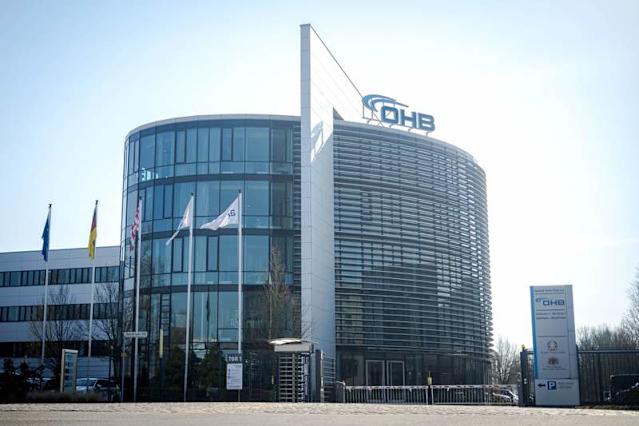
The European space industry is gearing up for a major transformation, and a significant cash injection is about to propel one of its key players into a new era. German satellite manufacturer OHB, backed by private equity behemoth KKR, is reportedly planning a substantial $579 million fundraise, a move that signals a serious commitment to scaling up operations in a rapidly evolving global market.
This isn't just another financial maneuver; it's a strategic gambit that underscores the growing commercialization and geopolitical importance of space. For everyday people, this translates to more robust satellite services, from navigation systems and weather forecasting to secure communications and environmental monitoring, directly impacting how we live, work, and stay connected.
OHB, a cornerstone of Europe's aerospace sector, has historically been a critical partner in major European Space Agency (ESA) programs, including the Galileo satellite navigation system and the Copernicus Earth observation initiative. Its expertise spans a wide range of satellite technologies, from scientific missions to telecommunications and defense applications. However, the space industry of old, largely driven by governmental contracts and lengthy, bespoke projects, is giving way to a more agile, commercially focused "New Space" paradigm.
KKR's initial investment in OHB marked a pivotal moment, injecting private capital and a keen eye for market growth into a sector traditionally reliant on public funding. The private equity firm recognized the immense potential in a company with deep technical capabilities, poised to capitalize on the burgeoning demand for satellite services. This planned $579 million fundraise is an acceleration of that vision, aiming to equip OHB with the financial firepower to innovate faster, expand production, and secure its position against a backdrop of intensifying global competition.
The capital infusion is expected to facilitate significant investments in research and development, particularly in areas like smaller, more adaptable satellites, advanced data processing capabilities, and secure communication payloads. It also likely targets an expansion of OHB's manufacturing capacity, essential for meeting the demands of burgeoning satellite constellations, which require dozens, if not hundreds, of identical satellites to be produced efficiently.
Why this matters for Europe's space ambitions
The space sector is no longer merely about scientific exploration; it has become a critical domain for economic growth, national security, and digital sovereignty. Europe, in particular, has been pushing for greater independence in space, driven by strategic imperatives and a desire to reduce reliance on non-European technologies and services. Initiatives like the EU's proposed IRIS² secure connectivity constellation and increased defense spending across the continent highlight this strategic shift.
OHB's fundraise is directly relevant to these broader European objectives. By strengthening a key domestic player, the continent aims to ensure a robust and sovereign capability in satellite manufacturing and services. This isn't just about building satellites; it's about controlling the entire value chain, from design and assembly to launch and data utilization. The ability to field secure, reliable, and domestically produced satellites is paramount for sensitive applications like defense intelligence, critical infrastructure monitoring, and encrypted government communications.
Furthermore, the investment reflects a deeper trend in the space industry: the convergence of public strategic needs with private commercial drive. Governments are increasingly looking to private industry to deliver space services more efficiently and at a lower cost, while private companies are eager to tap into the large, stable contracts offered by public bodies. OHB, with KKR's backing, is perfectly positioned to bridge this gap, leveraging its established government relationships while adopting the commercial agility required to thrive in the "New Space" economy. This dual focus allows OHB to pursue both large-scale institutional projects and emerging commercial opportunities, diversifying its revenue streams and reinforcing its market resilience.
The evolving competitive landscape
The global space industry is experiencing a renaissance, characterized by rapid technological advancements, falling launch costs, and a surge of private investment. Companies like SpaceX, Amazon (with Project Kuiper), and OneWeb are deploying vast constellations of satellites, transforming everything from global internet access to Earth observation. This creates both immense opportunity and fierce competition for established players like OHB.
Against this backdrop, the $579 million fundraise is crucial for OHB to maintain its competitive edge, particularly against U.S. and even Chinese rivals that often benefit from significant state support or massive private capital. The funds will allow OHB to invest in next-generation technologies, such as software-defined satellites, advanced propulsion systems, and artificial intelligence capabilities for on-board data processing. These innovations are vital for creating more flexible, powerful, and cost-effective satellites that can adapt to changing mission requirements and deliver faster, more actionable data to customers.
The space industry's center of gravity is also shifting towards data services and applications, rather than just hardware. While OHB is primarily a satellite manufacturer, this capital injection could enable it to expand its capabilities further into downstream services, such as ground segment operations, data analytics, and bespoke solutions for specific industry verticals. This horizontal expansion is a common strategy among leading aerospace firms looking to capture more value from the vast amounts of data generated by orbiting assets.
From an investor's perspective, KKR's deepening commitment to OHB highlights a broader trend in private equity: identifying and backing companies in critical, high-growth sectors with significant barriers to entry. The space industry, with its long development cycles, high capital expenditure, and complex regulatory environment, fits this profile. KKR's strategy likely involves leveraging OHB's technological prowess and European market position to achieve substantial long-term growth, eventually leading to a lucrative exit through an IPO or a sale to another strategic investor.
Ultimately, OHB's planned $579 million fundraise is more than just a financial transaction; it's a powerful statement about the future of European space. It signifies a decisive move to embrace the commercial dynamics of the "New Space" era while simultaneously securing Europe's strategic interests in orbit. The outcome of this investment will not only shape OHB's trajectory but also profoundly influence the continent's ability to innovate, compete, and lead in the vital domain of space for decades to come.
Frequently asked questions
What is OHB's planned fundraise?
German satellite manufacturer OHB, backed by private equity firm KKR, is planning a significant $579 million fundraise. This capital injection is intended to scale its operations and enhance its position in the rapidly evolving global space market.
Who is backing OHB's fundraise?
OHB's fundraise is backed by the private equity behemoth KKR.
What is the purpose of OHB's fundraise?
The fundraise aims to scale up OHB's operations and solidify its position in the transforming European space industry.
Which industry is OHB part of?
OHB is a key player in the European space industry, specifically satellite manufacturing.
What is the total amount OHB plans to raise?
OHB plans to raise $579 million.
Where is OHB based?
OHB is a German satellite manufacturer.